

ACH Wire Transfer Time: A Cutoff and Escalation Playbook
ACH and wires run on different clocks. Learn how to set release deadlines, identify where a payment is waiting, and decide whether an urgent replacement is safe.
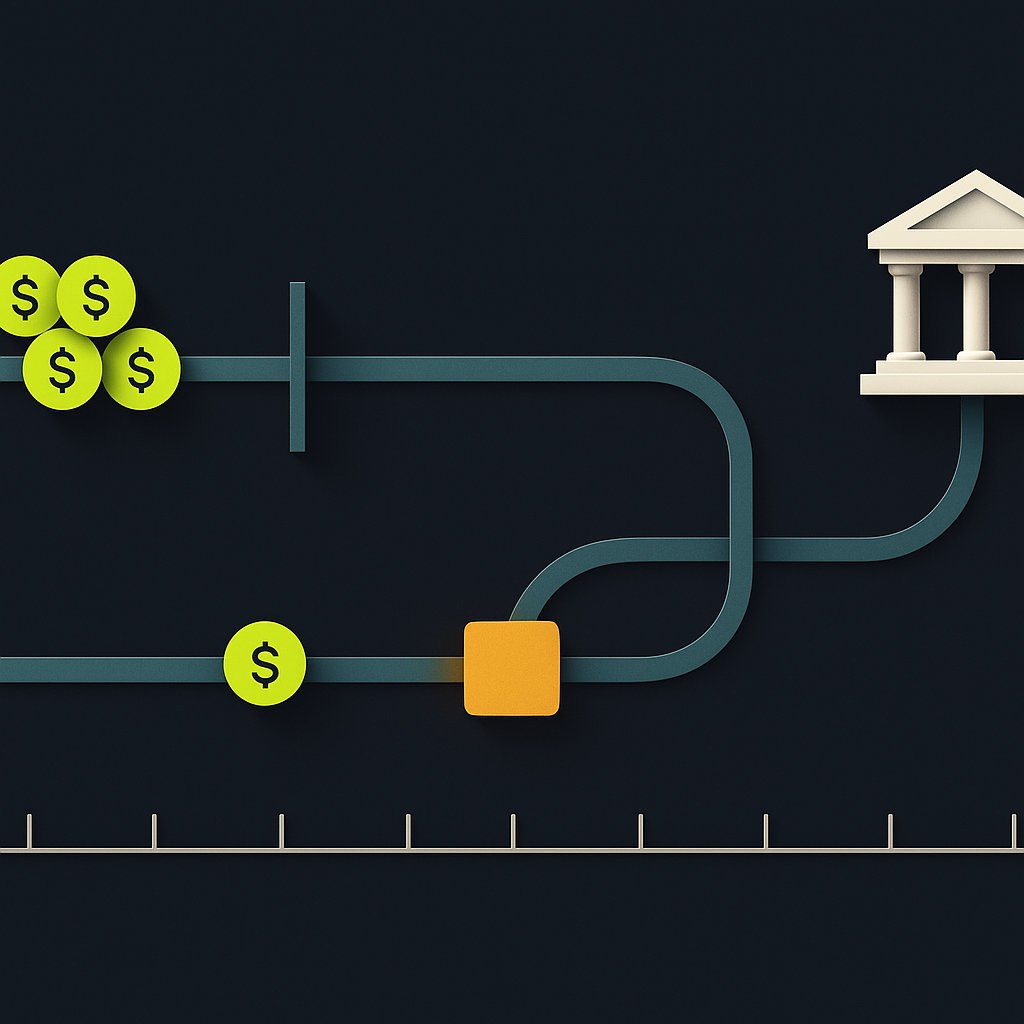
Standard ACH transfers commonly take one to three business days; eligible Same Day ACH payments can settle within the banking day; domestic wires generally arrive the same business day when submitted before the bank’s cutoff. International wires can take one to five business days, depending on the route and receiving bank. These are planning ranges, not guarantees of recipient access to funds; Plaid’s ACH and wire comparison explains the differences in speed and processing.
If you are searching for “ach wire transfer time,” first confirm the actual payment method: ACH and wires are separate rails, not a combined service.
For finance teams, the more consequential question is what to do when a payment deadline is approaching. The answer depends on whether the instruction is still in your workflow, accepted by a provider, submitted to the network, or already settled. This guide focuses on that release-and-escalation decision.
Use transfer times as planning ranges, not release deadlines
A bank’s advertised transfer speed does not necessarily start when an invoice is approved or when someone uploads a payment file. Funding, validation, compliance review, and internal queues can precede network submission.
| Payment method | Typical timing | Deadline dependency | Operational assessment |
|---|---|---|---|
| Standard U.S. ACH | One to three business days | Provider cutoff and effective date | Plan routine payments ahead |
| Same Day ACH | Same banking day if eligible | Eligibility and submission window | Confirm acceptance, not just upload |
| Domestic U.S. wire | Usually same business day | Bank cutoff and review completion | Useful for urgent funded obligations |
| International wire | Often one to five business days | Correspondents and destination calendar | Obtain a route-specific estimate |
The operational assessments above are editorial guidance, not service guarantees or provider ratings.
Standard ACH is not necessarily slow: Nacha reports that the significant majority of ACH payments settle in one business day or less. But network-wide performance is not a promise for a particular payment, especially one still awaiting funding or approval.
Identify which clock is consuming the deadline
Approval and funding time
An approved invoice is not a released payment. Confirm that payment authorization is complete, the source account has usable funds, and any required currency conversion has occurred. A faster rail cannot recover time while an instruction remains blocked internally.
Set a release deadline separately from the invoice due date. Use configurable approval policies to define who can authorize an urgent payment, without treating urgency as permission to bypass beneficiary verification.
Provider and network time
Your provider’s customer cutoff is the actionable deadline. It can precede the underlying network’s submission deadline because the provider needs time for screening, file preparation, and processing. Record its time zone and clarify whether the cutoff means “uploaded,” “fully approved,” or “accepted for transmission.”
Fedwire illustrates why those distinctions matter. It settles transfers individually in real time, with finality at settlement, as described in Modern Treasury’s explanation of Fedwire. That does not mean every customer wire request reaches Fedwire immediately.
Recipient availability time
Network settlement and recipient access are distinct milestones. A wire can settle between banks before the beneficiary bank finishes posting or reviewing the credit.
ACH availability also has specific rules. Effective September 18, 2026, Nacha eliminated the prior-day file-receipt condition for standard ACH credit availability: those credits must be available by 9 a.m. in the receiving institution’s local time on the settlement date. This does not turn an instruction awaiting submission into a settled credit, and it should not be confused with Same Day ACH availability requirements.
Work backward from when the recipient needs the money
Instead of adding a generic transfer estimate to an approval date, establish the recipient’s required availability date and work backward through each dependency.
- Define the obligation. Does the contract require payment initiation, settlement, or usable funds by the due date? Record the relevant destination time zone.
- Confirm the receiving route. Verify that the account accepts the chosen payment method and currency. ACH and wire routing instructions may differ.
- Obtain the provider’s deadline. Ask for the latest fully funded, fully approved acceptance time for the intended settlement date.
- Apply banking calendars. Standard ACH and ordinary bank-wire processing depend on banking days. For international wires, consider sender, intermediary, and destination calendars.
- Reserve preparation time. Include funding, FX execution, beneficiary checks, and approval completion before the provider cutoff.
- Set an escalation trigger. Escalate when the expected acceptance milestone is missing—not only after the recipient reports a late payment.
For international recipients, a U.S. ACH funding leg is not the entire payout journey. A provider may collect dollars through ACH, convert them, and then release a separate local payment abroad. Do not apply the domestic ACH estimate to that complete chain. Use a corridor routing policy to distinguish the funding rail from the delivery rail.
Missed the cutoff? Locate the instruction before replacing it
The most expensive timing mistake can be sending a replacement wire while the original ACH payment is still moving. “Pending” is not evidence that a payment is canceled or safe to resend.
| Last verified state | Immediate action | Replacement decision |
|---|---|---|
| Not released internally | Stop the original instruction | Reauthorize another rail if feasible |
| Queued with provider | Request cancellation confirmation | Wait for confirmed status |
| Submitted to network | Request trace and available remedies | Assume duplicate exposure remains |
| Settled; recipient reports missing funds | Trace beneficiary-bank posting | Do not resend solely on that report |
| Rejected or returned | Confirm reason and funds status | Correct, approve, then reissue |
ACH reversals are restricted remedies for qualifying errors, not a general cancellation tool for a payment that feels slow. Likewise, a wire recall request is not a promise of recovery. Obtain provider-specific guidance rather than assuming either rail can be undone.
Hypothetical: an urgent vendor payment after the ACH cutoff
A vendor needs usable funds today. Your ACH batch shows “pending,” and the provider says its Same Day ACH cutoff has passed.
First, ask whether that instruction is merely queued or already submitted. If the provider confirms cancellation before submission, assess whether a domestic wire can still meet the bank’s cutoff and the vendor’s availability deadline. Verify wire instructions through an established trusted channel.
If cancellation cannot be confirmed, a replacement creates a possible duplicate. Escalate that financial exposure for explicit approval, document the recovery plan, and communicate a revised expectation to the vendor. An urgent wire should not silently become an additional payable.
Make the next payment run easier to manage
Maintain a cutoff register for each provider, rail, currency, and destination. Store the time zone, applicable banking calendar, funding requirements, acceptance definition, and escalation contact. Refresh it when providers change their terms.
For each payment, retain the approved obligation, intended settlement date, release timestamp, provider acceptance, network reference where available, and any return or cancellation evidence. Keep the original and replacement linked under the same obligation so reconciliation can detect a duplicate.
When evaluating payout automation, ask providers to demonstrate these status transitions and exception workflows—not simply quote their fastest transfer time.
The practical next step: choose an upcoming payment run and verify its release deadlines before approval begins. Reliable payment timing comes from meeting the right cutoff with a funded, valid instruction—and knowing exactly what happened when that deadline was missed.
Created with AI assistance. Sources are linked in the article; this content is general information, not legal, tax, or financial advice.
Related resources

Local Payment Rails vs SWIFT: Build a Corridor Routing Policy
The right payout route depends on the recipient’s currency, bank reachability, funding, and payment purpose—not just the transfer fee. Here is how finance teams can turn that decision into a repeatable corridor routing policy.

Tax Reporting for Independent Contractors: Reconcile Global Payments
Reliable contractor tax reporting depends on connecting each payment to the right recipient, jurisdiction, and reporting treatment. Here is how finance teams can build a defensible process across currencies and payment rails.
Payroll Tax Reporting: Connect Global Payments to Compliance
Payroll tax reporting is not complete when salaries leave the bank. Finance teams need a traceable connection between taxable earnings, tax liabilities, filings, and settled payments across jurisdictions.
Run your entire money cycle on one ledger
Global payouts, AP/AR automation, and AI agents with their own wallets and spend limits.
Get started
Discussion
0 commentsBe the first to join the discussion.