

Facebook Monetization Minimum Payout: Thresholds and Release Rules
Facebook’s minimum payout depends on location, payment method, and the earning program. Here’s how to distinguish a threshold issue from an account hold or a payment still in transit.
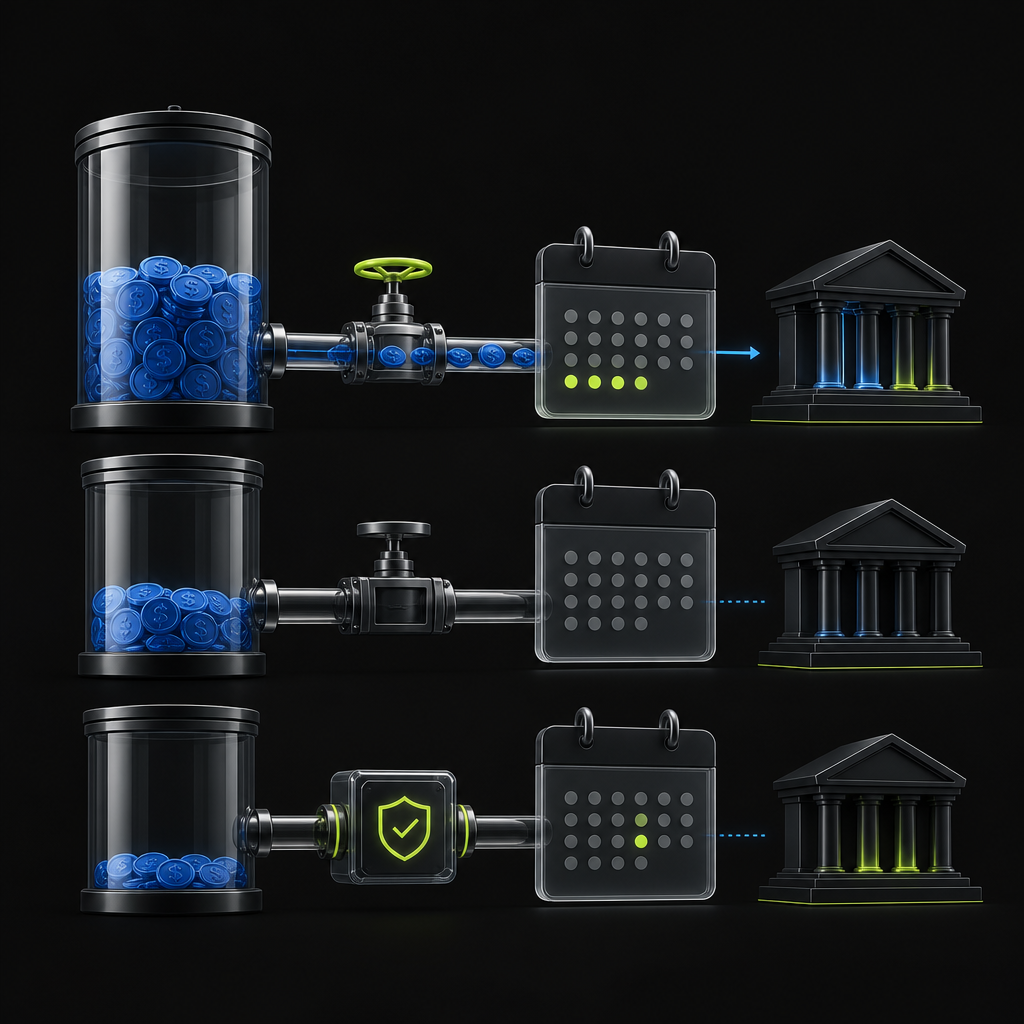
The Facebook monetization minimum payout is generally $5 for US creators, $25 outside the US for non-wire payout methods, and $100 outside the US for wire transfers. These are not universal rules for every incentive or bonus arrangement. Confirm the threshold attached to your earning program and payout account before forecasting a deposit.
The location-and-method distinctions reflect the guidance available in November 2026, including Shopify’s Facebook monetization overview. Reaching the minimum does not mean an immediate withdrawal: earnings must qualify for payment, account requirements must be complete, and the payment must enter the applicable release cycle.
For creators, the practical question is “What still needs to happen before this balance reaches my bank?” For agencies and finance teams managing creator income, it is “Which balances can we responsibly include in the cash forecast?”
Facebook minimum payout thresholds by location and method
Use the following as a starting point, then check the rule displayed in your Facebook payout settings. Amounts are expressed in US dollars; do not assume the same numerical threshold applies in a local currency.
| Creator location | Payout method | General minimum | What to verify |
|---|---|---|---|
| United States | Available supported methods | $5 | Program-specific terms and account status |
| Outside the United States | Non-wire methods | $25 | Method availability in payout settings |
| Outside the United States | Wire transfer | $100 | Wire classification and receiving-bank details |
| Any eligible location | Separate bonus or incentive arrangement | Check program terms | Whether a separate minimum applies |
“Bank transfer” alone is not enough information. A local bank deposit and an international wire can both end in a bank account while following different payout rules. Use the actual method identified by Meta, not an informal description supplied by the recipient.
Not every method is available in every country. A creator should not change their declared location to access a lower threshold; payout identity, tax information, and receiving-account details must remain accurate.
Why older guides often say $100
A blanket $100 answer loses the location and payment-method distinctions. It can lead a US creator to wait unnecessarily or a non-US wire recipient to expect payment too early. Older program rules and separate bonus terms can also explain conflicting answers.
When a general guide conflicts with an account-specific notice, investigate the notice and applicable program terms rather than treating the smallest published threshold as an entitlement.
Do not confuse payout setup with payout release
Meta also describes earnings thresholds associated with completing an incomplete payout account: $5 in the US and $25 outside the US. Meta’s payout setup guidance is the primary reference for this onboarding distinction.
A setup threshold answers, “When can this account complete the required setup?” A release threshold answers, “When is the payable balance large enough to enter a payout cycle?” Those are different events, even when the amounts match.
For example, a non-US creator using wire transfer should not interpret the $25 setup threshold as confirmation that a wire will be released at $25.
Keep these checks separate:
- Program eligibility: The creator has access to the relevant monetization tool.
- Account readiness: Required identity, tax, and payment information has been accepted.
- Payable balance: Earnings eligible for payment meet the applicable minimum.
- Release and receipt: Meta issues the payment and the receiving provider credits it.
For teams designing their own recipient workflows, this distinction also informs a better creator payment onboarding process: track missing documentation independently from low balances.
When does Facebook pay after the minimum is reached?
Facebook generally follows a monthly payment cycle for the previous month’s earnings, commonly around the 21st, as described in the Shopify overview linked above. Treat that as a general schedule, not a guaranteed bank-credit date for every program and country.
Balances below the applicable minimum generally carry forward until they qualify. However, rollover should not be interpreted as permission to leave payout setup incomplete indefinitely; onboarding deadlines and program terms can affect earnings.
Separate estimated earnings, payable earnings, and received cash
A monetization dashboard can show estimated earnings before review and adjustment. That estimate is not necessarily the amount used to determine the final payout.
Once a payment is issued, bank processing is another stage. A payment marked as sent is not the same as money available to spend. Weekends, banking holidays, payment routing, and receiving-bank checks can affect arrival.
For cash forecasting, record the earning period, finalized amount, release status, and bank-credit date separately. This follows the same principle used in country-specific payout settlement planning: release timing and receipt timing need different evidence.
How the minimum applies to Facebook Stars
Stars illustrate why a universal $100 minimum is misleading. At the stated creator earning value of $0.01 per Star, 500 Stars correspond to $5, 2,500 to $25, and 10,000 to $100. The Stars payout breakdown explains these equivalents and the location-and-method distinctions.
These are earnings equivalents, not a guarantee of release. The account still needs to satisfy the applicable payout conditions. They also do not describe what a fan pays to purchase Stars.
Do not automatically combine Stars, Content Monetization, and separate incentive balances in your own spreadsheet to declare the threshold met. First confirm whether Meta treats those earnings as a shared payable balance or separate program balances.
A practical checklist when the balance is above the minimum
- Identify the earning program. Record whether the amount comes from Content Monetization, Stars, subscriptions, or a separate incentive.
- Confirm location and method. Check the payout account’s country and whether the selected route is a wire or another supported method.
- Read the balance label. Distinguish estimated earnings from the balance available for payment and from a payment already issued.
- Check account requirements. Look for incomplete tax information, identity verification, bank details, or account warnings.
- Review recent changes. Payment-detail changes can trigger review or a hold. Use the account notice rather than assuming the normal schedule still applies.
- Check the earning period. Crossing a threshold during the current month does not establish that the amount belongs in the current release cycle.
- Trace an issued payment. Retain the payment reference, amount, currency, destination account ending, and issue date before contacting support or the receiving provider.
Share sensitive tax and banking records only through authorized support channels. A public screenshot should never expose full account numbers or tax identifiers.
What finance teams should add to their cash forecast
A threshold is a release condition, not a cash-availability promise. Teams managing multiple creators should classify each balance as below minimum, awaiting verification, awaiting the payment cycle, issued, or received. Assign an owner and next action to each exception.
Also separate the platform payout amount from the net amount credited. Receiving-bank charges and currency conversion may affect usable cash; there is no single universal fee or FX assumption appropriate to every destination.
For agencies making onward payments to creators or contractors, maintain two distinct records: what Meta owes the business and what the business owes each recipient. A delayed Meta receipt does not automatically change a contractual payment obligation.
Start with the account-specific rule
The useful answer is not simply “Facebook pays at $100.” It is a location-and-method threshold, applied to the correct program balance, after account requirements are satisfied and before bank settlement.
Check those conditions in order before escalating a missing payment. If your business then distributes received revenue internationally, Payouts.com payout automation can support the onward payment operation. It does not change Meta’s thresholds, remove Meta account holds, or accelerate Meta’s release schedule.
Created with AI assistance. Sources are linked in the article; this content is general information, not legal, tax, or financial advice.
Discussion
33 commentsRelated resources

Creator Payment Onboarding Portal: How to Build a Self-Serve Flow That Collects Tax Docs, KYC, and Payout Preferences Before Day One
A poorly designed creator onboarding flow creates compliance gaps, delayed payouts, and frustrated talent. Here's a practical blueprint for building a self-serve portal that gets tax documentation, identity verification, and payout preferences locked in before Day One.
Payout Settlement Times by Country: Build Reliable Payment ETAs
An instant domestic rail does not make an international payout instant. Use this country reference and operating framework to set payment ETAs that account for funding, calendars, and recipient-bank availability.

Adobe Stock Minimum Payout: Eligibility, Timing, and Net Cash
Adobe Stock’s payout threshold is only one condition for accessing royalties. Here’s how the waiting period, provider availability, tax withholding, and bank withdrawal affect when earnings become usable cash.
Run your entire money cycle on one ledger
Global payouts, AP/AR automation, and AI agents with their own wallets and spend limits.
Get started
The point about rollover not excusing incomplete payout setup is one we should have caught earlier. We've had two creators lose earnings because they hit the minimum but never finished tax documentation, and we assumed the balance would just sit there waiting. It didn't.
We had the same thing happen with a contractor pool. The balance rolled over twice, then disappeared when the earning window closed. Now we treat incomplete tax docs as a blocking issue in onboarding, not something that can wait until threshold.
We had a similar case where the balance disappeared after three months of incomplete setup. Turns out there was a program-specific expiration window buried in the terms that wasn't surfaced in the dashboard. Now we flag incomplete setups the day earnings cross 50% of the threshold.
The checklist at the end is useful but it stops before the part that actually breaks our reconciliation: what happens when Meta changes the release date mid-cycle or applies an adjustment after the earnings period closes. We've had payouts delayed by two weeks with zero notification in the dashboard, and the only way we caught it was manual comparison against prior cycles. Does anyone have a reliable way to detect schedule drift programmatically?
We've seen the same silent delays. Our workaround is logging the expected release date from the dashboard at period close, then tracking variance as a separate column. It doesn't prevent the delay but at least we can show treasury why the forecast changed without warning.
We built a separate exceptions table just for this. Every time we pull the scheduled release date from the dashboard we log it with a timestamp, so when Meta pushes it we have evidence of the original date. Still doesn't prevent the reconciliation headache but at least we can explain the variance in the monthly close.
The Stars earnings example is helpful but I wish the article had also covered how Meta handles cross-program balances when you're mixing Stars, ad breaks, and subscription revenue in the same account. We have creators earning from all three and the payout settings dashboard doesn't make it obvious whether those pool together or hit separate minimums.
We handle this by treating each program as a separate receivable line in our AR subledger until the payment actually clears. Stars, ad breaks, and subscriptions stay separated until we see evidence in the payout detail export that Meta combined them for a single release. It's more manual than we'd like but at least it matches how Meta seems to gate each program balance independently.
We handle this by treating each program as a separate receivable line in our AR subledger until the payment actually clears. Stars, ad breaks, and subscriptions stay isolated. The payout settings dashboard won't tell you if they pool or stay separate, so we just reconcile each one post-settlement and adjust the mapping from there.
The section on not confusing bank transfer with wire transfer is something we learned the hard way. Our controller was pulling creator payouts into the cash forecast assuming all 'bank transfers' followed the same rule, and it took two months of reconciliation variance before we realized the local deposit methods had a $25 threshold while wires were $100. Now we require the exact Meta method label in the tracking sheet, not just 'bank' as the destination type.
We hit this exact scenario. The root cause was treating 'bank transfer' as a single category in our ERP custom field instead of forcing the ops team to specify wire vs. local at data entry. Once we split the field and mapped each to the correct threshold rule, variance dropped to almost nothing.
We had the same reconciliation pain. The fix was adding 'payout_method_type' as a required field in our recipient table and stopping any forecast import that didn't classify wire versus local explicitly. The article's point about using Meta's actual method classification instead of informal descriptions would have saved us weeks.
The '$100 universal minimum' myth has cost us at least three finance-team hours per month chasing 'missing' payments that were just sitting below the actual threshold for wire transfer. The location-and-method table in this article should be printed and taped to every AP dashboard that touches creator payouts.
We had the same problem until we started tracking method type as its own field in our payout reconciliation sheet. The real issue is that creator-facing dashboards don't always surface which method Meta has actually assigned to them, so they tell us 'bank transfer' and we assume local when it's actually wire. Now we require a screenshot of the exact method name from their payout settings before we model the threshold.
We ended up doing the same thing after a similar audit. The part that caught us was treating 'bank transfer' as one category when it actually splits into local methods versus wire. Adding method classification to our tracking cut follow-up requests by more than half.
The separate tracking of release status and bank-credit date is exactly the distinction we needed. We've been using 'payment sent' as the cash-available flag in our forecast model, which overstates liquid position by 2-4 days depending on routing. Adding that extra stage to the reconciliation flow means more manual entries but it fixes the timing mismatch that's been breaking our weekly projections.
We added a 'funds_available_date' field separate from 'release_date' and built a simple rule that flags any payout older than five business days without a credit. That at least surfaces the outliers before they mess up weekly liquidity reporting.
We added the same stage after reconciliation kept breaking. The piece we still haven't solved cleanly is how to handle cross-border wire delays that stretch beyond the 2-4 day window, especially when intermediary banks sit on the payment over a weekend.
The recommendation to record earning period, finalized amount, release status, and bank-credit date separately is basically asking for four-column tracking where most teams only have one. We added those fields after our Q2 close turned into a reconciliation nightmare, but the upstream problem is that Meta's dashboard doesn't export all four cleanly—you end up scraping or manually logging half of it.
The upstream problem is usually that the platform itself doesn't expose those data points in a structured way until after the fact. We ended up scraping the payout dashboard daily and versioning the snapshots so we could reconstruct what changed between estimated and finalized, but that only works if you catch it before the earning period closes.
The upstream problem is usually that the platform itself doesn't expose those data points through a structured export. We built a scraper to pull the release status from the dashboard HTML because Meta's CSV dump only includes finalized amounts and deposit dates, not the in-between states.
The part about setup threshold versus release threshold is critical and I've never seen it documented this clearly anywhere else. We assumed $25 meant wire-eligible for non-US creators and delayed several payments because we were waiting for $100 that should have already gone out at $25 on non-wire methods.
We had the exact same confusion until someone flagged that the setup notice doesn't override the method-specific release rule. The article's table helps but Meta should really surface both thresholds side by side in the payout settings UI instead of burying one in onboarding docs.
Same issue here. We had non-US creators on PayPal waiting for $100 when they should have been paid at $25. The article's point about not using informal descriptions like 'bank transfer' is exactly right—we were relying on what creators told us instead of what was actually configured in their Meta payout settings.
How are teams actually handling the gap between "earnings estimated" and "earnings payable"? We've been burned assuming dashboard estimates equal cash in transit, especially when Meta adjusts after review. Are you recording this as a separate reconciliation step or just padding your forecast assumptions?
We record them as separate line items. Estimated earnings stay in a forecast bucket with a probability weight (usually 85% based on historical adjustment patterns), and nothing moves to cash forecast until the payment status flips to issued. The reconciliation step happens weekly now because waiting until month-end created too much variance in our liquidity model.
We split them into separate line items now. Estimated earnings go into a shadow column in our cash model with zero weight until Meta's review closes and we see the finalized amount in their payout dashboard. That final number is what gets a forecast date. The gap used to wreck our short-term liquidity views, especially in months with high bonus adjustments.
this is painfully relevant for us right now. we have about forty creators split across US and APAC and the inconsistent thresholds make monthly cash forecasting a nightmare. the part about not combining Stars and Content Monetization balances hits hard because our controller literally did that last quarter and we overestimated receivables by 18%.
We got burned by the same assumption. The article's point about verifying whether Meta treats different earning sources as shared or separate balances is critical. We now pull data directly from each program's dashboard before we commit anything to the forecast, and we flag anything under threshold with a 30-day carryforward assumption unless we have proof otherwise.
We ran into the exact same thing with a creator pool about half your size. The fix for us was splitting the forecast model by program type first, then by geography and method. It's more columns but at least each one maps to an actual Meta release rule instead of a guess. Still doesn't solve the bank-credit timing variance but it stopped the worst of the surprises.
The distinction between setup threshold and release threshold is something I wish our AR team had understood six months ago. We onboarded creators assuming $25 was universal and then spent weeks fielding questions about why wire recipients weren't seeing payouts until $100. That table by location and method should be printed and taped to every finance ops desk.
Same issue on our side, and it got worse when we tried to build internal tooling that auto-flagged 'ready to pay' balances. We were pulling totals from the dashboard without checking the method on file, so our system kept telling wire recipients they'd be paid at $25. The four-column table in the article would have saved us from that completely.
We made the same mistake with a much smaller pool. The wire/non-wire split isn't obvious from the dashboard, and creators don't always know which method they actually selected during setup. Now we ask for a screenshot of their payout settings page before we forecast anything.