

Global Payment System: The Dependencies Behind Every Payout
There is no single worldwide payment rail. Learn how interconnected networks deliver international payouts, where their dependencies create risk, and what finance teams should document before scaling.

A global payment system is the interconnected infrastructure that enables money to move between people and businesses across countries and currencies. It combines banks, payment service providers, messaging networks, clearing and settlement systems, foreign exchange services, and domestic payout rails. It is not one network with universal access, operating hours, or rules.
For finance teams paying hundreds of international vendors, contractors, or sellers, that distinction matters. A provider can offer a single interface while relying on different institutions underneath. Reliable payouts require understanding those dependencies—not just knowing which countries appear on a coverage map.
What makes a payment system global?
Domestic payment systems generally operate within a defined currency, jurisdiction, and participation framework. Cross-border services connect those systems through banking relationships, local payment partners, currency conversion, and shared technical standards.
Several functions must work together:
- Messaging: communicating who should receive money, how much, and under what instructions.
- Clearing: transmitting, validating, and sometimes calculating obligations between participants.
- Settlement: discharging obligations through transfers between the relevant accounts.
- Recipient credit: posting funds to the beneficiary’s account or wallet, subject to applicable checks and restrictions.
SWIFT is principally a financial messaging network, not a universal account that holds and transfers everyone’s money. ISO 20022 is a financial messaging standard, not a settlement rail. Domestic instant payment systems can accelerate a local leg without making the entire international journey instant.
This distinction is central to the BIS analysis of cross-border payment improvements and domestic infrastructure: the first and last miles of international payments often depend on domestic systems. Improving the connection between countries does not automatically remove local processing constraints.
The infrastructure behind an international payout
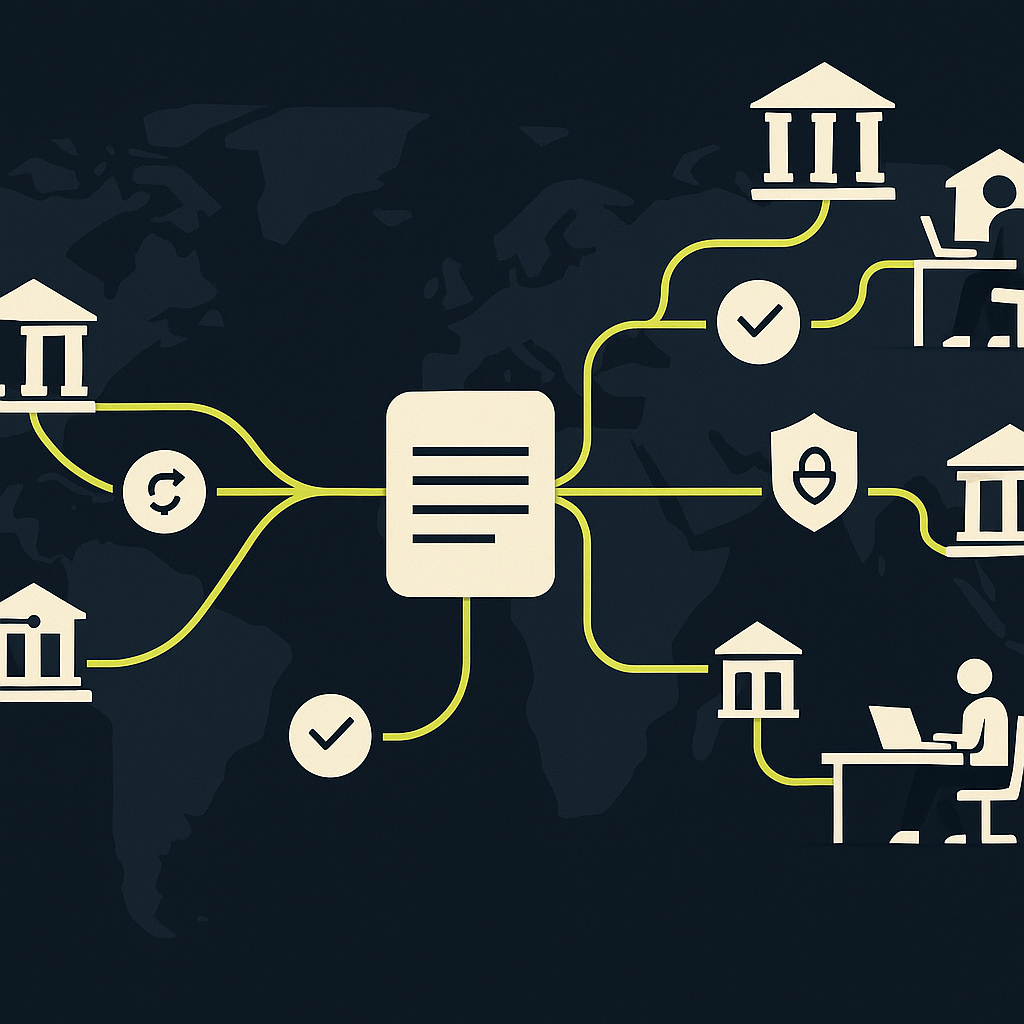
Not every payment uses every component below. A transfer within one provider’s internal ledger may avoid some external steps, while a bank payment can involve multiple intermediaries. Use this map to establish which functions your provider performs and which it delegates.
| Component | Function | Dependency to document | Question for finance |
|---|---|---|---|
| Funding account | Supplies payout funds | Bank access and available balance | When is cash usable? |
| Payment provider | Accepts and routes instructions | Processing service and partners | Who owns execution? |
| Messaging layer | Carries payment instructions | Network access and data quality | What proves acceptance? |
| FX service | Converts currencies | Liquidity and quote validity | Which rate is committed? |
| Settlement institutions | Discharge payment obligations | Accounts, liquidity, operating hours | Where can funds become unavailable? |
| Domestic payout rail | Delivers the local payment | Participation, limits, schedules | Is this recipient reachable? |
| Receiving institution | Credits the beneficiary | Account eligibility and review | What confirms recipient credit? |
The practical lesson: a successful API response confirms only what the provider defines it to confirm. Instruction acceptance, settlement, and beneficiary credit should not be treated as interchangeable events.
Why global reach does not mean universal availability
Country coverage is conditional
“Supported country” is an incomplete description. Availability can depend on the sending entity’s jurisdiction, funding currency, recipient type, receiving currency, transaction purpose, amount, and destination institution.
A service that supports personal remittances does not necessarily support business supplier payments. A wallet endpoint may not accept the same recipient types or amounts as a bank account. Ask for support at the level of your actual payment use case, not simply the destination flag.
Local data requirements remain different
A common messaging format does not create a universal beneficiary form. For example, euro SEPA transfers use an IBAN; UK domestic account payments commonly use a sort code and account number; Indian bank-account transfers commonly require an account number and IFSC.
Those identifiers are starting points, not complete onboarding specifications. Names, addresses, payment-purpose information, tax identifiers, or supporting documents may also be required depending on the country, rail, institution, and transaction.
Collect requirements from the executing provider and maintain them by payment route. The country-by-country contractor payment guide provides a useful starting framework, but current route requirements should determine the fields your workflow enforces.
Different rails move the bottleneck
Correspondent banking can provide broad reach but introduce intermediary dependencies. Local payout networks can simplify recipient delivery while requiring advance funding. Token-based transfers can change the settlement mechanism while retaining conversion, custody, compliance, and cash-out dependencies.
The BIS working paper on competing cross-border payment rails examines banks, fintechs, and stablecoins and cautions against treating stablecoins as a universal solution to payment friction. Finance teams should assess the complete service, including how recipients obtain usable funds.
Map shared dependencies, not just providers
Using multiple providers does not necessarily create independent payment paths. Two services may depend on the same local bank, FX counterparty, banking group, or domestic rail.
Create a dependency register for material payout corridors. Define a corridor by origin, destination, currency pair, and recipient method, then record:
- Execution chain: contracting provider, known settlement partners, and local delivery method.
- Funding chain: account owner, funding institution, currency, and replenishment process.
- Timing dependencies: funding deadlines, conversion availability, local operating windows, and review processes.
- Information dependencies: required beneficiary fields, supporting documents, and status evidence.
- Recovery ownership: who investigates, traces, cancels, returns, or authorizes a replacement payment.
Providers may not disclose their full banking network. Record that limitation explicitly and request whatever concentration and continuity information they can provide. An unknown dependency should not be counted as an independent fallback.
Hypothetical example: two brands, one failure point
A marketplace uses separate providers for regular and urgent local-currency payouts. Both rely on the same local settlement bank. When that bank’s service becomes unavailable, changing providers does not restore delivery.
A genuinely useful contingency might require another settlement partner, a different eligible recipient method, or delayed execution under an agreed communication plan. Each alternative must be approved and usable before the incident. A backup contract alone does not establish payment continuity.
Connect infrastructure choices to cash and cost
Local payout access often changes where liquidity must sit. Prefunding can support faster execution, but balances distributed across currencies and providers may leave treasury with idle cash in one place and a shortfall elsewhere.
Distinguish book balance, available balance, reserved funds, and funds in transit. A dashboard total is not necessarily the amount that can fund the next payment run.
Multi-currency accounts can help finance teams collect and hold currencies needed for payouts. They do not eliminate the need to verify entity ownership, withdrawal conditions, conversion arrangements, and downstream funding deadlines.
Cost analysis should also follow the whole chain. Compare the funding debit, explicit fees, FX rate, potential intermediary deductions, and expected recipient amount. Separately track the operational cost of investigations and the liquidity cost of maintaining prefunded balances. A low transaction fee can coexist with an expensive operating model.
A practical resilience checklist
Before increasing international payout volume, use this checklist with treasury, payment operations, engineering, and compliance:
- Define the obligation. Record the paying entity, recipient, currency, amount, due date, and whether the recipient must receive an exact net amount.
- Confirm route eligibility. Validate the business use case, recipient type, destination account, and applicable restrictions.
- Verify data requirements. Test beneficiary validation and establish how requirement changes reach onboarding teams.
- Establish funding readiness. Identify usable balances, replenishment deadlines, and who can authorize emergency funding.
- Document status meanings. Separate accepted, processing, credited, rejected, and returned states, including the evidence behind each.
- Check fallback independence. Determine whether the alternative changes the failed dependency and remains eligible for the payment.
- Control uncertain outcomes. Do not reroute an unresolved payment merely because a response timed out. Investigate the original instruction and apply duplicate-prevention controls.
- Reconcile the full lifecycle. Connect the payable, funding debit, FX conversion, fees, recipient outcome, and any return to one traceable record.
For incident handling, the failed-payment recovery guide expands on distinguishing rejection, return, and uncertain status before attempting another payment.
Build around the network you actually depend on
The global payment system offers many ways to reach a recipient, but none removes the need to manage local access, liquidity, data, and execution evidence. The strongest operating model makes those dependencies visible and assigns ownership when they fail.
Start by mapping your most business-critical corridors and identifying shared failure points. Then assess how Payouts.com’s payout automation fits that map. A unified financial operating system can bring money movement and operational records together; your acceptance criteria should still establish what happens beneath the interface, from funding through recipient credit.
Created with AI assistance. Sources are linked in the article; this content is general information, not legal, tax, or financial advice.
Related resources
How to Pay International Contractors: A Country-by-Country Bank Payment Guide
A successful contractor payment delivers the agreed amount—not just a completed transfer instruction. Build a country-specific payment plan around bank details, currency, fees, and the date funds become available.

Multi Currency Payouts: A Failed-Payment Recovery Guide
A returned cross-border payment is not simply the original transaction in reverse. Learn how to preserve the recipient’s currency entitlement, manage FX differences, and retry payments without creating duplicates.

Stripe Minimum Payout: Which Threshold Applies to Your Payment?
Stripe does not have one universal minimum payout. Identify the product, currency, and destination first, then separate payment limits from retained balances and platform release policies.
Run your entire money cycle on one ledger
Global payouts, AP/AR automation, and AI agents with their own wallets and spend limits.
Get started
Discussion
0 commentsBe the first to join the discussion.