

How Does Etsy Pay Sellers? From Sale to Bank Deposit
Etsy pays sellers through Etsy Payments, but a completed sale is not the same as cash available in the bank. Understand deposit schedules, deductions, reserves, and international payout routes.
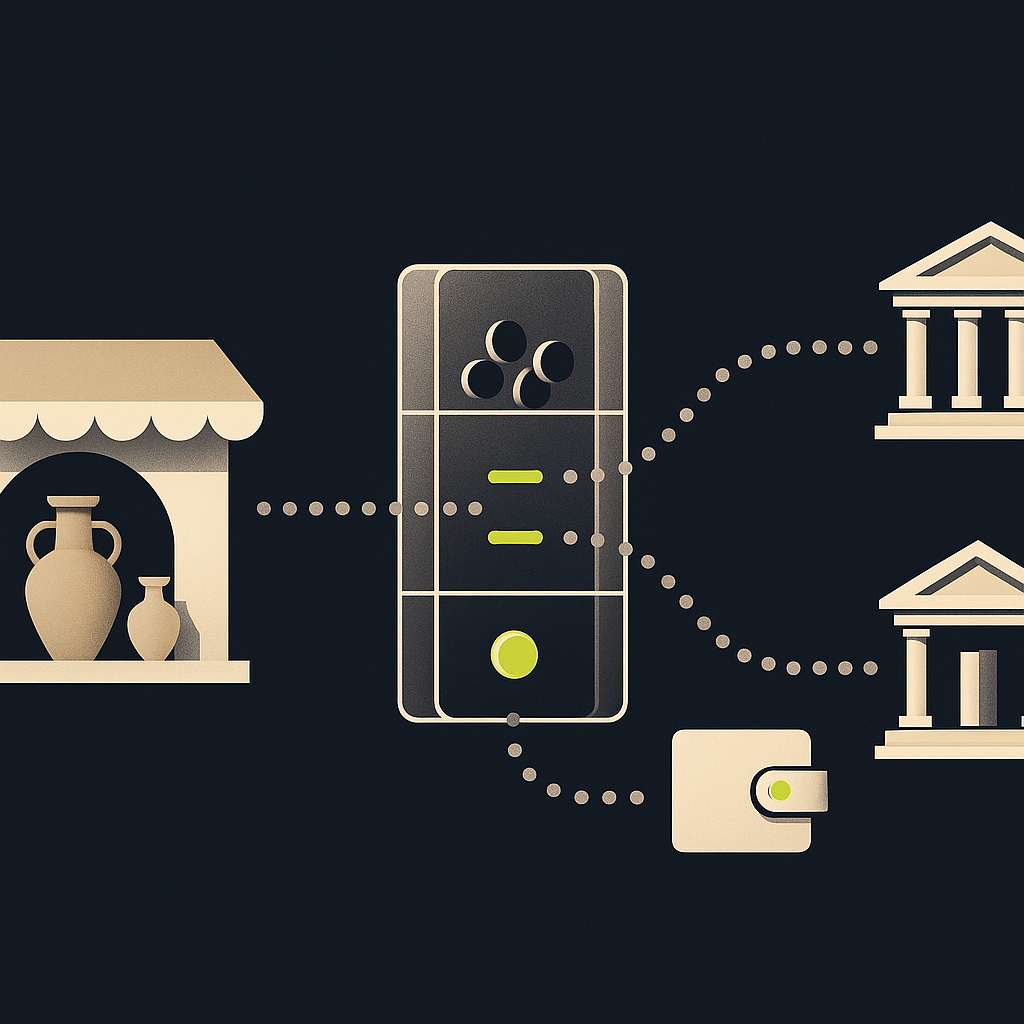
Etsy pays sellers through Etsy Payments: customer payments enter the seller’s Etsy Payment Account, applicable fees and other charges are deducted, and available funds are sent to the seller’s bank account on a deposit schedule. In certain countries, sellers receive funds through a linked Payoneer account before withdrawing to their bank.
The important distinction is between a sale, money available for deposit, and money received. Those are separate events. A daily deposit schedule does not make every sale immediately withdrawable, and an Etsy deposit notification does not mean the bank has credited the funds.
For sellers managing cash flow—and finance teams studying marketplace payout operations—the useful question is not just “When does Etsy pay?” It is “What stage has this money reached, and what must happen next?”
How Etsy seller payments work
Etsy Payments brings supported buyer payment methods into one seller payment account. A customer may pay by card, a supported digital wallet, or another available checkout method, but the seller’s payout follows Etsy’s settlement process rather than the buyer’s chosen payment method.
For example, when a buyer uses PayPal through Etsy Payments, the proceeds go to the seller’s Etsy Payment Account, not directly to the seller’s personal PayPal account. Payment-method availability varies by country.
| Stage | What happens | What the seller should check |
|---|---|---|
| Customer payment | Payment enters Etsy’s processing flow | Order and payment status |
| Payment Account entry | Sales and deductions affect the balance | Fees, refunds, and account activity |
| Funds become available | Eligible funds can be deposited | Available amount and restrictions |
| Deposit initiation | Etsy sends eligible funds on schedule | Deposit date and destination |
| Recipient credit | Bank or Payoneer receives funds | Receipt and any remaining withdrawal step |
The Payment Account balance is not necessarily the amount available for deposit. Some funds may still be processing or subject to a reserve, hold, or deposit delay. Fees and refunds can also reduce what is ultimately sent.
When does Etsy pay sellers?
For sellers receiving direct bank deposits, Etsy offers daily, weekly, biweekly, and monthly deposit schedules, subject to applicable conditions. New sellers generally start on a weekly schedule. Daily deposits may require a country-specific minimum balance.
These schedules determine when eligible funds are sent—not when every sale becomes eligible. Etsy’s Payments Policy sets out the framework for deposits, availability, and restrictions. Check your Payment Account for the schedule and conditions that actually apply to your shop.
Separate the timing into three parts
- Availability: When proceeds become eligible for deposit. Account status and payment restrictions can affect this.
- Scheduled release: When Etsy initiates a deposit of available funds, subject to thresholds and account requirements.
- Bank processing: When the receiving institution credits the money after Etsy sends it.
Weekends and bank holidays can affect processing. Etsy does not provide one universal bank-arrival clock time for every seller, country, and institution.
Do not budget around a blanket claim that every sale pays out after a fixed number of days. New-seller conditions, reserves, verification requirements, and the receiving bank can change the timeline.
Finance teams can use the same distinction when building their own payout communications: state the expected release date separately from the estimated receipt date. Our guide to payout settlement times by country explains how to build more useful payment estimates.
What does Etsy deduct before paying sellers?
Your bank deposit is a net settlement, not a gross-sales report. It can reflect multiple orders, fees, refunds, and other account activity rather than one sale.
The main charges include the following, as summarized in Printify’s Etsy fee breakdown:
- Listing fees: The standard listing fee is $0.20, with additional listing charges possible under Etsy’s renewal and quantity rules.
- Transaction fees: Etsy charges 6.5% on the item price plus shipping and gift wrapping where applicable.
- Payment processing: The rate depends on the seller’s jurisdiction. The US rate is 3% plus $0.25 per order; do not apply that rate to other countries.
- Other applicable charges: Advertising, shipping labels, subscriptions, currency conversion, and jurisdiction-specific charges can also affect the balance.
Check the rates and fee bases applicable to your shop rather than estimating every deduction with one percentage. Processing and transaction fees do not necessarily use identical bases, particularly where taxes are involved.
Reconcile sales separately from cash received
For accounting purposes, retain the sales and fee detail rather than recording only the bank deposit as sales. Otherwise, gross sales and associated expenses can both be understated.
A useful reconciliation separates three questions:
- What sales, fees, refunds, and adjustments changed the Payment Account balance?
- How much of the remaining balance was eligible for deposit?
- Which initiated deposits reached the bank or Payoneer account?
A reserve affects cash availability; it is not automatically an expense. Likewise, an initiated deposit that has not reached the bank is a timing difference to investigate, not automatically missing revenue.
How Etsy pays international sellers
The payout route depends on the seller’s country. Etsy’s eligible countries page identifies supported locations and which require Payoneer. Check that live list before opening a shop or planning a change of banking arrangements.
Direct bank deposits
In supported direct-deposit countries, Etsy sends available funds to the registered bank account. Sellers must provide the required account information and complete the applicable verification process.
Do not assume the listing currency, payout currency, and bank-account currency are identical. Before forecasting net receipts, establish which currency Etsy sends and whether the receiving bank will convert it.
Payoneer-linked payouts
Some countries, including Pakistan, Egypt, Brazil, and the United Arab Emirates, use a linked Payoneer Payment Account for Etsy Payments. Sellers on this route generally receive available Etsy funds in USD on a weekly Monday schedule, then withdraw through Payoneer to their local bank.
This adds a separate withdrawal stage. Funds received in Payoneer are not yet necessarily spendable in the local bank account. Payoneer withdrawal requirements, applicable charges, conversion, and bank processing must be considered separately.
Identify where currency conversion happens
Keep Etsy-side conversion separate from conversion performed by Payoneer or the receiving bank. A buyer paying in a different display currency does not, by itself, establish which seller conversion charges apply.
For each deposit, record the currency and amount sent, any downstream charges, and the currency and amount received. This is the same discipline used to identify and reduce cross-border payment costs: measure the whole route, not just the platform’s visible fee.
Why an Etsy payout may be delayed
A payment reserve, an account hold, and ordinary bank processing are different issues. Changing the deposit schedule will not resolve all of them.
Etsy may reserve a portion of funds to manage financial risk. Its payment account reserve guidance explains how reserves work and how qualifying tracking information can affect release. Follow the terms shown for your account rather than assuming every seller has the same reserve percentage or release date.
Other checks include incomplete identity or bank verification, insufficient available funds, an unmet deposit threshold, and account-specific restrictions. Uploading tracking can help where the reserve rules recognize it, but it is not a universal override for every hold.
A practical missing-payout checklist
- Check availability. Look at the amount available for deposit, not just total sales or the overall balance.
- Review deductions. Identify fees, refunds, and adjustments that reduced the expected amount.
- Check restrictions. Read reserve notices and outstanding verification requests in Shop Manager.
- Confirm the schedule. Check the next deposit date and any applicable minimum.
- Confirm the destination. Determine whether the funds should reach a bank or Payoneer first.
- Locate the last confirmed event. If Etsy initiated the deposit, retain its date, amount, currency, and reference before contacting support or the receiving institution.
The takeaway: follow the money beyond the sale
Etsy pays sellers by turning collected customer payments into eligible net funds, then sending those funds through the payout route available in the seller’s country. The schedule matters, but availability, deductions, verification, and downstream processing determine when the money becomes usable.
For an Etsy shop, the next step is to reconcile the latest deposit against Payment Account activity and verify the next available payout. For finance teams running their own seller or vendor payment operation, the broader lesson is to track eligible, sent, and received funds separately. Explore Payouts.com’s payout automation for managing your own global disbursements—not as a way to bypass Etsy’s payout rules.
Created with AI assistance. Sources are linked in the article; this content is general information, not legal, tax, or financial advice.
Discussion
31 commentsRelated resources

Payout Settlement Times by Country: Build Reliable Payment ETAs
An instant domestic rail does not make an international payout instant. Use this country reference and operating framework to set payment ETAs that account for funding, calendars, and recipient-bank availability.

How to Reduce Cross Border Payment Fees: A Finance Playbook
Lower transfer fees do not always mean cheaper payouts. Learn how to negotiate, operationalize, and verify savings across your international payment program.

Tax Reporting for Independent Contractors: Reconcile Global Payments
Reliable contractor tax reporting depends on connecting each payment to the right recipient, jurisdiction, and reporting treatment. Here is how finance teams can build a defensible process across currencies and payment rails.
Run your entire money cycle on one ledger
Global payouts, AP/AR automation, and AI agents with their own wallets and spend limits.
Get started
The part about separating 'sale, money available for deposit, and money received' as distinct events is something we didn't formalize until we got burned on a cash flow forecast. A seller client was projecting weekly availability based on sales dates and completely missed that reserves were eating 15% of their balance for three months after a policy flag. Now we ask for screenshots of the actual Payment Account availability section, not just sales reports.
Same issue. We built a three-stage forecast model after that—one column for gross sales, one for Payment Account availability after reserves and holds, and one for actual bank receipts with T+2 or T+3 depending on the institution. The article's framework maps exactly to what we should have done from the start.
We had the same wake-up call. The worst part is that reserves aren't always disclosed upfront in the seller dashboard—you find out when the expected deposit doesn't match the available balance. Now we model payout timing with a minimum 7-day buffer and flag any account that shows a reserve so we can adjust the forecast immediately.
The distinction between 'deposit initiated' and 'bank credited' is something we had to hardcode into our cash flow dashboard after getting burned twice. Etsy's API doesn't surface bank processing delays clearly enough, so we built a 2-business-day buffer into our forecasting model and flag anything that exceeds it for manual review.
We did something similar but ended up going with a 3-day buffer after a couple deposits hit on the fourth business day during a holiday week. The variability is worse than the delay itself when you're trying to manage working capital.
We did something similar but ended up going with a 3-day buffer after a couple deposits hit on Tuesdays following US Monday holidays. The article mentions weekends and bank holidays affecting processing but doesn't spell out how cumulative that delay can be—worth tracking your own historical data by deposit day of week.
The net settlement point is critical and often overlooked. We had a seller client who was booking revenue based on deposit amounts rather than actual sales, which completely understated their transaction fees as an operating expense category. Took two quarters to unwind that mess for their tax filings.
We see this constantly with marketplace sellers who treat bank deposits as the source of truth. The bigger problem is when they're also handling refunds or chargebacks in a later period—suddenly the P&L doesn't tie back to anything real. Did you end up having to restate or just adjust going forward?
Same issue here. The gross-versus-net problem gets worse when sellers are on daily deposits because the fee detail gets buried across multiple small transactions. We started requiring Payment Account CSV exports at month-end just to reconstruct the actual fee base and verify what should have been deducted.
The article mentions that payment-method availability varies by country but doesn't clarify whether this affects settlement timing. We've noticed that certain buyer payment methods in the EU seem to add an extra processing day even when the seller is on a daily schedule—has anyone else tracked whether the buyer's payment method influences when funds become available in the Payment Account, or is that entirely abstracted away by Etsy's processing flow?
We haven't tracked it systematically, but our hunch is that certain EU buyer methods like SEPA direct debit or iDEAL might have longer clearing windows on the acquirer side before Etsy even sees settled funds. The seller's deposit schedule only starts counting once Etsy receives cleared money, so if the buyer method adds a day or two upstream, that delay just compounds.
We've seen the same thing with SEPA direct debit specifically. There's a settlement lag on Etsy's side that doesn't show up in their published schedules. The deposit schedule is one thing, but the actual clearing time for certain EU payment methods adds another layer that's invisible unless you're tracking receipt timestamps against order dates.
The section on reserves vs. expenses is useful, but the article doesn't explain what triggers a reserve in the first place. We've had clients hit with unexpected reserves after running promotions that spiked their order volume, and Etsy's communication about why it happened was basically nonexistent. Would be helpful to know if there are documented thresholds or if it's entirely discretionary.
We had the same experience when one of our clients ran a holiday sale. The reserve kicked in after their GMV doubled week-over-week, and Etsy's only explanation was a generic email about 'account review.' Would be helpful if the article at least referenced what monitoring thresholds sellers should watch—transaction count, dollar volume, chargebacks, or some combination.
We've seen the same pattern with volume spikes. Etsy's risk model seems to treat sudden growth the same way it treats fraud risk, and there's no pre-notification. The best workaround we found was building a 10-day cash buffer into the client's forecast specifically for marketplace holds, but that just masks the transparency problem.
The reconciliation logic here is solid but the real headache is when you're aggregating cash forecasts across multiple marketplaces with different settlement models. Etsy's Payment Account balance vs. available vs. initiated is already three states to track, but now add Shopify's pending payouts, Amazon's reserve policy, and eBay's managed payments cadence. We ended up building a state machine just to normalize 'what cash will hit the bank when' across platforms.
We solved this by treating each marketplace as its own reconciliation entity with standardized state mapping—Etsy's three stages, Shopify's pending/in_transit/paid, Amazon's settlement periods all get normalized into available/initiated/cleared in our internal schema. The hardest part was handling the different reserve policies and currency conversion timing across platforms.
Exactly. We ended up building a normalized data model that maps each platform's payout states to a common schema—pending processing, reserved, available for transfer, in transit, settled. Otherwise every integration is a one-off translation layer and your cash position report is always wrong.
The gross vs. net reconciliation problem gets even messier when you factor in refunds that span multiple deposit periods. We've had cases where a refund deducted from today's deposit actually relates to a sale that was part of last month's accounting close, and the controller has to manually adjust two different periods just to keep revenue recognition clean.
The point about not applying US payment processing rates to other jurisdictions is more important than it looks. We spent two weeks debugging a reconciliation mismatch before realizing our finance team was hardcoding 3% + $0.25 for all deposits regardless of seller country. Different rate structures mean you can't just reverse-engineer gross from net using one formula.
We had a similar issue with currency conversion fees being applied inconsistently across regions. The fee disclosure is often buried in jurisdiction-specific docs, and if you're reconciling hundreds of transactions a month, one wrong assumption compounds fast.
We had the same blind spot. The article mentions jurisdiction-specific charges but doesn't list them all out, which is probably smart since they change. We ended up pulling the actual fee structure from each seller's Payment Account settings rather than relying on documentation that generalizes across regions.
The three-part timing breakdown (availability, scheduled release, bank processing) is exactly what we needed when modeling our marketplace seller flows. Most platforms don't separate those stages in their docs, so everyone just assumes 'daily deposits' means cash hits tomorrow. We built our reconciliation around the same structure and it caught two reserves we would have otherwise treated as missing revenue.
We ran into the same issue with a client who sells on multiple marketplaces. They kept asking why their balance showed one number but deposits were different amounts on different days. Once we separated availability windows from actual settlement dates in the cash forecast, variance dropped by about 60%. The bank processing lag is the wildcard though, especially with international transfers.
We did the same thing after discovering that 'deposit initiated' in the API didn't mean the funds were in our account yet. Bank processing can add 2-3 days in some regions, and if you don't model that separately your cash position reporting is just wrong.
I appreciate that you called out the difference between a reserve and an expense. Our controller was treating every hold as a write-down until we walked through the reconciliation logic. It's a timing difference, not a loss, but if you're only looking at deposit notifications you'll never catch it.
Same here. We had to build a separate reconciliation layer just to track the difference between gross sales, available balance, and what actually hit the bank. The deposit notifications are nearly useless for accrual accounting without the underlying transaction detail.
We had the exact same problem. Once we started separating the Payment Account balance into 'available', 'in reserve', and 'in transit to bank', everything reconciled cleanly. The deposit notification is just one event in the chain, not the final state.
Quick question on the Payoneer requirement for certain countries—does Etsy pass through any of the withdrawal fees when sellers move funds from Payoneer to their local bank, or is that purely on the seller? We're evaluating which marketplaces to recommend to clients in LATAM and the actual net-to-bank rate matters more than the advertised deposit schedule.
Etsy doesn't cover the Payoneer-to-bank withdrawal fees. That's on the seller. We've seen anything from $1.50 to $3 per withdrawal depending on the destination country and method, plus sometimes a percentage if currency conversion is involved. You'll want to factor that into your net calculation for LATAM clients.
Etsy doesn't cover the Payoneer-to-bank withdrawal fees. That's on the seller. We've seen those fees range from 2% to 3% depending on the destination country, which can meaningfully affect net margin when you're dealing with lower-ticket items and already absorbing the 6.5% transaction fee plus processing.