

Multi-Currency Publisher Payouts: How Ad Networks Eliminate FX Leakage at Scale
FX costs quietly erode publisher earnings and ad network margins on every cross-border payment. Here's how modern ad networks architect multi-currency publisher payouts to eliminate that leakage at scale.
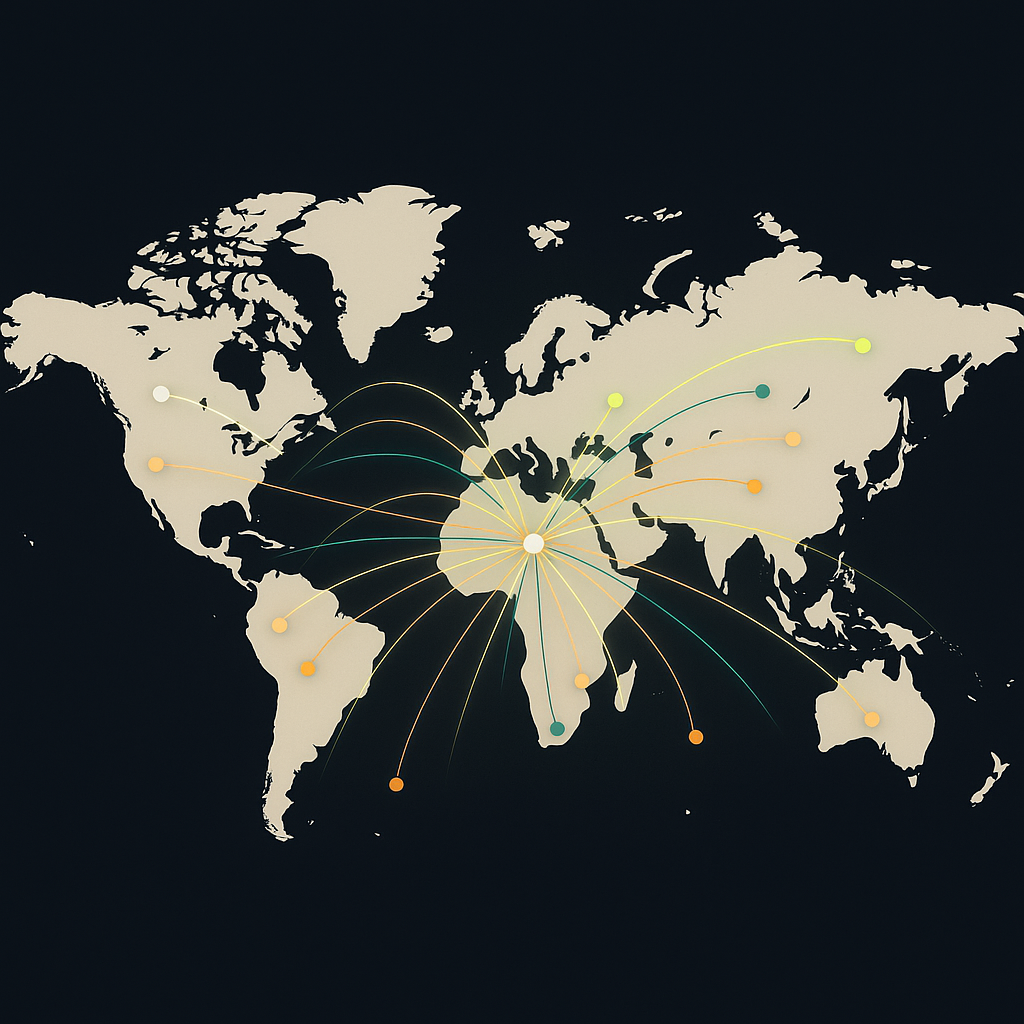
The Hidden Cost Sitting Inside Every Cross-Border Publisher Payment
Every time an ad network pays a publisher in a currency different from where that revenue was earned, money disappears. Not dramatically — there's no single moment of loss — but through accumulated spread, conversion fees, intermediary bank charges, and unfavorable settlement timing. At scale, across tens of thousands of publishers in dozens of markets, that leakage compounds into a significant drag on both publisher earnings and network unit economics.
This is the core problem behind multi-currency publisher payouts: not complexity for its own sake, but the concrete financial cost of routing global advertising revenue through payment infrastructure that wasn't designed for it.
This guide breaks down where FX leakage originates in ad network payment stacks, what a well-architected solution looks like, and what finance leaders should demand from any platform they put in the critical path between advertiser spend and publisher bank accounts.
Where FX Leakage Actually Originates
Most ad network finance teams can point to a wire fee line item. Far fewer have a clear view of the full cost picture. FX leakage in publisher payment workflows typically flows from four sources:
- Conversion spread at the point of disbursement. When a network holds all funds in a single base currency (often USD) and converts at the moment of payout, the publisher receives the wholesale rate minus whatever spread the payment provider captures. Spreads of 1–3% on individual transactions are common through traditional banking rails.
- Double conversion. A publisher in Brazil earning revenue from a European advertiser may see EUR converted to USD at the network level, then USD converted to BRL at payout. Each leg carries its own spread.
- Intermediary bank fees. SWIFT-routed international wires pass through correspondent banks that each clip a small fee — often opaque and variable — before funds reach the beneficiary.
- Settlement timing risk. When payouts are batched weekly or monthly, the network is exposed to rate movements between when revenue is recognized and when payments settle. That risk is either absorbed by the network or implicitly passed to publishers through conservative rate-setting.
Individually, each of these looks manageable. Aggregated across a publisher network of meaningful scale — say, 50,000 publishers across 80 countries — the total cost can represent several percentage points of total payout volume annually.
The Architecture of a Leakage-Free Payout Stack
Eliminating FX leakage isn't about finding a cheaper wire provider. It requires rethinking the entire flow of funds from advertiser billing through to publisher disbursement. The most effective architectures share a common set of principles.
Hold Revenue in Local Currency Closer to the Source
The fundamental shift is moving from a single-currency treasury model to a multi-currency one. Rather than consolidating all incoming advertiser payments into a USD (or EUR) pool and converting outward at payout, leading ad networks maintain balances in the currencies they actually pay out. This means holding GBP, BRL, MXN, INR, IDR, and whatever other currencies represent meaningful publisher populations — and funding those local balances from matched advertiser receipts wherever possible.
Global Accounts infrastructure makes this operationally tractable: the network can receive, hold, and disburse in 30+ currencies without opening local bank entities in each market. The result is that many publisher payments become domestic transfers in the publisher's own currency — eliminating the cross-border FX event entirely for that transaction.
Route Payments Across the Right Rail for Each Market
A SWIFT wire is the wrong tool for paying a publisher in Southeast Asia or Latin America. Local real-time rails — PIX in Brazil, UPI-linked payouts in India, Faster Payments in the UK, SPEI in Mexico — deliver funds in minutes at a fraction of the cost, and publishers receive payment in their local currency without going through a correspondent banking chain.
The operational challenge is that maintaining direct integrations with dozens of local rails is expensive and technically demanding. Payout automation platforms that abstract rail selection — automatically choosing the optimal rail for each publisher's location and currency — let ad networks achieve local-currency delivery at scale without building or maintaining that rail connectivity themselves. Payouts.com, for example, reaches publishers across 190+ countries on 100+ payment rails through a single API integration.
Lock Rates at Revenue Recognition, Not at Disbursement
One of the more sophisticated levers available to ad network treasury teams is decoupling FX rate capture from the payment execution event. When an advertiser pays in EUR for inventory that will ultimately be credited to a USD-denominated publisher, the network can lock in a conversion rate at the moment of revenue recognition rather than at the end of the billing cycle. This eliminates intra-period rate exposure and gives finance teams predictable publisher payout values without having to widen FX spreads as a buffer.
For a deeper look at how real-time treasury visibility enables this kind of rate management, see our guide on Real-Time Treasury Explained.
Automate Compliance Without Slowing Down Payments
Cross-border payments carry regulatory obligations: KYC/KYB on publisher entities, tax documentation (W-8/W-9 collection for US-sourced income, withholding calculations), sanctions screening, and local reporting requirements. Networks that handle this manually create bottlenecks — publishers get paid late because their tax forms are outstanding, or payments are held pending manual screening queues.
The right infrastructure embeds tax and compliance workflows directly into the publisher onboarding and payment flow, so documentation is collected before the first payment is ever attempted and screening happens in real time. This is especially important for networks paying publishers in jurisdictions with complex withholding regimes — Brazil, India, and South Korea each have distinct requirements that need to be handled at the payment level, not as an afterthought.
What This Looks Like in Practice: A Worked Example
Consider a mid-sized programmatic ad network with publisher partners across Western Europe, Southeast Asia, and Latin America. Under a legacy payment stack:
- All advertiser revenue pools into a USD account.
- Publisher payments are batched monthly via SWIFT.
- Each payment incurs a 1.5–2.5% FX spread plus correspondent bank fees averaging $15–25 per wire.
- Publishers in Brazil, Indonesia, and Mexico receive funds 3–5 business days after the payment is initiated.
Under a modern multi-currency architecture:
- EUR advertiser payments fund a EUR balance used to pay European publishers directly — no USD conversion event.
- Brazilian publishers receive BRL via PIX within minutes of payment batch execution.
- Indonesian publishers receive IDR via local bank transfer the same business day.
- FX conversions that do occur happen at institutional rates with transparent, flat-fee pricing — not opaque spreads.
- W-8BEN documentation is collected through a self-serve publisher portal at onboarding, so no payment is ever delayed by missing tax forms.
The difference isn't marginal. For a network disbursing $50M annually to international publishers, even a 1.5% reduction in blended FX cost represents $750,000 in recaptured value — money that can be passed to publishers to improve competitiveness, or retained to improve network margins.
Publisher Experience Is a Competitive Differentiator
It's worth naming something that pure treasury analysis sometimes obscures: publisher payment quality is a retention and acquisition lever. Publishers — particularly independent content creators, app developers, and smaller media properties — choose networks partly based on how well they get paid. Speed, currency, and fee transparency all factor into that calculus.
A publisher in Indonesia who receives IDR in their local bank account within 24 hours of payout has a materially better experience than one waiting five days for a USD wire they'll immediately have to convert at a retail FX rate. Networks that solve local-currency delivery at scale build a genuine moat. Those that don't will see publisher churn concentrate in exactly the markets they're trying to grow.
For networks that also work with content creators and influencer-style publisher partners, the same infrastructure considerations apply — see our breakdown of creator payouts at global scale for additional context on the operational patterns involved.
What to Evaluate in a Multi-Currency Payout Platform
When assessing infrastructure for global publisher payment currency management, ad network finance and engineering teams should evaluate:
- Currency and rail coverage. Does the platform support the specific currencies and local rails relevant to your publisher geography — not just the major ones?
- FX pricing transparency. Is the FX model a flat fee, a spread, or a hybrid? Can you see the rate applied to each transaction? Hidden spread is the primary source of leakage in most existing stacks.
- Multi-currency holding. Can you maintain balances in multiple currencies to fund local payouts without forced conversion?
- Compliance depth. Does the platform handle tax documentation collection, withholding logic, and sanctions screening — or does it push that to you?
- Publisher onboarding UX. A vendor portal that lets publishers self-onboard, submit banking details, and upload tax forms reduces operational overhead and payment delays significantly.
- API and integration quality. The platform should integrate cleanly with your ad server reporting layer and finance stack so payout batches can be generated and reconciled without manual intervention.
Conclusion: FX Leakage Is an Operational Choice, Not an Inevitability
Multi-currency publisher payouts are not inherently expensive or operationally complex. They become both when ad networks rely on infrastructure designed for simpler use cases and patch the gaps with manual processes and unfavorable FX arrangements. The leakage that results is real, measurable, and — with the right architecture — largely avoidable.
The networks winning publisher relationships in competitive global markets are the ones that have made local-currency delivery, transparent FX, and automated compliance a core part of their payment infrastructure rather than an afterthought. That's an operational bet worth making.
To see how Payouts.com enables ad networks to eliminate FX leakage and scale global publisher disbursements, visit the ad networks solution page or explore the Global Accounts product.
Published by Payouts.com. Editorial standards · Report a correction.
Discussion
31 commentsRelated resources

Creator Payouts: How Platforms Can Pay Millions of Creators Fast, Globally, and Compliantly
Paying creators at scale is one of the most operationally complex challenges in fintech today. Here's how modern platforms are solving it — from multi-currency rails to automated tax compliance.

Real-Time Treasury Explained: How Finance Teams Are Rethinking Liquidity in Motion
Real-time treasury moves beyond batch reporting and end-of-day snapshots, giving CFOs and controllers a live, actionable picture of every dollar in motion. This guide explains the mechanics, the operational payoff, and what it takes to build it.
Run your entire money cycle on one ledger
Global payouts, AP/AR automation, and AI agents with their own wallets and spend limits.
Get started
The settlement timing risk is real but I'd argue it cuts both ways. We've had quarters where batching payments monthly actually saved us money because rates moved favorably. Obviously not a strategy you can rely on but the exposure isn't purely downside.
I like the framework here but the assumption that you can match advertiser receipts to publisher payouts by currency only works if your network has geographic balance. We're heavy on APAC publishers but most advertisers pay USD.
One thing missing here is the reconciliation nightmare. We tried holding 12 currencies simultaneously and our accounting team nearly revolted because month-end close went from 3 days to 8 days. You need serious automation on the back end or this creates more problems than it solves.
"Money disappears. Not dramatically — there's no single moment of loss" - this is exactly why we didn't catch our FX leakage problem for 18 months. It only showed up when we ran a full waterfall analysis from advertiser payment to publisher receipt. Brutal wake-up call.
Same experience here. Finance only saw the top-line payout number. It took our ops team actually surveying publishers on what they received net to realize we were leaking 4%+ in some markets. Now we track end-to-end delivery as a KPI.
The piece about conversion spread of 1-3% is conservative in my experience. We've seen spreads north of 4% on some emerging market currencies when using traditional banking partners, especially for smaller transaction sizes.
The SWIFT correspondent bank fee section is spot on. We had a publisher in Nigeria receive $1,200 from a $1,500 payout and it took us three weeks to even trace where the $300 went. Completely eroded trust with that partner.
Question on the compliance automation piece - are most platforms actually handling the withholding calculations accurately across jurisdictions, or is that still something finance needs to validate manually? We got burned by a provider that botched treaty rate applications.
We're still doing everything out of a USD master account and I can feel this article judging me. The challenge for us isn't understanding the problem, it's getting budget approval to rebuild treasury ops when current system 'works.'
This is solid but I'd add that the business case gets much stronger when you factor in publisher churn from payment friction. We lost several high-value publishers in Indonesia before we finally got local bank transfers working properly.
The correspondent bank fee opacity is maddening. We had cases where publishers in certain African markets were losing $45-60 on a $500 payment and we couldn't even get itemized explanations from the intermediary banks.
We see the same thing in certain corridors. The real problem is those fees get deducted silently downstream so the publisher just sees a net amount that's way lower than expected. Switching to local rails where available cut those intermediary hops entirely.
Does anyone have experience with networks that pass FX costs directly to publishers vs absorbing them? We're considering a model where publishers can choose their payout currency and we apply a transparent conversion fee, but I'm worried about the perception issue even if the all-in cost is lower.
The local rails point is absolutely critical and underappreciated. We integrated PIX for Brazil last year and publisher satisfaction scores jumped 20+ points just from same-day settlement. The cost savings were honestly secondary to the relationship benefit.
Exactly this. The NPS impact was bigger than the margin improvement for us. Publishers started referring other creators because we were the network that actually paid fast and reliably.
Completely agree on the relationship aspect. Publishers don't think in basis points, they think in "I got paid today vs next week." The speed and predictability matter more than we initially expected when we built the business case.
curious how networks are thinking about currency concentration limits in this model. holding 30+ currencies creates its own treasury risk if you're not actively managing exposure
I'd be interested to see the math on when it makes sense to take on FX exposure yourself vs paying for someone else to manage it. At some scale the spreads you save probably justify hiring dedicated treasury staff, but where's that crossover point?
We moved to this model 8 months ago and the hardest part wasn't the tech stack, it was convincing treasury to hold balances in 15+ currencies instead of sweeping everything to USD daily. The mental shift from "cash concentration" to "strategic currency positioning" took real executive sponsorship.
Does the rate lock strategy actually eliminate risk or just shift it? If you're locking at revenue recognition but not converting until payout, someone is still holding that exposure, probably your treasury provider pricing it into their fee structure.
what's the minimum scale where this architecture makes sense? we're at about 3,000 publishers across maybe 15 countries and I'm trying to figure out if we're big enough to justify the operational overhead of multi-currency treasury
I'm curious about the rate lock mechanism at revenue recognition. Does this require you to pre-fund your local currency accounts based on projected payouts, or can you execute the conversion lazily as long as the rate is locked? We've looked at this but our treasury team pushes back on liquidity management complexity.
We use a hybrid approach - lock the rate via a forward contract but don't fully pre-fund, just maintain minimum balances per currency based on 2-week rolling projections. Gives treasury some flexibility while protecting margin.
You can lock the rate without immediate conversion - most modern FX platforms let you reserve a rate with a commitment to execute within a window (24-72 hours typically). Your treasury team would still need some buffer in the target currency for timing, but you're not pre-funding the full amount at lock. The tradeoff is you're taking on credit risk with the FX provider during that window.
The article glosses over one major operational headache: how do you forecast liquidity needs per currency when publisher payment behavior is inconsistent? We've had months where our MXN balance sat idle while we were short BRL and had to do emergency conversions anyway.
We built a simple ML model that forecasts payout volume by currency based on historical patterns plus upcoming payment schedules. Not perfect but gets us within 15% most months, which is good enough to avoid panic conversions.
The double conversion problem hit us hard last year - we were burning about 2.8% on EUR->USD->INR flows before we realized how much was leaking out. Switched to holding INR directly and the savings paid for the treasury platform upgrade in four months.
How do you handle the tax compliance piece when you're disbursing from multiple currency accounts? We've been hesitant to move away from USD-only payouts because our tax team is worried about withholding calculations and reporting across different jurisdictions.
The timing on this article is perfect. We're literally in the middle of an RFP process for exactly this problem and our current providers keep pointing to their wire fee schedule like that's the only cost that matters.
One question on holding multi-currency balances: how are you all handling month-end reporting when you've got 20+ currency positions fluctuating? Our auditors already complain about FX revaluation complexity with just three currencies.
Honestly the biggest win for us wasn't FX savings, it was cutting payment failures. When we moved to local rails for top markets our failed payment rate dropped from 8% to under 1%. The operational cost of chasing down failed wires was massive.