

Shopee Affiliate Payout: Country Rules and Payment Holds
Shopee affiliate commissions are not available cash until validation, payment eligibility, and settlement are complete. This guide explains which country-specific rules to check and how to investigate a missing payout.
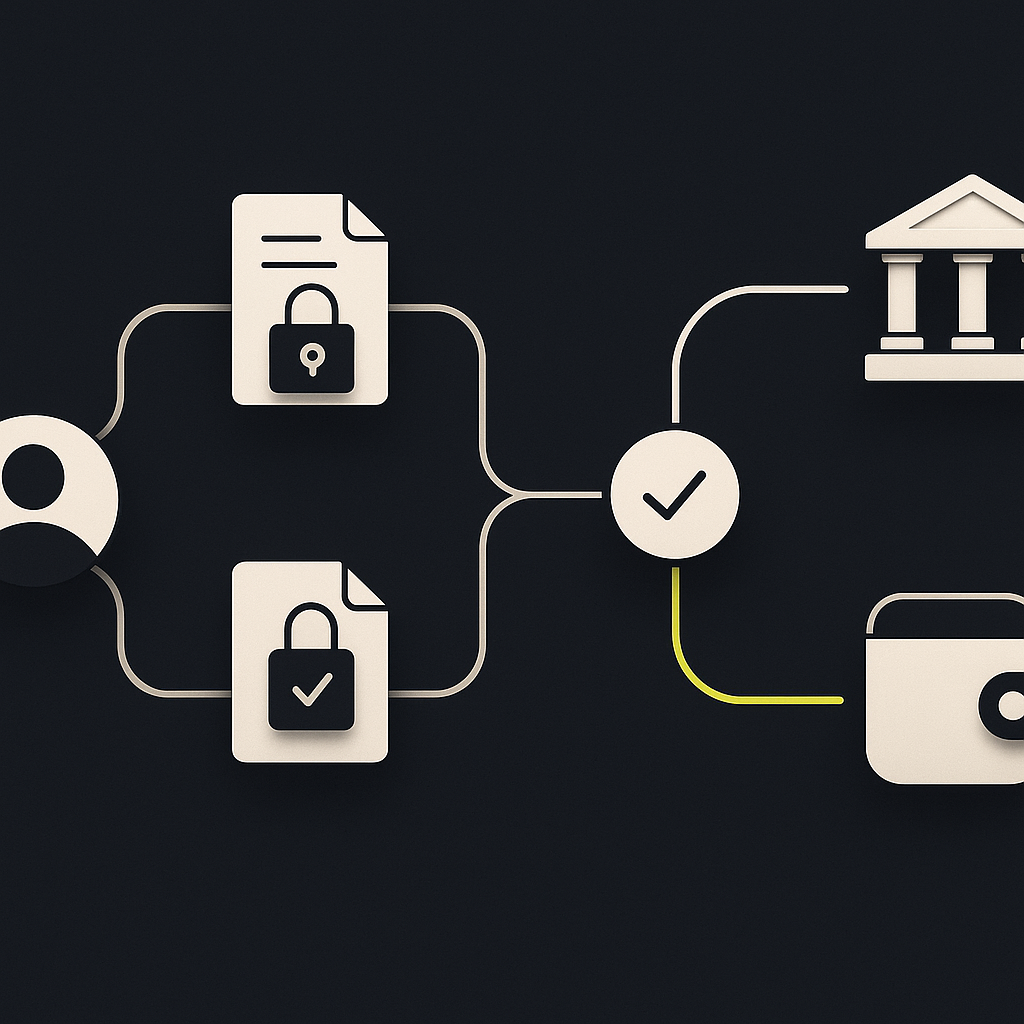
A Shopee affiliate payout is the payment of eligible, approved commissions through the payment method supported by your local affiliate program. There is no single payout date, minimum balance, or withdrawal method that can safely be applied across all Shopee markets. Check your country’s affiliate dashboard and terms for the applicable threshold, payment cycle, and payment-and-tax requirements.
If a payout is missing, first establish whether the commission is still awaiting approval, approved but not yet payable, or already released for payment. Those are different problems with different next steps.
For agencies and finance teams managing creators across Southeast Asia, the practical challenge is keeping these local rules separate while maintaining a consistent record of expected and received cash.
How Shopee affiliate commissions become a payout
A tracked sale is not the same as an approved commission, and an approved commission is not the same as money credited to an account. Use the following stages as an operational model—not as a claim that every Shopee dashboard uses these exact labels.
| Stage | What it establishes | What to check |
|---|---|---|
| Tracked or estimated | A potential commission exists | Order reference and attribution |
| Validated or approved | The commission passed applicable checks | Final amount and adjustments |
| Eligible for payment | Release requirements are satisfied | Minimum balance, documents, payment cycle |
| Released | A payment has been initiated | Payment reference and destination |
| Credited | The destination received the funds | Bank or wallet transaction record |
Returns, cancellations, eligibility checks, and adjustments can affect the amount that progresses through this process. For Philippine accounts, the Shopee Affiliate Program terms are the relevant starting point for commission eligibility and provisions allowing payment exclusions, set-offs, or recovery of previously paid amounts. Do not assume those terms govern an account enrolled in another country.
The key cash-management distinction is simple: forecast estimated earnings separately from approved amounts and actual receipts. Otherwise, an agency may commit to creator payments using income that is still subject to adjustment.
When does Shopee pay affiliates?
The answer depends on the local program and the event that starts its payment clock. A date calculated from an order, commission approval, invoice receipt, or payment release can mean something very different.
For example, the Malaysian affiliate terms provide for validation and approval of fees and payment within sixty days of receipt of the affiliate’s invoice. That is not a promise of payment sixty days after a shopper places an order, nor should it be applied to other Shopee markets.
For Singapore, consult Shopee’s dedicated Affiliate Commissions Payout guidance alongside the information displayed in your account. Singapore guidance should not be used to establish a Malaysian or Philippine payment date.
Third-party guides circulate monthly payment windows and country-level minimums, but the available summaries conflict on some thresholds. Rather than publish an unreliable regional timetable, use this verification checklist:
- Market and program: Confirm the country and whether the account belongs to the affiliate program rather than a seller program.
- Trigger: Identify whether timing begins with approval, an invoice, a request, or a scheduled cycle.
- Minimum payout: Confirm the current amount, currency, and which balance counts toward it.
- Release conditions: Check payment details, tax information, and any required invoice or receipt.
- Settlement: Distinguish the platform’s release date from the receiving institution’s credit date.
A fast payment rail only helps after the money is released. For the broader distinction, see our guide to building reliable payout settlement estimates.
Payment methods and documents: verify the local account
Do not confuse affiliate payouts with seller withdrawals
Shopee seller proceeds and affiliate commissions are different payment flows. A bank or payment-provider option described in Seller Centre does not establish that an affiliate account can use it.
Likewise, do not assume that a wallet mentioned in another market’s tutorial is available to your account. Check the payment destinations offered in the local affiliate interface and whether payment is scheduled automatically or requires an action. Avoid following a withdrawal tutorial until you have confirmed that it covers the same country and program.
Complete payment and tax setup before forecasting a receipt
Shopee Malaysia’s payment and tax information guide describes the local submission process. Depending on the applicant’s status, relevant documents may include identity documents, a bank statement header, a certificate of residence, or business registration and tax documentation. These are Malaysian examples, not a universal document list.
Check the legal payee name, account ownership, bank details, tax status, and document validity together. An uploaded document is not necessarily an accepted document; retain the confirmation or status showing that setup is complete.
Withholding also requires jurisdiction-specific treatment. Do not calculate a deduction from a general affiliate blog or assume that withholding settles every tax obligation. Reconcile the actual deduction to the statement and obtain local tax advice where needed.
Why is a Shopee affiliate payout missing or smaller?
Start with the last confirmed stage, rather than treating every issue as a bank delay.
- Estimated earnings have not become approved commissions: Review order outcomes, eligibility, and adjustments. A receiving bank cannot investigate money that has not been released.
- Approved commissions remain unpaid: Check the applicable minimum, payment cycle, accepted payment-and-tax information, and any required invoice.
- A payment is marked as released but has not arrived: Obtain the release date, reference, amount, currency, and masked destination. Confirm that these match the intended account.
- The credited amount is lower: Compare approved commission, adjustments, withholding, and any separately evidenced payment or conversion charges. Do not classify every difference as an FX fee.
- A commission has been reversed: Request the order-level reason and applicable policy. A reversal requires an eligibility investigation, not another withdrawal request.
Do not diagnose fraud from anecdotes about shared addresses or Wi-Fi. Ask for the actual reason attached to the affected commission and follow the local review process.
Build a support-ready evidence packet
Include the affiliate account identifier, enrolled market, affected earning period, relevant order or commission references, current status, and payment reference if one exists. State the problem precisely: “approved balance not released” is more actionable than “Shopee did not pay.”
Use official support channels. Redact unrelated transactions and unnecessary personal data from screenshots, and never provide passwords or one-time security codes.
For agencies: separate Shopee receipts from creator obligations
Hypothetical example: An agency manages creators enrolled in different Shopee markets. One account shows estimated commissions, another shows approved commissions, and a third shows a released payment. Combining all three as available cash would overstate liquidity.
Maintain a market-specific receipt register containing the legal recipient, currency, earning period, approved amount, adjustments, payment requirements, release reference, and credited amount. Record the effective date of each payout rule so changes do not silently alter historical forecasts.
Keep any agency-to-creator obligation separate. The agency’s contract determines when it owes the creator; Shopee’s payment status does not automatically change that obligation. If the agency pays before receiving funds, that is a funding decision, not evidence that Shopee has settled.
For teams operating their own onward payment flows, structured creator payment onboarding helps collect recipient details before payment is due. A payout platform can support that separate workflow, but it cannot override Shopee’s commission approval or release rules.
The next step: verify the rule, then trace the payment
To resolve a Shopee affiliate payout question, confirm the country and program, identify the commission’s current stage, verify the local release requirements, and reconcile the eventual receipt. This prevents estimated earnings, approved balances, and bank cash from being treated as interchangeable.
If your business also pays affiliates or creators internationally, explore Payouts.com’s affiliate payment solutions for your own disbursement operation. Start with clear payment obligations and verified recipient data—not an assumption that an upstream commission balance is already cash.
Created with AI assistance. Sources are linked in the article; this content is general information, not legal, tax, or financial advice.
Discussion
30 commentsRelated resources

Creator Payment Onboarding Portal: How to Build a Self-Serve Flow That Collects Tax Docs, KYC, and Payout Preferences Before Day One
A poorly designed creator onboarding flow creates compliance gaps, delayed payouts, and frustrated talent. Here's a practical blueprint for building a self-serve portal that gets tax documentation, identity verification, and payout preferences locked in before Day One.
Payout Settlement Times by Country: Build Reliable Payment ETAs
An instant domestic rail does not make an international payout instant. Use this country reference and operating framework to set payment ETAs that account for funding, calendars, and recipient-bank availability.
Contractor Payment Terms: From Contract to Cross-Border Credit
Net 30 is only part of the agreement. Learn how to define contractor payment terms that connect invoice acceptance, currency, fees, and payment completion across borders.
Run your entire money cycle on one ledger
Global payouts, AP/AR automation, and AI agents with their own wallets and spend limits.
Get started
The practical implication of 'a fast payment rail only helps after the money is released' is something treasury teams still don't internalize. We've seen FP&A build cash forecasts assuming T+1 settlement when the platform hasn't even released funds yet, then wonder why actuals miss by weeks.
We've started splitting our variance reports into two line items: platform hold period and settlement lag. That way FP&A can see where the miss originated instead of just blaming the bank every time.
We've started separating platform release SLA from bank settlement SLA in our variance reports. Helps the FP&A conversation when you can show that 14 of the 18 day delay was pre-release, not a banking issue.
The 'withholding does not settle every tax obligation' line deserves its own section. We've had two SG-based affiliates assume platform withholding was final, then scramble when their accountant flagged underreported income at filing. Local advisory is not optional if you're above petty cash threshold.
We now flag accounts for tax review at the point they cross the local threshold, not at year-end. The SG situation you describe is common enough that we treat it as a compliance checkpoint in onboarding, especially since some affiliates are sole props who've never dealt with withholding before.
Same situation. We now require local tax counsel sign-off for any affiliate over SGD 10k annual—platform withholding is just a credit, not a clearance. The scramble at year-end is worse than the advisory cost.
The note about not confusing seller withdrawals with affiliate commissions is spot on. We wasted two weeks trying to use a GrabPay option that was only available in Seller Centre, not the affiliate program, and the documentation didn't make that separation clear at all.
We hit the exact same thing in Malaysia, except ours was a bank transfer option shown in seller documentation that wasn't supported for affiliate payouts. The affiliate dashboard only offered one wallet provider, but nowhere in the UI did it say 'these are your only options'—you had to figure that out by trial and error.
We hit the exact same thing in Malaysia, except ours was a bank transfer option shown in seller docs that turned out to be unavailable in the affiliate program. The documentation silos are a real problem when you're trying to onboard quickly.
The Malaysia 60-day clock starting from invoice receipt is a problem if you're batching invoices monthly because you're effectively adding 30 days to the cycle yourself. We switched to submitting within 48 hours of approval and it helped, but now tracking which invoice corresponds to which batch of commissions is its own reconciliation headache.
We solved the reconciliation side by adding the invoice submission timestamp to our tracking sheet and matching it against the dashboard approval date. It's manual but at least we know which 60-day window applies to which batch without having to dig through email confirmations.
We ran into the same invoice lag issue and solved it the same way, but now the reconciliation problem is matching creator-level payment records to the combined invoice reference that Shopee returns. Ended up tagging each invoice line with the approval batch ID so we can trace backward when a payout arrives short.
The checklist format for verification (market, trigger, minimum, release conditions, settlement) is extremely useful for SOPs. We rolled it into our onboarding doc for new finance ops hires who handle regional creator payments and it's already reduced the number of Slack questions about why a payout hasn't landed yet.
We did something similar but had to add one more column to the checklist: currency of payout vs currency the affiliate expects. Sounds basic but we had two cases where the dashboard released in local currency and the affiliate's downstream creator contracts were denominated in USD, so the FX movement between approval and settlement became their problem to explain.
We added a second checklist for currency and local withholding variance since the base checklist assumes the platform's default behavior matches reality. In practice, the currency deposited sometimes doesn't match what the dashboard displays, especially for cross-border invoices.
The staged cash-management model is helpful, but we've found that the 'approved' to 'eligible' transition is where the longest variance sits in our SG and MY portfolios. The dashboard shows approval, creators expect payment, but release still waits on batch cycle timing that isn't surfaced anywhere in the UI. We've started logging approval timestamps manually to measure that gap and it's averaging 12-18 days depending on month-end proximity.
We solved this by adding a manual flag in our tracking sheet for 'batch cycle estimated release date' based on prior months. Not automated, but at least creators now get a range instead of expecting it the day after approval shows up.
We treat the approved-to-eligible window as a reconciliation line item now, with a default 14-day buffer for SG and 21 for MY based on observed cycles. It doesn't eliminate the variance but at least we can explain it to creators without saying 'the platform doesn't tell us.'
The staged model (tracked > validated > eligible > released > credited) is a really clean framework for handling creator liability accruals. We were booking commission expense on the tracked amount and ended up with a material difference after returns and validations, especially in months with heavy promo activity. Now we only accrue on approved balances and flag anything still in validation separately.
We had the same problem until we moved expense recognition to 'validated' instead of tracked. Still gives us enough lead time for cash planning but eliminates most of the adjustment noise from cancellations and fraud flags.
We moved to booking only on 'eligible' status and treat everything upstream as contingent. Still required a reversal accrual process for clawbacks, but the variance dropped by about 80% quarter over quarter.
Would be useful to know if the 60-day Malaysian invoice cycle actually starts when they receive it or when they process it internally. We've seen variance of 5-7 days just on receipt acknowledgment, which matters a lot when you're trying to close a monthly book with affiliate revenue across four markets.
Same issue. We switched to treating Malaysian affiliate revenue as recognized only when the payment is actually released, not when the invoice is submitted. Receipt acknowledgment is essentially a black box and the 60-day clock assumption breaks reconciliation if you're consolidating monthly.
We treat receipt as the date stamped in the affiliate portal notification, not email or internal queue movement. If your contract says "receipt of invoice" and you're seeing 5-7 day gaps, document those timestamps and escalate for a written clarification on what constitutes receipt. Otherwise you're accruing based on a variable you don't control.
The withholding piece is understated here. We manage affiliate income for about 40 creators across SG, MY, and PH and the tax treatment is completely different in each jurisdiction—not just rates but whether it's even withheld at source or expected via self-assessment.
Same experience. In PH it's supposedly withheld but we've seen cases where the statement amount didn't match the expected rate, and there's zero documentation in the dashboard to support a foreign tax credit claim. SG is cleaner but you still need to track the gross if you're consolidating.
Exactly. We had a PH account where the affiliate thought withholding settled their tax liability, then got flagged during BIR filing because self-assessment was still required. The article is right to say get local advice but doesn't emphasize how painful it is when you assume the platform handled it.
The distinction between "approved" and "released" saved us about three hours of back-and-forth with our bank last quarter. Our finance team was chasing a wire that hadn't even left Shopee yet because we were looking at the wrong dashboard column.
We had the same issue with a Thai affiliate account. The dashboard showed 'pending payment' but when we called it in, nothing had been sent yet because the minimum wasn't actually met after a return adjustment. Now we export both columns before opening any bank ticket.
We built a simple status check into our weekly reconciliation after a similar issue. Now we log the column header and timestamp when we mark something as expected cash, not just the amount. Saves the explanation when someone asks why a forecast didn't hit.