

ACH Wire Payment: Which Transfer Do You Actually Need?
An “ACH wire payment” is not a separate payment method. Learn how to distinguish ACH from wires, collect the right banking instructions, and change payment methods without creating duplicate payouts.
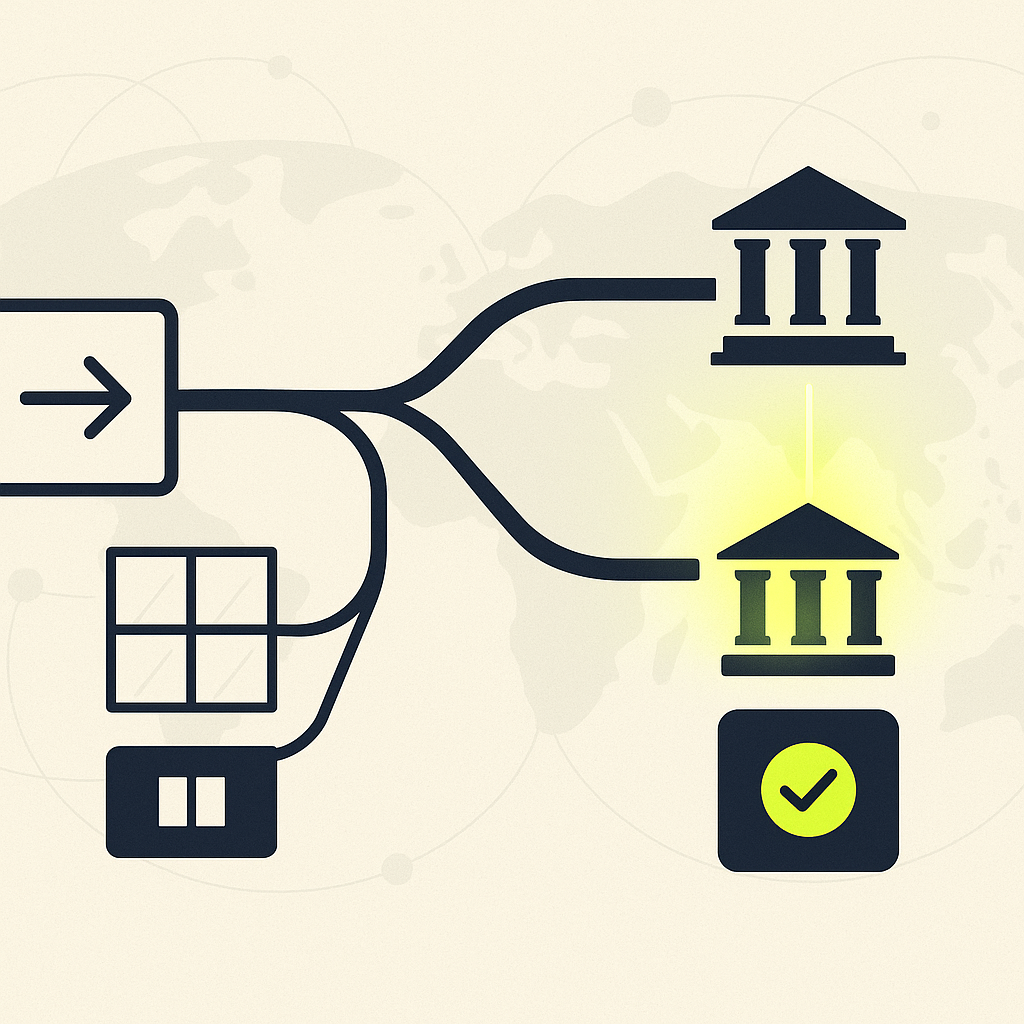
An “ACH wire payment” is not a distinct payment type: ACH transfers and wire transfers use different banking rails. ACH generally suits scheduled, lower-cost U.S. bank payouts. Wires generally suit urgent or high-value transfers and international payments where the receiving account or currency requires them. The right choice depends on the recipient’s banking instructions, deadline, currency, and your provider’s capabilities.
If a vendor asks for an “ACH wire,” clarify which method they mean before releasing funds. A valid account number alone does not establish that the accompanying routing instructions work for both.
For finance teams managing international payout batches, that distinction should live in the beneficiary record—not in an email someone must interpret on payment day.
ACH versus wire: what actually changes?
ACH moves payment entries through the U.S. Automated Clearing House network in scheduled processing windows. For vendor and contractor payouts, the relevant transaction is usually an ACH credit: the payer pushes funds to the recipient. ACH debits, which pull funds under an authorization, have different operational and dispute considerations.
Wires use bank payment systems rather than ACH processing windows. U.S. domestic wires commonly use Fedwire. International wires may involve correspondent banks and SWIFT messages; SWIFT carries payment instructions rather than acting as a universal settlement ledger.
As Stripe’s ACH and wire comparison explains, ACH generally trades lower cost for scheduled processing, while wires typically offer faster domestic delivery at a higher price. Neither label alone guarantees when an overseas beneficiary can use the funds.
| Factor | ACH credit | Wire transfer | Editorial guidance |
|---|---|---|---|
| Best for | Scheduled U.S. payouts | Urgent, high-value, or supported international transfers | Choose against the recipient’s deadline |
| Processing | Scheduled clearing windows | Wire-system and bank operating hours | Check the provider’s submission cutoff |
| Cost | Generally lower | Generally higher; additional fees possible | Compare total delivered cost |
| Bank details | ACH-enabled U.S. routing details | Domestic or international wire instructions | Do not assume interchangeability |
| Recovery | Rule-bound returns and reversals | Recall requests; recovery uncertain | Validate before release |
| International reach | U.S. rail; cross-border arrangements vary | Broad reach, subject to bank support | Confirm destination and currency eligibility |
Collect instructions for the rail, not just the bank account
A beneficiary can have different ACH and wire routing numbers at the same bank. International wire instructions may also specify an intermediary bank. Treat each instruction set as a supported payment method attached to the beneficiary, rather than maintaining one generic “bank details” field.
For a U.S. ACH credit
- Collect the account holder’s name, account number, account type, and ACH routing number.
- Confirm that the account can receive the intended ACH credit.
- Record verification status and any restrictions associated with the receiving account.
For a domestic or international wire
- Obtain wire-specific routing instructions and the beneficiary’s legal name and account identifier.
- For international payments, collect the applicable IBAN or local account number, bank identifier such as a BIC/SWIFT code, and any required beneficiary address.
- Capture intermediary-bank details, payment-purpose information, and local identifiers when required by the destination or provider.
- Confirm the currency the account accepts and whether conversion will occur.
These are starting points, not a universal country schema. An IBAN is not used everywhere, and a BIC does not replace every domestic clearing identifier. Make fields conditional on country, currency, and rail.
A structured vendor onboarding portal can help centralize instruction collection. Keep the original submission, subsequent changes, and verification evidence available to the payment approver. A formatting check can identify an invalid identifier; it does not prove account ownership.
Compare deadlines and delivered cost—not headline speed
Work backward from usable funds
Ask when the recipient needs the money available, then check approval time, funding readiness, provider cutoff, settlement schedule, and receiving-bank processing. “Submitted today” and “available today” are different commitments.
Same Day ACH can be appropriate for eligible urgent U.S. credits, but it is not an always-on payment service. As of September 30, 2026, its per-payment limit is $1 million. Nacha’s rule-change schedule sets an increase to $10 million for September 17, 2027; that higher limit is not yet effective. Your bank or provider may impose lower limits.
A domestic wire can be a useful escalation when ACH timing does not fit. An international wire, however, can still encounter correspondent-bank processing, compliance checks, and destination holidays. Obtain a corridor-specific estimate rather than applying a domestic-wire promise globally.
Price the beneficiary outcome
For international payments, compare the sender’s debit with the amount and currency expected to reach the beneficiary. Include:
- The outgoing payment fee and any receiving or intermediary deductions.
- The FX rate and any conversion margin.
- Charges for investigations, amendments, or returns.
- The operational cost of exceptions and short-paid invoices.
A low transfer fee is not necessarily a low-cost payment if conversion or deductions leave the invoice unpaid.
Where “international ACH” fits—and where it does not
Global ACH is not one worldwide extension of the U.S. ACH network. Providers often use the term for services that deliver through destination-country bank clearing systems. Coverage, currencies, required data, and timelines depend on the service.
U.S. Bank’s comparison of international ACH and wires illustrates why currency requirements and destination coverage matter: a local-currency clearing option and a wire delivering foreign currency are not interchangeable products. Verify the actual service offered rather than treating one provider’s limitations as universal rules.
Also distinguish a commercial “global ACH” label from an International ACH Transaction, or IAT. IAT is a U.S. ACH classification for qualifying transactions involving a foreign financial agency, with specific data requirements. Recipient nationality alone does not determine the classification. Ask the originating bank or provider to confirm the appropriate treatment.
Do not confuse recovery options with cancellation rights
ACH is sometimes described as reversible and wires as irreversible. That shorthand is unsafe for business payout decisions.
ACH reversals are permitted only for defined errors under applicable rules and deadlines. Returns follow their own rules, and consumer debit protections should not be assumed to apply to business-originated vendor credits. ACH is not a general-purpose “undo” mechanism.
Once a wire has settled, the sender generally cannot unilaterally cancel it. A bank may request a recall or recovery, but success depends on the circumstances and receiving institutions. For either rail, report a suspected mistake or fraud immediately.
Before release, independently verify changed bank instructions using a trusted contact channel. Separate beneficiary maintenance from payment approval, and apply additional scrutiny to urgent requests that combine new bank details with pressure to bypass controls. Configure payment approval policies around those risk signals, not just the transfer amount.
A safe checklist for switching from ACH to wire
The most dangerous escalation is sending a wire while an ACH credit is still in flight. A pending payment is not necessarily a failed payment. Use this checklist before changing rails:
- Identify the original obligation. Link the invoice or approved payable to every associated payment attempt.
- Establish the ACH status. Distinguish internal approval, provider acceptance, network submission, settlement, and return. Do not infer cancellation from a missing bank debit.
- Confirm whether cancellation remains possible. Obtain evidence of cancellation or return before replacement. If uncertainty remains, escalate the duplicate-payment exposure explicitly.
- Validate wire instructions separately. Never copy the ACH routing number into a wire form without confirmation.
- Reapprove changed terms. Review additional fees, FX, funding, timing, and any beneficiary-detail change.
- Link and reconcile both attempts. Retain the original ACH reference and replacement wire reference. Monitor for a late settlement or return.
Hypothetical example: A contractor requests a wire because an ACH payment has not appeared. The provider confirms that the ACH credit was submitted but cannot confirm cancellation. The safe default is to investigate rather than automatically resend. If the business authorizes a replacement despite uncertainty, record the exposure and assign responsibility for resolving a potential double payment.
For the wider exception workflow, see the failed-payment recovery guide.
Make the payment method an explicit release decision
The useful answer to “ACH or wire?” is a verified instruction set, a credible availability estimate, and a documented recovery path. Standardize those inputs before automating release.
Start by auditing beneficiary records for ambiguous payment labels and missing rail-specific details. Then evaluate how Payouts.com’s payout automation can fit your payment workflow. Automation should execute an approved choice—not guess what “ACH wire payment” meant.
Created with AI assistance. Sources are linked in the article; this content is general information, not legal, tax, or financial advice.
Discussion
35 commentsRelated resources

Multi Currency Payouts: A Failed-Payment Recovery Guide
A returned cross-border payment is not simply the original transaction in reverse. Learn how to preserve the recipient’s currency entitlement, manage FX differences, and retry payments without creating duplicates.

Payment Fraud Prevention: Close the Gaps in Global Payouts
Global payout fraud exploits gaps between identity checks, destination verification, and payment rails. Build a prevention policy around the evidence available in each corridor—not a universal risk score.

Payment Operations Manager: Role, Authority, and Global Payout KPIs
A payment operations manager owns the execution and control of payments, not just the processing queue. For global payouts, success depends on clear authority over releases, exceptions, provider performance, and operational change.
Run your entire money cycle on one ledger
Global payouts, AP/AR automation, and AI agents with their own wallets and spend limits.
Get started
The recommendation to treat each instruction set as a separate payment method attached to the beneficiary rather than a generic bank details field is spot-on, but implementing it is harder than it sounds when you're working with legacy ERP systems that weren't designed with multiple routing instructions per vendor in mind.
We hit this too. Ended up creating a bridging layer that pulls multiple instruction sets from a custom table and exposes them to the ERP as virtual beneficiary records with suffixes like -ACH and -WIRE. Not elegant but it lets AP select the right rail without touching core vendor master schema.
We ran into the same problem and ended up building a normalized vendor payment methods table that sits outside the ERP but syncs back enriched routing data at payment execution time. Not elegant, but it let us maintain multiple rails per vendor without forcing our ancient AP module to understand the difference.
The distinction between account verification (formatting check) versus ownership verification is critical and something our AP team was conflating until recently. We were auto-approving payouts based on a routing number validation API when we should have been requiring micro-deposit confirmation or bank letter attestation for new vendors.
We hit the same issue and ended up implementing a small-value test payment workflow for new beneficiaries. The article's point about keeping verification evidence available to the payment approver really matters when you need to audit why a beneficiary was trusted in the first place.
We hit the same issue and ended up implementing a small-value test payment workflow for new international beneficiaries. The micro-deposit approach works fine domestically but gets expensive and slow for cross-border. Now we send a $1 test wire, require the vendor to confirm receipt and the exact amount landed, then unlock the beneficiary for production payments.
The point about collecting separate instruction sets per rail rather than one generic bank details field is something we learned the hard way after a vendor gave us their wire routing number and we tried pushing an ACH through it—took three days to figure out why it bounced and by then we'd missed the invoice discount window.
We had a similar bounce situation but with international wires where the vendor gave us their regular account number instead of the IBAN format their bank actually needed for inbound SWIFT. Now we make vendors upload a screenshot or PDF from their banking portal showing the exact instructions for the rail they're requesting.
We had the exact same issue. Now our AP system won't let you submit a payment until you explicitly select ACH or wire in the UI, and it only shows the routing number tagged for that rail. Forced structured data entry instead of relying on whoever copied the vendor's email into a notes field.
The Same Day ACH limit detail is really useful—we've been assuming the $10 million threshold was already in effect, but you're right that it doesn't kick in until September 2027. That's going to create some awkward conversations with vendors who want to move large payments urgently between now and then.
Same here. We're documenting the 2026 and 2027 thresholds in our payment policy now so AP doesn't promise same-day for large amounts until the limit actually changes. The one-year gap is longer than I expected.
The section on collecting wire-specific routing versus ACH routing really hit home—we had a vendor give us their wire routing number and then got upset when we sent an ACH payment using it, which bounced back three days later. Now we explicitly ask which rail they want and collect instructions separately, but it's wild how many finance teams still think one routing number works for everything.
Same issue here. We ended up locking down beneficiary edits so only treasury can change the routing fields after initial setup. AP can update contact info and payment terms but touching bank details requires a fresh W-9 and signed instruction form.
We now require vendors to complete a payment method questionnaire during onboarding—checkboxes for ACH, domestic wire, international wire, each with its own instruction section. It's added maybe two minutes to the process but has eliminated almost all of those day-of-payment clarification emails.
The point about "submitted today" versus "available today" being different commitments is something we should probably print out and tape to every AP desk. We've had too many vendor calls where someone promised same-day funds based on when they clicked the button, not when the beneficiary's bank actually clears it.
We added a required field in our approval workflow that forces the submitter to estimate actual beneficiary receipt date based on corridor and rail. It slows things down by maybe thirty seconds but has completely eliminated the 'I sent it Friday, why didn't they get it Monday' tickets.
We solved this by changing the approval screen to show estimated availability date instead of submission date. It forces the person releasing the payment to confirm they actually looked at the cutoff and settlement schedule, not just whether the button works today.
The advice to work backward from usable funds instead of submission time is probably the single most useful thing in here. We've had vendors complain about late payment when we actually sent the wire two days early—turned out their bank in Singapore was closed for a holiday and then held it for compliance review.
We started asking vendors for their bank's operating calendar upfront, especially in APAC. Doesn't catch everything but at least flags the obvious lunar new year and golden week windows before we commit to a delivery date.
We started asking vendors for their bank's operating calendar upfront, especially in APAC. Doesn't catch everything but at least we can route around Lunar New Year and the big ones without waiting for a complaint.
The bit about intermediary banks and how SWIFT carries instructions rather than settling is something I wish our AP team understood before they started asking why wire fees vary so much by destination. We've been treating all international wires as equivalent when pricing, and it's causing real problems when we get correspondent deductions that weren't in the original quote.
We had the exact same learning curve. The article's point about pricing the beneficiary outcome instead of just sender fees forced us to build a corridor-specific cost model. Turns out our EUR and GBP wires were fine but anything routed through two correspondent banks was eating 3-4% in hidden deductions.
We had the exact same learning curve. The article's point about pricing the beneficiary outcome instead of just the outgoing fee finally got our procurement team to stop pushing the cheapest wire option. Now we track full delivered cost by corridor and it's completely changed which providers we use for which regions.
The table comparing ACH credit versus wire transfer is helpful, but I'd push back slightly on the international reach row—describing ACH as 'U.S. rail; cross-border arrangements vary' undersells how opaque those arrangements actually are. Most finance teams I talk to have no idea whether their provider is converting the ACH to a local clearing payment, routing through a correspondent, or something else entirely, which makes cost estimation nearly impossible until after the first payment clears.
Completely agree. We've had multiple situations where our provider said they support 'international ACH' for a given country, but when we tried to actually use it the beneficiary's bank rejected the clearing format or applied unexpected conversion fees. The article is being diplomatic but you're right—those arrangements are a black box until you test them.
Completely agree. We've had multiple situations where our provider said they support 'international ACH' to a country but didn't mention until after submission that it converts to local rails with a 3-day hold, or that certain banks in that country reject the format entirely. The opacity is the real problem.
curious if anyone has good workflow for handling the same-day ACH limit increase in 2027—our treasury system flags anything over the current cap but we'll need to update those rules twice in the next 18 months and I'm not confident our vendor will push config changes proactively
We're planning to version our config so the September 2026 and September 2027 thresholds are already staged with effective dates. Still requires someone to remember to test it before go-live, but at least the changes won't be a scramble when Nacha's dates hit.
We're handling this by setting up calendar reminders tied to the Nacha effective dates and treating it like a compliance cutover. Our treasury platform lets us stage rule changes with an activation date, so we'll preload both the 2026 and 2027 thresholds now and just flip them live when each one hits. If your vendor doesn't support scheduled config updates, you might need to build a manual checklist and own the timing yourself.
Would love to see a follow-up on what actually constitutes valid verification evidence when you're onboarding international vendors. We collect wire instructions through a form, but half our suppliers still send PDFs of bank letters with slightly different account holder names than their invoice entity, and then we're stuck deciding whether to release the payment or start the whole cycle over.
We treat the bank letter as supporting documentation but the structured form fields as the source of truth. If there's a mismatch in legal name we flag it for the vendor to clarify before we even attempt verification. The article's point about keeping original submission plus changes available to the approver has been huge for us when disputes come up later.
We require the bank letter PDF but also make them fill out structured fields in our onboarding portal. If there's a mismatch between legal entity name on the letter and what they put in the form, we freeze the vendor record until someone from their finance team confirms which is correct on a recorded call. It's annoying but has caught enough fraud attempts and invoice-entity mismatches that our CFO won't let us relax it.
The point about beneficiary records storing the rail choice instead of having someone interpret an email on payment day is exactly what we needed to hear. We've had three short payments this quarter because AP grabbed the wrong routing number from a thread.
Same issue here. We ended up locking down beneficiary edits so only treasury can change the routing instructions after initial verification. AP can still select which method to use per payment but they can't modify the numbers anymore.
We built a simple toggle in our vendor master—ACH or wire, with separate instruction fields per method. Sounds trivial but it forced us to ask the right questions during onboarding instead of firefighting on release day.