

ACH Wire Transfer Definition: Decoding Bank Payment Terms
“ACH wire transfer” is not a single standard payment type. Here is how to interpret the terminology, separate payment rails from bank identifiers, and clarify ambiguous payout instructions.
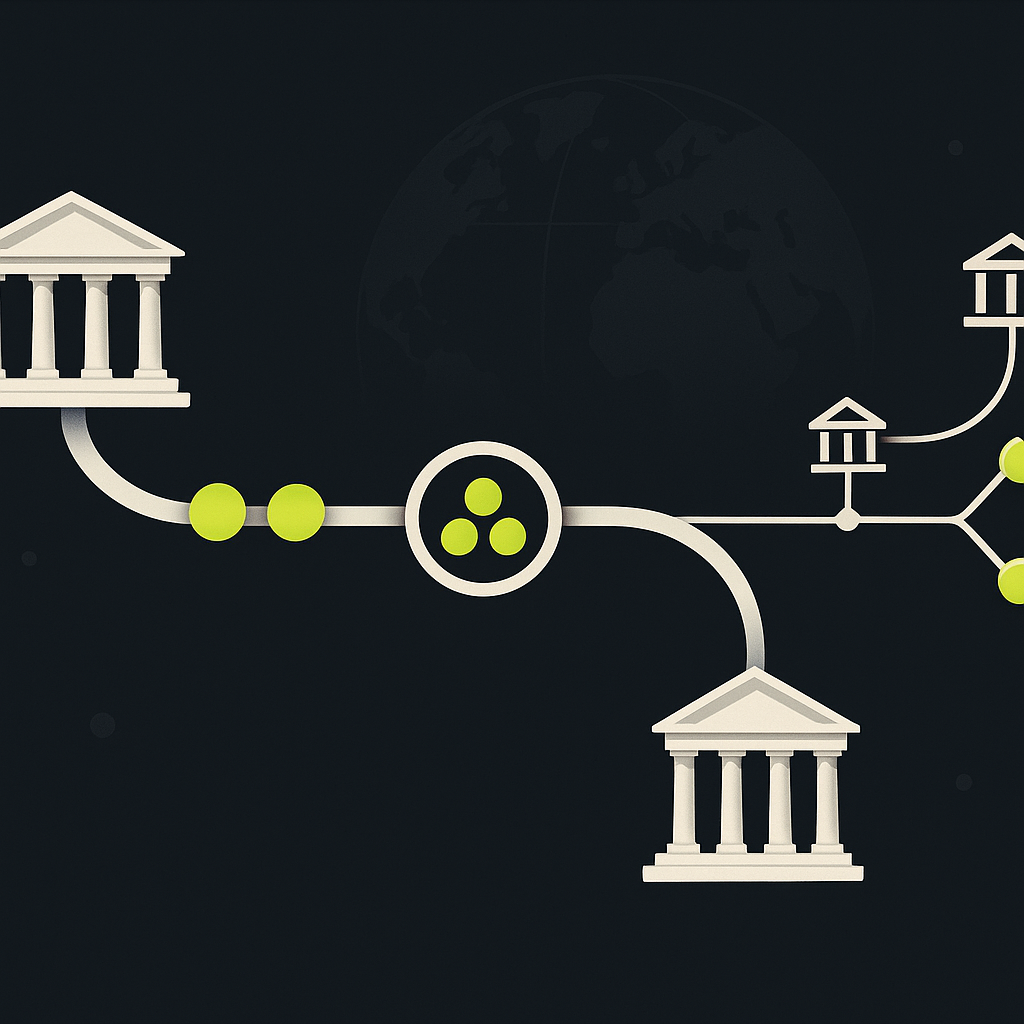
An “ACH wire transfer” is not a single standard payment type. An ACH transfer moves money through the U.S. Automated Clearing House network. A wire transfer moves money through bank wire arrangements, which may involve systems such as Fedwire or correspondent banks. Both are electronic bank transfers, but an ACH payment is not a wire.
If you are looking for an ACH wire transfer definition because an invoice or onboarding form uses that phrase, treat it as ambiguous instructions—not permission to use either method. Confirm which payment type the receiving account supports and which bank details apply.
For teams paying international vendors, contractors, and sellers, this distinction starts with vocabulary. A bank account identifier, a payment network, and a provider’s service label describe different things.
What is an ACH transfer?
ACH stands for Automated Clearing House. ACH transfers are electronic account-to-account payments processed through the U.S. ACH network. Common uses include payroll direct deposits, supplier payments, and authorized bill collections.
ACH supports two directions of payment:
- ACH credit: The payer initiates a payment to the recipient, such as a business paying a contractor.
- ACH debit: The collecting party initiates an authorized withdrawal from another account, such as a utility collecting a bill.
Instructions pass from an originating financial institution through an ACH operator to the receiving institution. Processing follows scheduled cycles rather than treating every instruction as an immediately settled individual payment. Plaid’s explanation of ACH and wire transfers describes this batch-based distinction and the difference between push and pull payments.
Same Day ACH accelerates eligible ACH payments; it does not turn them into wires or make the network an always-on instant payment system. Actual availability depends on submission timing, eligibility, bank processing, and applicable rules.
What is a wire transfer?
A wire transfer is a payer-initiated electronic transfer arranged through financial institutions using wire payment infrastructure. It can be domestic or international. It is not a synonym for every electronic bank payment.
In the United States, Fedwire is one important wire settlement system. It processes payments individually using real-time gross settlement. CHIPS is another major U.S.-dollar system, with a different liquidity and settlement mechanism. The FFIEC’s explanation of Fedwire and CHIPS distinguishes these systems and their settlement characteristics.
An international wire may pass through correspondent banks before reaching the beneficiary’s bank. “Bank-to-bank” therefore does not necessarily mean “without intermediaries.”
Domestic wires can often complete within the same business day, subject to cutoffs and review. International delivery adds dependencies such as intermediary processing, local banking hours, and currency conversion. Chase’s business guide to ACH and wires explains their typical timing, cost, and use-case differences. Neither the word “wire” nor an account debit guarantees that the recipient already has usable funds.
A payment terminology decoder
The most useful way to read bank instructions is to ask what each term identifies—and what it leaves unanswered.
| Term | What it identifies | What it does not establish |
|---|---|---|
| ACH | The U.S. Automated Clearing House network | Guaranteed immediate availability |
| Wire transfer | A bank wire payment method | A direct route without intermediaries |
| EFT or bank transfer | A broad electronic transfer category | The specific payment rail |
| ABA routing number | A U.S. financial institution routing identifier | Acceptance of both ACH and wires |
| SWIFT/BIC | A financial institution identifier | The beneficiary’s account or settlement status |
| IBAN | An account identifier used in participating countries | The network carrying the payment |
| International or global ACH | A provider label for cross-border bank payments | One universal worldwide ACH network |
SWIFT is a financial messaging network, not itself the system that settles every payment it helps banks coordinate. Similarly, an IBAN tells you about an account; it does not tell you whether the payment will use a local clearing system or correspondent banking.
What the definition does—and does not—tell finance teams
Account details may be rail-specific
A U.S. bank can provide different routing instructions for ACH and wires. Do not assume that an account number plus any routing number is sufficient. Obtain instructions explicitly labeled for the intended payment type.
For international recipients, collect the destination-specific information required by the provider. That may include an IBAN or local account number, bank or branch code, beneficiary address, payment purpose, and intermediary details. A SWIFT/BIC alone is not a complete payment instruction.
Final settlement is not the same as easy recovery
ACH payments can be returned under applicable rules, and reversals are permitted only in defined circumstances. This does not mean a payer can cancel a completed ACH payment at will.
Wire settlement can be final at the interbank level. A bank may attempt a recall or recovery, but success is not guaranteed. Neither rail should be described internally as simply “reversible” or “irreversible” without specifying the event and applicable procedure.
A service label does not reveal the whole cross-border route
A provider might collect funding by ACH in the United States, convert the funds, and deliver a local bank payment abroad. The funding method and recipient delivery method are different legs of that transaction.
Likewise, a multi-currency account may offer distinct receiving details for different currencies or payment types. Record each supported combination rather than labeling the entire account “ACH/wire.” For more on these handoffs, see how cross-border payments carry money and data.
Checklist: clarify an “ACH/wire” instruction before paying
- Resolve the label. Ask whether the recipient means ACH credit, domestic wire, international wire, or another local bank transfer.
- Confirm the destination. Record the receiving bank’s country and the account’s accepted currency—not just the recipient’s residence.
- Match details to the method. Confirm routing numbers, account identifiers, and any intermediary instructions for that specific payment type.
- Verify changes independently. Confirm new or changed bank details through a trusted contact channel, not only the email requesting the change.
- Define completion. Distinguish submission, bank acceptance, interbank settlement, and beneficiary credit in status reporting.
- Confirm commercial terms. Check fees, FX conversion, potential deductions, cutoffs, and the expected availability date with the provider.
A structured onboarding process, supported by a vendor portal, can collect payment preferences and bank details together rather than leaving operators to interpret free-text invoice instructions.
Use precise labels before automating payouts
The practical definition is straightforward: ACH and wire transfers are separate payment methods within the broader category of electronic bank transfers. Neither term alone specifies the full route, price, availability date, or recovery options.
Start by replacing “ACH/wire” in your recipient records with a confirmed payment method and method-specific bank details. Then evaluate Payouts.com’s payout automation to manage global payments within a consistent workflow. Automation works best when the underlying instructions are unambiguous.
Created with AI assistance. Sources are linked in the article; this content is general information, not legal, tax, or financial advice.
Discussion
40 commentsRelated resources

Cross Border Payments: Follow the Money and the Data
International payments move through two connected chains: money movement and payment information. Finance teams need visibility into both to understand costs, resolve delays, and confirm recipients have been paid.

Cross-Border Payments Are Currency Transactions Between Whom?
Cross-border payments connect payers and recipients in different countries, but currency conversion is not always involved. Understanding that distinction helps finance teams assign costs, collect the right data, and avoid incorrect payment assumptions.

How Does Heritage Auctions Pay Sellers? Timing and Net Proceeds
Heritage’s published consignment process describes settlement checks sent 45 days after auction close, or 30 days for sports. Here’s how to verify your payment method, calculate net proceeds, and plan for bank availability.
Run your entire money cycle on one ledger
Global payouts, AP/AR automation, and AI agents with their own wallets and spend limits.
Get started
The point about collecting 'instructions explicitly labeled for the intended payment type' is something we now enforce in vendor onboarding, but it's still surprising how many banks send over a single set of details and expect you to figure out which rail they support. We've started rejecting incomplete forms outright rather than guessing.
The part about 'final settlement is not the same as easy recovery' should be printed and taped to every AP desk. We had a controller insist wires were 'safer' because they're final, then got absolutely nowhere trying to recover a payment sent to the wrong beneficiary after a vendor changed banks without telling us.
We had almost the identical situation. The wire went out Friday afternoon, vendor notified us Monday that the account was closed, and the funds sat in limbo for nearly two weeks while banks sorted it out. Now we verify any banking changes with a phone call to a known contact before processing, regardless of how official the email looks.
This is why we now treat wire finality as a feature for the right use case, not a blanket advantage. For known recurring vendors, ACH return windows are actually helpful for catching account changes. For wires we added a mandatory 24-hour hold on any payment where vendor banking details were updated in the last 30 days.
The terminology decoder table is gold. We're adding 'What it does not establish' as a mandatory review column in our vendor onboarding checklist because half our payment delays come from assuming an ABA number works for both rails.
Same fix here. We also started requiring vendors to explicitly mark which routing number applies to which rail during onboarding. The number of times a vendor just sent us whatever routing number was printed on their check without clarifying it was ACH-only was surprising.
We did the same thing after realizing our onboarding form just had a single 'routing number' field with no radio button for payment type. Now we require both sets of instructions upfront and validate them against the bank's published details before the first payment goes out.
The distinction between 'funding method' and 'delivery method' in cross-border payments finally clicked for me reading this. We've been treating our provider's 'global ACH' product as one payment type in our ERP when it's actually ACH collection on our end and then who-knows-what for final delivery. That explains why delivery times vary so much by country even though we're always sending the same way.
Exactly this. We had the same problem with our treasury system classifying everything as one GL code. Once we started mapping the funding leg separately from the delivery leg, reconciliation got way easier and we could finally track actual costs per destination country.
We had to map this out manually after reconciliation kept failing. Turned out our provider was using local clearing systems in 8 different countries but our GL only had two payment type codes. The article's point about recording each supported combination separately is spot on.
The batch processing vs real-time settlement distinction is why we stopped letting vendors write 'ACH or wire' on their W9s. Now we collect separate forms for each rail during onboarding and validate the routing numbers against the Fed directory before we even add them to our ERP.
Smart move on the Fed directory validation. We added a similar check but still run into edge cases where a bank has multiple ACH routing numbers for different account types. Do you flag those for manual review or just fail the validation entirely?
We considered Fed directory validation but ran into issues with credit unions and smaller institutions that have multiple routing numbers not always reflected in the public directory. Did you build in a manual review step for edge cases or just reject anything that doesn't validate automatically?
The settlement finality section is important but I'd add that ACH return windows vary by code - unauthorized debits can be returned for 60 days, but most credit returns have a much shorter window. When we document our SOPs we now specify the exact return code scenarios rather than just saying 'ACH can be returned' because treasury needs to know the actual exposure period for reconciliation.
Good addition. We maintain separate runbooks for each return code category now too. The unauthorized debit window has caught us before when a vendor reused old bank details without updating their system—60 days is a long tail for reconciliation to stay open.
We did the same after getting burned by a late return on what we thought was settled. Now our reconciliation process flags ACH credits as provisional for 2 business days and debits get a separate 60-day watch list with monthly sweeps.
The 'rail-specific routing number' issue bit us hard last quarter when we switched treasury banks. Our AP system had one routing number on file per vendor, and we didn't realize some of our regular ACH payments would need completely different wiring instructions when we had to send an urgent same-day payment. Cost us a bounce fee and a very annoyed supplier.
We hit this during a bank migration too. The fix was adding a required 'payment type' dropdown in our vendor master that forces AP to specify ACH or wire at setup, then validates routing number format against that selection. Still doesn't catch everything but at least flags the mismatch before submission.
We had the exact same cutover pain. What finally worked for us was flagging any payment marked urgent in our workflow to trigger a secondary routing number lookup instead of pulling from the vendor master file. Not elegant but it caught most of the mismatches before they went out.
The SWIFT vs IBAN distinction is something we still have to explain to new team members constantly. People treat SWIFT codes like they're the entire instruction when they're really just part of the messaging layer. We now require a full beneficiary details checklist before any international payment gets queued.
We had the same problem until we realized the issue wasn't training—it was that our vendor onboarding form literally had one field labeled 'SWIFT code' with no context about what else was needed. Once we restructured it to match the article's decoder table logic, the incomplete submissions dropped significantly.
We did something similar but also added a required field for intermediary bank details on international wires. Half our payment delays were from missing correspondent bank info that wasn't on the original invoice.
The checklist at the end is cut off but honestly the decoder table alone would have saved us about six hours of back-and-forth with our international suppliers last quarter. We kept getting forms that said 'bank transfer details' with a mix of SWIFT codes, IBANs, and ABA numbers in random combinations and no indication of which rail actually worked.
Same here. We ended up creating an internal template that separates out ACH-specific fields, wire-specific fields, and international payment fields into three distinct sections. Vendors hate filling it out but it's eliminated most of the rework on our side.
Same here. We ended up creating an internal template that separates out ACH-specific fields, wire-specific fields, and international payment fields with conditional logic. Vendors still push back on filling out 'extra' information but it's better than having payments bounce or route through three extra correspondent banks we didn't budget for.
The point about service labels not revealing the cross-border route resonates—we've had situations where our provider's dashboard said 'completed' but the vendor hadn't received funds yet because it was still in the local clearing leg. Now we ask providers to document each settlement point in the chain and give us expected timelines for each hop, not just end-to-end estimates.
We started requiring providers to show us the entire payment chain with estimated timing for each leg. Turns out 'completed' just meant they'd sent it to their correspondent bank, not that the vendor's account was actually credited.
We ended up building a status dashboard that shows settlement stage separately from provider status. Helped a lot with vendor inquiries since we could point to exactly where funds were stuck instead of just saying 'it shows completed on our end.'
The decoder table is helpful but I'd push back on one thing: in practice, most vendors have no idea what rail they actually support. We ask for 'wire instructions' and get back a routing number that only works for ACH, or they send both sets of numbers unlabeled. The real problem isn't our understanding of the terminology, it's that the vendor onboarding process at most companies treats all bank details as interchangeable.
We solve this by requesting a voided check or bank letter for any payment over $10k. Sounds old-school but it's the only way to get authoritative routing details that actually specify the rail. Vendor-provided forms are almost always wrong or incomplete.
Agreed, which is why we now send a test payment first for any new vendor over a certain threshold. If their 'wire' routing number bounces or takes three days, we know they gave us ACH details and we update our records before the real payment goes out.
Would love to see this table expanded to include RTP and FedNow, since we're starting to get requests from vendors asking if we support 'instant payments' and I'm not sure how to map that against our existing ACH setup.
RTP and FedNow both settle immediately but they're not interoperable with ACH infrastructure at all—completely different message formats and participation requirements. If a vendor is asking for instant payments generically, you need to confirm which rail they actually support because accepting RTP doesn't mean they can receive FedNow and vice versa.
RTP and FedNow are separate instant payment rails that don't run on ACH infrastructure at all. If a vendor is asking if you support instant payments, they're probably asking whether your bank can send via RTP or FedNow specifically, not whether you can do Same Day ACH. You'll need to check with your treasury bank what rails they actually support for outbound payments.
The routing number caveat is real - we had a wire bounce because AP used the ACH routing number from a previous payment instead of asking for wire-specific instructions. Bank charged us for the failed wire and we still had to resubmit with correct details. That mistake cost about $75 and three days.
We built a routing number validation step into our payment workflow after a similar incident. Now the system flags any wire above $5k if the routing number on file was last used for an ACH transaction. Not foolproof but catches most of these before submission.
We started requiring vendors to complete a separate wire vs ACH form during onboarding after running into this exact issue. The extra step upfront has saved us dozens of failed payment fees and resubmissions.
The point about service labels hiding the actual payment route is something we learned the hard way. We had a vendor onboarding form that said 'supports ACH' but turned out they were using a service that took ACH domestically, converted through FX, then delivered via local rails in EUR. Cost and timing were completely different than we budgeted for domestic ACH. Now we always ask what happens after the money leaves our account.
Same experience here. The FX conversion step wasn't disclosed until we asked why a same-day ACH was taking 3 business days to settle. Turned out the 'ACH' part was only the first leg and the vendor never mentioned the correspondent bank chain on the other side.
We ran into the exact same issue. Now we require a full payment flowchart from any provider that touches more than one currency—domestic funding method, FX step, final delivery rail, and estimated end-to-end timing. It's annoying for vendors but we got burned too many times treating 'ACH-enabled' as a single atomic thing.