

AliExpress Affiliate Account: Setup, Withdrawals, and Net Cash
Opening an AliExpress affiliate account is only the first step. Learn how to verify the payment route, distinguish pending commissions from available cash, and control cross-border withdrawal costs.
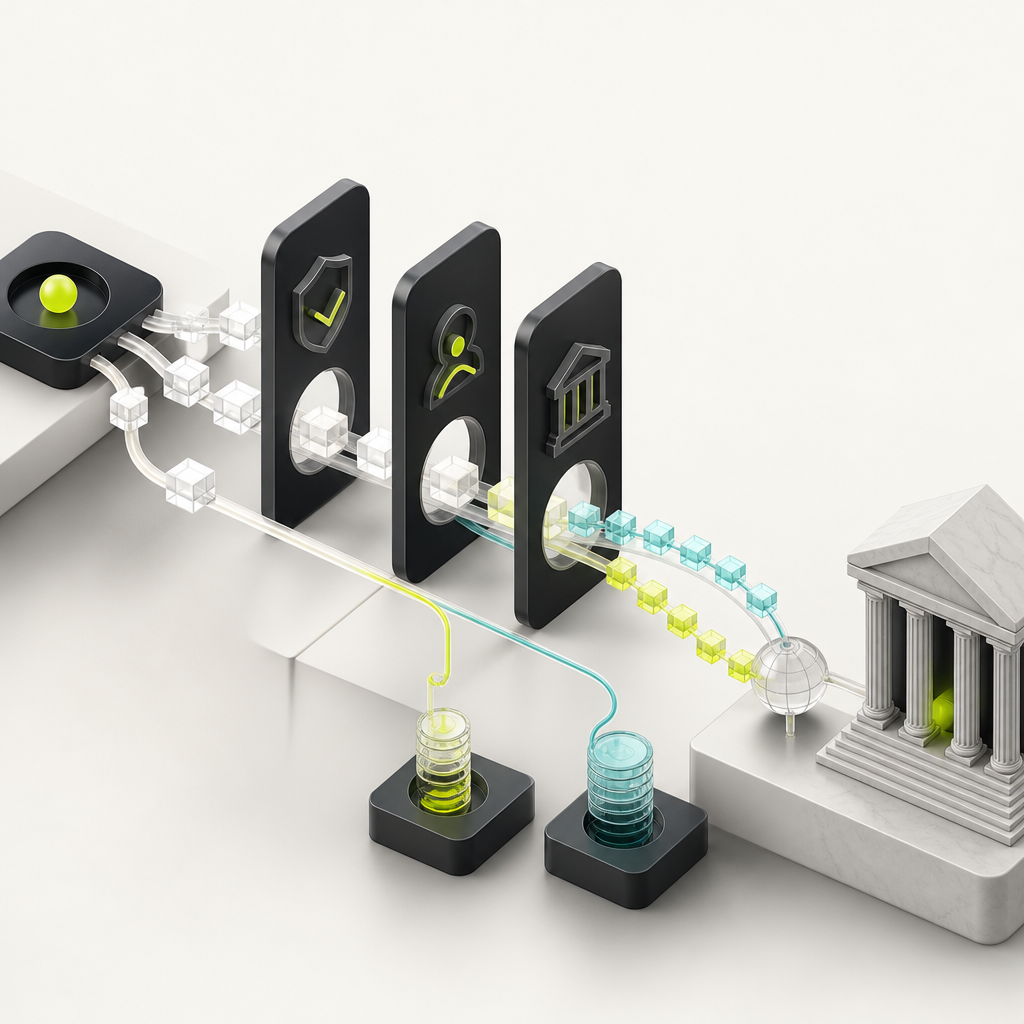
An AliExpress affiliate account lets you generate promotional links and earn commissions on qualifying purchases. The direct program operates through AliExpress Portals and uses an AliExpress login. You apply with information about your promotional channels, then follow the program’s approval and payment setup requirements.
For publishers and finance teams, the important distinction is this: an approved affiliate account is not the same as a withdrawable balance or a payment-ready bank account. Before budgeting commission income, establish which program pays you, when earnings become eligible for withdrawal, and how much reaches your bank after fees and currency conversion.
How to set up an AliExpress affiliate account
The AliExpress Portals joining guide describes the direct application route through an existing AliExpress login, with applicants supplying information about their promotional platform. A practical setup sequence is:
- Choose your enrollment route. Decide whether to apply directly through AliExpress Portals or through an affiliate network offering an AliExpress campaign. These are different contractual and payment relationships.
- Use an authorized login. For a business-owned publishing operation, establish who controls access and account recovery before submitting the application.
- Provide accurate publisher information. Describe the website, channel, or social account you operate and how you intend to promote products. Follow the application’s current requirements rather than a third-party screenshot.
- Review the applicable terms. Check eligible traffic sources, territories, product exclusions, attribution rules, and prohibited promotional practices.
- Complete payment information. Use the legal payee and beneficiary details required by the program. Resolve any mismatch between the applicant and receiving account before requesting payment.
- Generate links through the approved tools. Confirm that campaign identifiers appear in reporting. A normal product URL should not be assumed to carry affiliate attribution.
Do not treat eligibility for the general affiliate program as proof of eligibility for a separate influencer campaign. Country availability, channel requirements, and payment options may differ. Approval also does not establish that every product or referred purchase earns commission.
Direct Portals or an affiliate network: identify who pays
AliExpress campaigns are also offered through third-party affiliate networks, as described in Strackr’s AliExpress affiliate program guide. The operational question is not simply where you generate links. It is which entity owes the commission and which terms govern its release.
With direct enrollment, consult the Portals agreement and withdrawal interface. With a network, consult that network’s AliExpress campaign terms and publisher payment policy. Do not carry a rate, threshold, tracking window, or payment method from one route into another.
Secondary descriptions commonly identify international bank transfer as the direct program’s withdrawal route. They are not sufficient evidence that PayPal, local bank payments, or a particular receiving-account provider is supported for your account. Network payment options can also depend on the publisher’s country and currency.
Before choosing a route, record:
- The contracting entity and account country.
- The applicable commission schedule and attribution rules.
- The conditions for validating or reversing commissions.
- The withdrawal currency, supported bank route, and beneficiary requirements.
- The threshold, processing charges, and payment schedule.
A higher advertised commission rate can produce less usable cash if validation takes longer or the receiving route is more expensive. Compare expected net receipts, not headline rates alone.
What are the withdrawal minimum, fee, and schedule?
The supplied Alibaba Affiliates Help Center withdrawal page states a US $16 minimum balance, a US $15 processing fee per withdrawal, and availability to withdraw between the 15th and 30th of the next month. Its scope is Alibaba Affiliates; this page alone does not establish the current terms for every AliExpress Portals account.
Those figures also appear in secondary descriptions of AliExpress, but the controlling evidence should be your current account’s withdrawal screen and agreement. Save the applicable fee disclosure before planning a withdrawal. Check whether the fee is deducted from the requested amount, whether another charge applies, and what “available” means in the interface.
Conditional illustration: if your account confirms a $16 withdrawal with a $15 fee deducted from that amount, only $1 remains before any other deductions. That arithmetic shows why an eligibility threshold should not automatically become your withdrawal target.
Likewise, a monthly withdrawal window is not a guaranteed bank-credit date. Order validation, withdrawal eligibility, payment processing, and receiving-bank credit are separate stages. Research descriptions disagree on attribution windows and commission details, so neither a universal tracking duration nor a fixed commission rate is reliable enough to use across enrollment routes.
Track commissions through separate cash states
The following is an internal finance model, not a claim about the exact labels used in the AliExpress interface. Map the account’s actual statuses into these states so marketing reports do not become unsupported cash forecasts.
| Internal state | What it establishes | Evidence to retain | Finance treatment |
|---|---|---|---|
| Tracked | A referral appears in reporting | Order or transaction reference | Forecast only |
| Validated | Program conditions have been satisfied | Approved commission record | Assess under accounting policy |
| Withdrawable | Balance can be requested | Available balance and terms | Schedule a withdrawal |
| Requested | A withdrawal instruction exists | Request ID and amount | Track against the request |
| Sent | Payment has been released | Payment confirmation or reference | Monitor cash in transit |
| Credited | The receiving account has funds | Bank statement entry | Reconcile net proceeds |
Keep the commission currency and bank-credit currency separate. If the credited amount is lower, distinguish program deductions, bank charges, and FX effects before opening a dispute. A commission adjustment requires different evidence from a missing bank transfer.
Check the receiving account before requesting payment
A bank account that accepts domestic transfers may not accept the international transfer type or currency offered by the payer. Ask the receiving bank for instructions for the specific incoming route.
- Beneficiary identity: exact account-holder name, legal entity, and address where requested.
- Bank identifiers: account number or IBAN, SWIFT/BIC where required, and any country-specific routing information.
- Currency handling: whether the account receives the payment currency directly or converts it automatically.
- Additional instructions: intermediary-bank details, payment-purpose information, or supporting documents where required.
- Charges and restrictions: incoming-transfer fees and any limits affecting commercial commission receipts.
Do not infer the required fields from the recipient’s country alone; the selected transfer route also matters. Confirm whether virtual, pooled, or third-party receiving details are accepted by both the program and the account provider.
If holding receipts before conversion would help your treasury process, evaluate multi-currency global accounts. However, any proposed receiving account still needs an acceptance check with the affiliate program; multi-currency capability does not prove compatibility with AliExpress withdrawals.
Set a withdrawal policy around net cash
Use a consistent calculation: net receipt equals gross withdrawal less program fees and bank deductions, then adjusted for any currency conversion. Keep all components in a common currency when comparing costs.
Where a fixed withdrawal fee applies, a useful planning formula is: target withdrawal balance = fixed fee ÷ maximum acceptable fixed-fee share. This is a budgeting tool, not a program requirement. It excludes variable charges and FX costs.
Accumulating a larger balance can reduce the fixed-fee share, but it also delays access to cash and increases exposure to an external platform balance. Set both a cost target and a maximum acceptable waiting period. Our guide to reducing cross-border payment fees explains how to separate transfer charges from less visible FX costs.
Before your first withdrawal: an actionable checklist
- Confirm whether Portals or a network owes the commission.
- Save the current payment terms, fee disclosure, and account-country requirements.
- Check that the balance is withdrawable, not merely tracked or pending.
- Verify beneficiary details against bank-issued receiving instructions.
- Confirm the transfer currency and whether conversion is automatic.
- Retain the withdrawal reference and reconcile it to the bank credit.
- For a missing payment, first identify whether the blocker is validation, withdrawal eligibility, release, or bank receipt.
For an agency or publisher paying downstream partners, AliExpress receipts and partner obligations are separate money flows. Only plan redistribution where the program and your partner agreements permit it; do not treat a pending upstream commission as settled funding.
The next step is to verify your account’s actual withdrawal terms and build a net-receipt forecast. If your business also operates its own international partner payment program, explore affiliate payout infrastructure for that downstream workflow. It can help manage your payment operation, but it cannot change AliExpress’s approval rules or accelerate commissions that the program has not released.
Created with AI assistance. Sources are linked in the article; this content is general information, not legal, tax, or financial advice.
Discussion
39 commentsRelated resources

How to Reduce Cross Border Payment Fees: A Finance Playbook
Lower transfer fees do not always mean cheaper payouts. Learn how to negotiate, operationalize, and verify savings across your international payment program.

QuickBooks Online Supplier Payment on Account: A Guide
A supplier advance should remain traceable until the invoice arrives—not become a duplicate expense or a second payment. Here’s how to record, allocate, and reconcile it in QuickBooks Online.

Affiliate Account Meaning: The Profile Behind Commission Payments
An affiliate account connects a partner’s referrals to commission records and payment settings. It is not automatically a bank account, a withdrawable balance, or proof that payment is due.
Run your entire money cycle on one ledger
Global payouts, AP/AR automation, and AI agents with their own wallets and spend limits.
Get started
The five-state cash model is helpful, but I'm surprised there's no mention of chargebacks or commission clawbacks. We've seen instances where 'Validated' commissions get reversed weeks later due to product returns or policy violations. How are you supposed to model that risk when forecasting withdrawable cash?
The article's model ends at the payment side of the transaction, so reversals would be an upstream event affecting the Validated state rather than a separate downstream stage. We handle this by treating Validated as conditional until the return window closes, which varies by category. The real challenge is that most affiliate dashboards don't surface return or reversal data in real time, so you're reconciling backward from balance changes rather than modeling forward from order data.
Good point. We treat chargebacks as a separate adjustment layer that sits outside the primary state model. When a Validated commission reverses, we log it as a negative transaction against the same campaign ID and period, then adjust the forecast manually. Not elegant, but it keeps the state model clean and forces finance to review every reversal instead of letting them disappear into netting.
The emphasis on identifying the contracting entity before you start promoting is something we now enforce in our vendor setup checklist. We had a situation where marketing enrolled through what looked like the direct program but was actually a reseller arrangement with different terms, and reconciliation became a nightmare because the commission reversals didn't match what was in the campaign brief.
We had a similar issue. The marketing team enrolled through a network without flagging it to finance, and when we tried to reconcile the first payment the beneficiary name didn't match any vendor record. Now we require a copy of the enrollment confirmation and payment terms before any affiliate links go live.
We had the same issue with a reseller setup. The mismatched payment terms didn't surface until the first withdrawal attempt, and by then we had three months of unreconciled commissions sitting in limbo. Now we require a screenshot of the actual withdrawal screen and terms during vendor onboarding, not just the marketing material.
The distinction between 'who owes the commission' and 'who processes the payment' is critical and often missed in vendor evaluations. We had a campaign running through a network where the network agreement limited liability to commissions already received from the advertiser, meaning delays and validation reversals weren't their problem contractually. Always confirm whether the network is principal or agent in the transaction before you forecast anything.
We hit this exact scenario with a network reselling another vendor's program. The network's liability cap meant our entire month's commissions got stuck when the advertiser delayed validation by 45 days. Now we only work with networks that guarantee payment on their own schedule regardless of upstream timing.
We hit this exact scenario with a network reselling another vendor's program. The network's terms capped their liability at funds already collected, so when the upstream advertiser delayed validation by 60 days, our cash forecast was completely wrong even though the network's dashboard showed approved commissions.
The advice to record the contracting entity, payment schedule, and beneficiary requirements before choosing an enrollment route is the kind of thing that sounds obvious in hindsight but gets skipped constantly. We onboarded through a network assuming we could switch withdrawal methods later and found out six weeks in that our entity type wasn't eligible for anything except wire transfer with a $50 fee.
Same. We locked in a network route assuming we could pivot to direct enrollment once volume picked up. Turns out the network agreement included a 12-month exclusivity clause we didn't catch until we tried to move. Now we're stuck with their payout schedule and can't even test the direct withdrawal fees.
We had the same experience. The network locked us into their standard payout cycle and wouldn't support the beneficiary structure we use for other channels, so we had to reconcile it manually every month until we could migrate.
The distinction between 'approved affiliate account' and 'withdrawable balance' needs to be in every onboarding doc. We had a content team assume approved meant payment-ready, built Q2 forecasts around pending commissions, and then discovered a 45-day validation window plus the monthly withdrawal gate. Treasury hated us.
We built a reconciliation worksheet that maps every affiliate platform's status labels into those five internal states. Saves us from exactly this problem when marketing adds new programs without looping in finance first.
We added a mandatory cash-state mapping step to our affiliate SOPs after a similar incident. Now no platform goes live until finance confirms every status label (pending, approved, available, etc.) maps to one of the five states in our GL policy. Saves the awkward variance conversations later.
The instruction to map program statuses into a standardized five-state cash model makes sense, but it would be helpful to see how AliExpress Portals actually labels these stages in the dashboard. We're evaluating whether to add this channel and need to know if their UI will make the Validated vs Withdrawable distinction obvious or if we'll need to reverse-engineer it from the terms.
The article deliberately avoids UI screenshots because those change and vary by account type, but you can extract the actual labels by requesting a test withdrawal (without confirming) and screenshotting each step, then mapping those to the five states. We did this for three other programs and now maintain an internal lookup table that translates platform-specific language into our standard statuses for cash forecasting.
The article deliberately avoids UI screenshots because those change and vary by account type. Your procurement or legal team should request current screenshots during vendor eval, not rely on a blog post. We asked for annotated dashboard exports during our diligence phase and got them within 48 hours.
The 'choose your enrollment route' section is critical and undersold. We wasted two months troubleshooting payment issues before realizing our team had applied through both Portals and a network under different logins, so half our commissions were stuck under a different threshold in a second account we didn't know existed.
We almost did the same thing. Now we lock down enrollment to a single point of contact and require a screenshot of the acceptance email before any links go live. Would also recommend auditing your link generation tools monthly—our content team had cached an old network tag in a template that nobody caught for six weeks.
We almost did the same thing. Now we lock down enrollment to a single point of contact and require them to document the route and login before generating any links. The dual-account problem is invisible until withdrawal time.
The recommendation to save the fee disclosure before planning a withdrawal is something we learned the hard way. Our team assumed the $15 fee was a percentage or that it scaled with amount, so we queued four small withdrawals in one month instead of batching them. Lost $60 to fees on what should have been a single $15 charge if we'd consolidated.
We made the exact same mistake with a different platform. Flat withdrawal fees are punishing when volumes are low or you're testing. Now we set internal minimum withdrawal thresholds well above the platform minimum and treat the first few months as cost-of-validation rather than real margin.
Flat fees on low minimums basically force you to wait until you hit a meaningful balance or accept terrible effective costs. We set an internal rule now: never withdraw affiliate balances under $200 unless the platform has proportional fees or we're closing the account.
The point about comparing net receipts instead of headline rates is something we had to learn the hard way. We onboarded with a network offering 7% versus the direct 5%, but after their payment threshold, currency conversion markup, and a 45-day longer validation window, the effective yield was lower and the cash came nearly two months later. Now we model the full cycle with actual fees and timing before choosing a route.
Exactly. The validation delay is the part that doesn't show up in the rate comparison but hits your cash flow forecast. We now model affiliate programs using effective yield over 90 days instead of the posted rate, and it completely changed which routes we prioritize.
We ran into the same calculation gap. The validation delay is the silent killer—a month of extra float tied up in 'pending' means you're effectively financing their working capital while eating FX risk on both ends. Now we discount affiliate cash flows by the full cycle time before we commit budget to a channel.
The part about confirming who actually owes you the commission before you start promoting is underrated. We had a creator run traffic through what they thought was the direct program but turned out to be a network wrapper with different validation rules and a 90-day hold we didn't budget for. Cost us two quarters of reconciliation work.
We caught this during onboarding review after the contract was already signed. Now we require a test withdrawal with full screenshot documentation before any campaign goes live—threshold, fee structure, currency, beneficiary fields, everything. Saves reconciliation headaches later.
90-day hold on top of network fees would kill the economics on most campaigns. Did you end up building that delay into your creator agreements, or did you absorb it and just shift to direct enrollment going forward?
That $15 fee on a $16 minimum is brutal. If you're testing channels or ramping slowly, you'll burn most of your first withdrawal just to prove the payment route works. Would be useful to know if network routes (Impact, Awin, etc.) have better fee structures for smaller publishers, especially outside the US.
We evaluated this for a smaller client last quarter. Impact charged 3% but no fixed fee, which worked out better under $500 per month. The catch was their AliExpress campaign had a shorter attribution window, so validated commission volume dropped about 12%. You end up trading fee efficiency for conversion credit.
We ran the same math when evaluating direct versus network routes for a client. Impact charges a flat monthly minimum but no per-withdrawal fee, which flips the economics if you're under $200/month. The tradeoff is you lose a few points on the commission rate, but for early-stage testing that's worth it.
The five-state cash model (Tracked → Validated → Withdrawable → Requested → Sent) is exactly what we needed. We were booking affiliate revenue at the Tracked stage and then chasing down reversals two months later when orders got cancelled or refunded. Now mapping everything through Validated before it touches the forecast.
We had the same issue with a different affiliate program. Moved our accrual gate to Validated and built a reconciliation script that flags anything stuck longer than 90 days. The variance between Tracked and Withdrawable was eye-opening once we actually measured it.
Same issue here. We switched to recognizing revenue only after the Validated state and set up a separate GL account for Tracked balances so the marketing team can still monitor pipeline without creating phantom AR. Cut our month-end reconciliation time in half.
Quick question on the withdrawal window (15th-30th of next month): does that mean commissions earned in January become withdrawable Feb 15-30, or is there another validation period before they hit 'available balance'? We need to model this for quarterly planning and the timing matters more than the rate.
The article doesn't give you that detail, which is exactly the problem. Validation period varies by product category and sometimes by seller. I've seen 30-60 days post-purchase before status changes to withdrawable, so if you're modeling quarterly, assume at minimum a two-month lag from sale date to earliest possible bank credit.
The article doesn't give you that detail, which is exactly the problem. Validation period is separate from the withdrawal window, and the interface doesn't always spell it out. You need to check your actual account's available balance date, not just the withdrawal request period. We've seen 30-60 day validation lags on top of the monthly window.