

Daraz Affiliate Account: Choose Your Program and Verify Payouts
A Daraz affiliate account connects promotional activity to commission earnings, but payment rules depend on the country and enrollment route. Verify who pays, which currency you receive, and what makes earnings payable before launching campaigns.
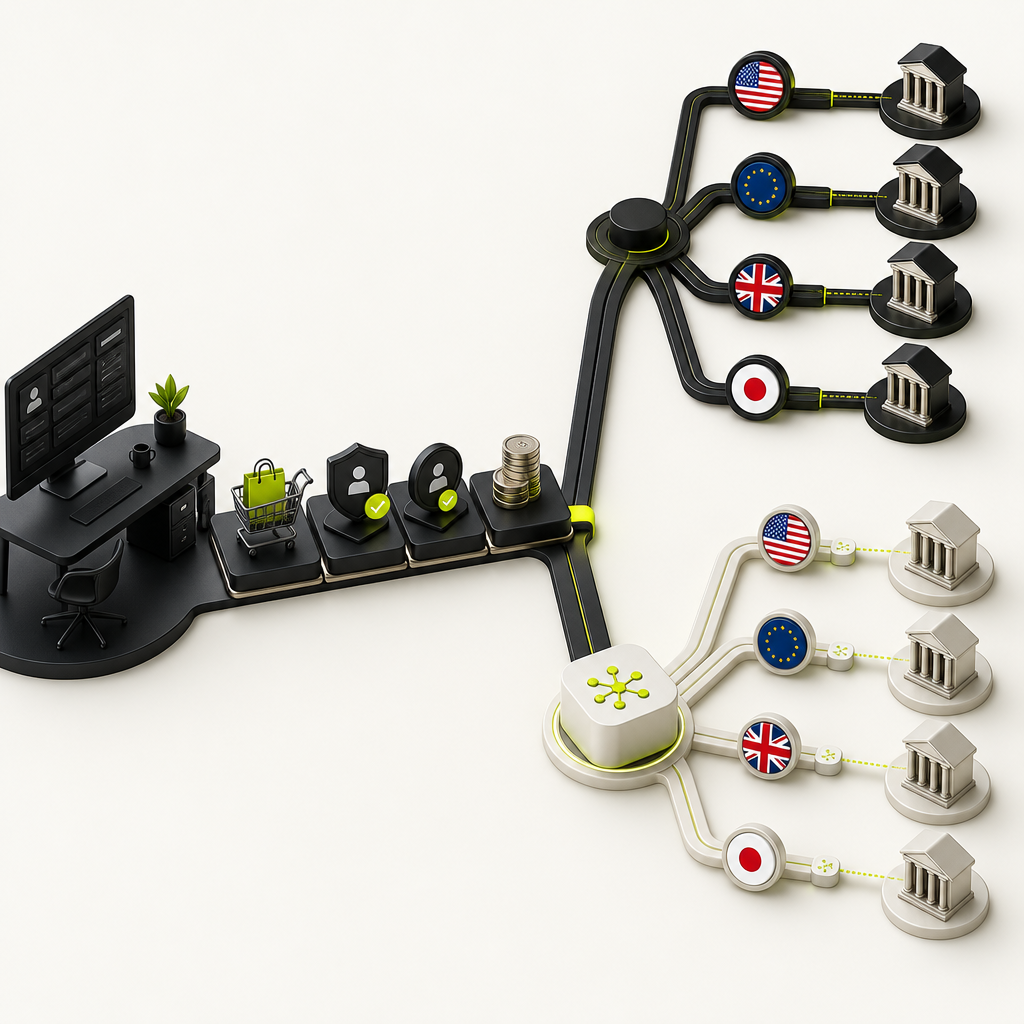
A Daraz affiliate account lets an approved publisher, creator, or business generate tracked promotional links and earn commission on qualifying purchases. To apply, use the relevant country’s Daraz affiliate program, submit your promotional-channel details, and complete the required account and payment information. Joining the direct program is free, but approval does not mean every tracked sale is immediately payable.
The most important decision is which program you are joining: a direct Daraz country program or an intermediary affiliate network. That choice can change your payer, commission terms, settlement currency, and support process. For agencies and finance teams managing affiliate income across markets, those differences matter more than a headline commission rate.
Choose the program before creating the account
Do not treat Daraz affiliate participation as a single global payment arrangement. A country-specific agreement and a third-party network offer are different commercial relationships, even when both send shoppers to Daraz.
Direct Daraz enrollment
Start with the affiliate page for the market you intend to promote. For example, the official Daraz Bangladesh affiliate page describes the program and its agreement, including commission and payment provisions. Its terms apply to that arrangement; they are not a universal rate card or payment policy for every Daraz market.
Before applying, confirm whether your residence, business location, promotional channel, and receiving account are eligible. Access to a shopping account or local storefront does not, by itself, establish affiliate eligibility.
Enrollment through an affiliate network
A network route introduces another set of terms. The FlexOffers listing for Daraz Pakistan, for example, describes USD payments based on the applicable exchange rate. That is a network-specific arrangement, not evidence that Daraz’s direct Pakistan program pays every affiliate in USD.
Check the network’s publisher agreement as well as the advertiser offer. Identify who owes you the commission, which party validates transactions, and which party handles payment support. Never assume that joining a network automatically grants access to every advertiser listed on it.
How to create a Daraz affiliate account
The exact interface can change by market and enrollment route. A secondary walkthrough from BeingGuru describes the broad process of registration, application, and access to affiliate tools. Use the live country application as the authority for required fields rather than relying on screenshots or a promised approval time.
- Open the correct application. Confirm the country and whether you are applying directly to Daraz or through a network. Avoid unofficial registration services requesting a joining fee.
- Sign in or create the required login. Use a controlled email address. A business should retain access if the employee managing campaigns leaves.
- Describe your promotional channels. Supply the requested website, social profile, or other channel details accurately. Do not borrow another market’s follower requirement.
- Enter the correct payee identity. Determine whether the applicant and commission recipient will be an individual or a business. Keep the application, tax information, invoice identity, and beneficiary details consistent where required.
- Submit and respond to verification requests. Treat the account as pending until the program confirms acceptance. There is no reliable universal approval deadline in the supplied evidence.
- Review the approved account before publishing links. Confirm the available campaigns, commission terms, attribution rules, and payment setup. Save the governing terms and their effective date.
For teams managing multiple channels, assign an account owner and a separate finance contact. Keep credentials in approved access-management tools, not in a shared commission spreadsheet.
What must be verified before the first payout?
An approved account is a marketing permission. Payment readiness requires additional evidence. Use the following checklist as an internal control framework; these are not claimed Daraz dashboard status labels.
| Checkpoint | Evidence to retain | Risk if unresolved |
|---|---|---|
| Program and payer | Country agreement or network contract | Wrong support or payment expectations |
| Payee identity | Accepted legal and tax details | Verification or invoice hold |
| Commission entitlement | Applicable rate and qualifying-order rules | Overstated expected income |
| Release conditions | Threshold, validation, and invoice rules | Balance mistaken for cash due |
| Receiving route | Accepted method and beneficiary details | Rejected or misdirected payment |
| Currency and charges | Settlement currency and conversion terms | Unexplained net-cash difference |
| Settlement evidence | Remittance matched to account credit | Payment marked complete too early |
Country-specific documentation matters
Do not reuse one onboarding checklist unchanged across jurisdictions. For example, Gadgetbyte Nepal’s coverage of the Nepal program reports an ability to issue a VAT/PAN invoice among its requirements. Confirm the current requirement with the program before applying; the article is secondary guidance, not a substitute for the agreement.
Collect only the banking fields required for the actual receiving route. If an application requests a banking identifier your country does not use, ask support for the approved procedure. Do not invent an IBAN or enter placeholder digits merely to bypass validation.
Separate tracked commission from payable cash
A click, attributed order, approved commission, and bank credit are different events. Canceled, refunded, or fraudulent transactions can be excluded from commission or lead to reversals. Consequently, a dashboard total should not automatically become the amount finance expects to receive.
For internal reporting, distinguish:
- Tracked earnings: transactions attributed to affiliate activity but potentially still subject to validation.
- Approved earnings: commission accepted under the program’s qualifying rules.
- Eligible for release: approved amounts that satisfy applicable thresholds, documentation, and payment-cycle requirements.
- Paid and reconciled: the remittance has been matched to funds credited to the receiving account.
These are operational reporting categories, not accounting recognition advice or guaranteed Daraz interface labels.
Read payment dates in their contractual context
The Bangladesh agreement describes monthly commission invoicing by the seventh day for the preceding month and payment within fifteen days of the invoice date. An invoice milestone is therefore not a promise that money will appear in the bank on the seventh. Its BDT payment provisions also should not be generalized to a Pakistan network arrangement.
For any account, verify the minimum payable balance, carry-forward rules, validation period, invoice requirements, and payment method in the current terms. Public guides report conflicting thresholds and wallet options. A wallet’s popularity in a country is not proof that your affiliate program supports it.
Check FX exposure before choosing a receiving account
For cross-border recipients, map three currencies: the currency used to calculate commission, the currency the payer sends, and the currency the bank credits. A USD payout can still incur conversion costs if the receiving account automatically converts it to local currency.
Ask who performs conversion, how the rate is determined, when conversion occurs, and whether receiving or intermediary charges may apply. A higher advertised commission does not necessarily produce more usable cash after validation adjustments and payment costs.
Keep gross approved commission, documented deductions, payment fees, and currency conversion separate in your reconciliation. The same discipline underpins multi-currency publisher payout controls: explain each difference rather than recording an unexplained net shortfall.
A launch checklist for affiliate operations teams
- Record the country program, payer, account owner, and approved promotional channels.
- Retain the current rate schedule and attribution rules; avoid budgeting from an unsourced “up to” rate.
- Confirm beneficiary identity, tax documentation, and invoice requirements.
- Verify the supported receiving method, settlement currency, and any cross-border restrictions.
- Record release conditions and distinguish invoice dates from expected bank-credit dates.
- Match the first remittance to approved transactions and investigate every unexplained deduction.
- Review changes to commission terms or payment instructions before the next campaign or payment cycle.
Make the account payment-ready, not just campaign-ready
The practical next step is to choose the correct Daraz enrollment route and obtain its current payment terms before committing campaign spend. Account approval, commission approval, and cash receipt should remain separate checkpoints.
If your business also distributes earnings to downstream partners, that is a separate payment obligation. Explore Payouts.com’s affiliate and partner payout capabilities and payout automation for that workflow. They do not change Daraz eligibility, accelerate Daraz’s approval process, or override its release rules.
Created with AI assistance. Sources are linked in the article; this content is general information, not legal, tax, or financial advice.
Discussion
30 commentsRelated resources
Multi-Currency Publisher Payouts: How Ad Networks Eliminate FX Leakage at Scale
FX costs quietly erode publisher earnings and ad network margins on every cross-border payment. Here's how modern ad networks architect multi-currency publisher payouts to eliminate that leakage at scale.

Mass Payout API: Build a Reliable Batch-to-Ledger Integration
A mass payout API should do more than submit payments in bulk. Build an integration that preserves approvals, prevents duplicate releases, and reconciles each payout across currencies and rails.

AdSense Minimum Payout: Thresholds, Timing, and Cash Planning
The standard AdSense payout threshold is $100 for USD payments accounts, but reaching it does not mean immediate payment. Learn how account currency, finalized earnings, holds, and bank processing determine when cash arrives.
Run your entire money cycle on one ledger
Global payouts, AP/AR automation, and AI agents with their own wallets and spend limits.
Get started
The warning about not inventing an IBAN or placeholder digits to bypass validation is oddly specific and tells me this has caused actual payment failures in the field. We've seen similar issues with affiliates who fake routing numbers just to get past onboarding, then wonder why their first payout never arrives.
We saw the same thing with an affiliate onboarding where someone put "999999999" as a sort code. The validation passed but the first payment bounced and reversed 30 days later, which threw off two monthly closes.
Exactly this. We had a contractor enter a fake SWIFT code during setup because the form wouldn't accept their actual correspondent bank structure, then blamed us when the first transfer bounced back three weeks later. Now we validate every field against ISO standards before submission, even if it delays onboarding.
The requirement to verify who actually owns the payment obligation—Daraz or the network—before launch is something we should have applied to every channel partner onboarding, not just affiliates. We've had disputes where marketing thought they were dealing with one counterparty and finance received wire instructions from a completely different entity with no advance notice.
We had the exact same breakdown. Marketing assumed direct partnership, finance saw a network remittance six weeks later with a completely different entity name and currency. Now we require a signed memo from any channel partner confirming payment entity, currency, and threshold before the first link goes live.
We had the exact same breakdown. Marketing assumed direct partnership, finance saw a network entity on the wire, and reconciliation turned into a three-way blame spiral. Now we require a signed vendor form with explicit payer entity before any affiliate link goes live.
The distinction between tracked, approved, and payable earnings needs to be reflected in your accounting system from day one. We had to write off two quarters of affiliate accruals because operations was booking dashboard totals as revenue without waiting for the actual remittance advice, and reconciliation became a nightmare when refunds and fraud reversals hit weeks later.
We had the same issue. Now we only book affiliate income when the remittance hits the bank account, and we track dashboard figures as a memo field in the subledger. Took one painful audit adjustment to get finance and marketing aligned on that policy.
We had the same issue. Now we only book affiliate income when the remittance hits the bank statement, not when it shows approved in the dashboard. Adds reporting lag but eliminates the writeoff risk entirely.
The guidance on payee identity consistency across application, tax info, and beneficiary fields is something we learned the hard way after a three-week payout hold last quarter. Our marketing team had enrolled as individual, invoices went out under the corporate entity, and the receiving account was under a subsidiary—completely avoidable if finance had been looped in before the application was submitted.
We hit the exact same issue with a different affiliate program. The root cause for us was that the intake form didn't specify whether the entity field was for tax reporting or just internal tracking, so the team defaulted to individual for speed. Now we require legal entity confirmation before any payment method is configured.
We enforce a single entity rule now for all affiliate accounts. If the account is under an individual contractor, that person invoices us, then we pay the platform. Adds a step but eliminates the identity mismatch risk entirely.
The currency mismatch warning between direct program and network route is something we learned the hard way. We had budgeted in PKR assuming direct enrollment, then discovered our network contact actually remitted in USD with their own FX spread applied. The variance on a six-month campaign was material enough to require a reforecast.
Same issue here. The network's conversion rate also updates at their settlement date, not the transaction date, so we couldn't even lock the variance at time of sale. We now ask for a sample remittance statement before committing to any network route longer than a pilot quarter.
We now build the network's spread into the initial campaign ROI model as a known cost line. Treating it like any other intermediary fee makes budget variance reviews much cleaner, and marketing stops treating the dashboard number as gospel.
The section on network versus direct enrollment should be printed and handed to every marketing team before they sign up anywhere. We've had affiliates route through networks without finance knowing, and reconciliation becomes a nightmare when commissions land in USD while we're forecasting local currency from direct terms.
We solved this by requiring marketing to submit a vendor form before any affiliate enrollment gets approved. Forces them to declare the actual counterparty, which currency the contract specifies, and whether it's a direct or intermediary relationship. Reconciliation still isn't fun, but at least we're not surprised three months later.
We now require marketing to route all affiliate enrollments through procurement first. Finance gets the contract and payer details logged in our vendor system before any links go live, which at least gives us a fighting chance to set up the right GL codes and currency buckets upfront.
The checklist table around payment readiness is helpful but I'd add one more line: who actually reconciles the attribution window close versus the invoice trigger date. We've had disputes where marketing counted commissions in one quarter based on dashboard totals but finance couldn't book revenue until the network validated transactions 45 days later, creating a permanent timing gap between forecast and actuals.
Good call. We treat the dashboard attribution close as a soft accrual and only firm it up once the network or program sends a finalized statement with invoice-eligible amounts. Marketing still gets their performance metrics on click-through, but we don't let them count commission revenue until validation clears.
We started recording a separate accrual date field in our affiliate tracking sheet—dashboard close date versus when the network or program actually releases funds for withdrawal. Solved the cross-quarter mismatch but required a policy change with our external auditors on when commission income could be recognized.
The point about separating tracked commission from payable cash is critical and often overlooked. We burned a whole quarter treating dashboard balances as receivables before realizing how many transactions were still in validation. Now we only book revenue when we have remittance confirmation, not when the affiliate portal updates.
We made the same mistake initially. Now we flag anything under 30 days old as pending and only move to AR after clearing validation holds and hitting the payout threshold. The remittance-first approach saved us from overstating Q3 affiliate income by about 18%.
We made the same mistake initially. Now we flag anything under 30 days old as pending and only move it to receivable after remittance hits. The article's point about canceled and refunded orders being excluded retroactively is something our old controller just didn't account for.
Curious how others are handling the multi-jurisdictional tax piece when you're running campaigns through both direct and network routes. The article mentions keeping payee identity consistent with tax info, but if you're operating through a network paying USD and a direct program paying local currency, are you treating these as separate vendors entirely for 1099/reporting purposes?
We ended up treating them as separate revenue streams for tax purposes. Network payments go through our US entity since they settle in USD, and direct local programs get booked in the subsidiary that holds the local tax registration. The painful part is reconciling when both routes drive traffic to the same market.
We ended up treating them as separate revenue streams for tax purposes. Network payments go through our US entity as USD service income, direct program payments hit the local subsidiary where that Daraz market operates. The real pain is reconciling the dashboard totals when you've got reversals flowing through at different cadences depending on which route the sale came from.
wish more affiliate programs were this explicit about the difference between approval and payment readiness. most just give you a dashboard login and expect you to figure out thresholds and currency conversion on your own
Exactly. We had an affiliate balance sit for two months because no one told us there was a minimum threshold AND a manual invoice requirement. The article's checkpoint table would have caught that if we'd had it during onboarding.
Same experience with two other networks we tested last year. The article's checklist around release conditions and settlement evidence is actually something we had to build ourselves after reversals hit three months after the dashboard showed earnings approved. Would have saved hours if the initial setup docs had walked through the cash-vs-accrual gap.