

Does Australia Have the TikTok Creator Fund? Eligibility Explained
Australian creators should not assume they can earn TikTok's main video rewards. Here is how to distinguish country eligibility, separate monetisation programmes, and an actual entitlement to payment.
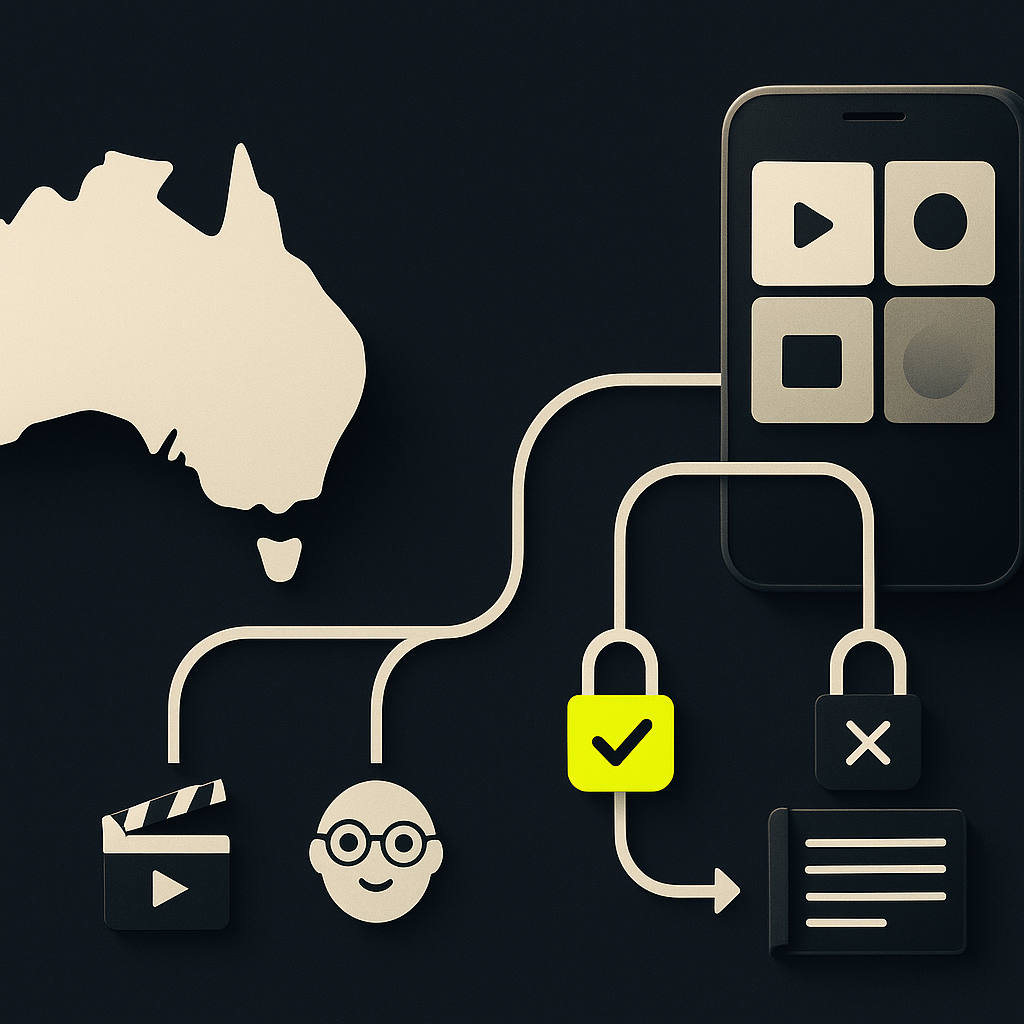
No—not on the strongest on-record evidence available. Australia was explicitly excluded from TikTok's Creator Rewards Program, the successor to the Creator Fund, in a TikTok Australia statement reported in November 2024. Research available for this article on 19 October 2026 does not establish a confirmed Australian launch, despite conflicting third-party country lists.
The practical answer is therefore: do not budget for Australian Creator Rewards income unless TikTok confirms eligibility and enrolment for your account. Check TikTok Studio and the programme terms rather than treating a search result, payment screenshot, or viral announcement as proof.
For creator-platform product and operations teams, this distinction matters beyond TikTok: being able to receive a payment in Australia is not the same as being entitled to earn under a particular programme.
What the evidence actually says about Australia
In its November 2024 report, Yahoo Finance quoted a TikTok Australia spokesperson saying: “The Creator Rewards Program is only available to users from certain countries and is not available to users in Australia.” The report also stated that there were no plans to make the programme available to Australian users at that time.
That is meaningful evidence, but it is a dated statement—not a guarantee of permanent exclusion. Third-party guides published in 2026 disagree about whether Australia has subsequently become eligible. Those lists are insufficient to establish a launch without supporting TikTok terms or account-level confirmation.
Likewise, Russh's investigation into Australian Creator Fund rumours distinguishes claims of access from concrete evidence. A creator saying they received money does not, by itself, identify the programme that paid them.
Keep three conclusions separate:
- Established historical position: TikTok publicly said Australia was excluded in November 2024.
- Current uncertainty: later third-party country lists conflict; the available evidence does not confirm a general Australian rollout.
- Actionable verification: inspect the specific programme in your own account and read its current regional terms.
Creator Fund, Creator Rewards, and effect rewards are different
“Creator Fund” is often used as a catch-all for TikTok income. That makes the Australian eligibility question harder than it needs to be.
The original Creator Fund is the legacy programme. The relevant successor for earning from qualifying videos is the Creator Rewards Program, following the Creativity Program Beta. Neither name should be treated as shorthand for every way a creator can earn through TikTok.
For eligible markets, ContentStudio's programme guide describes requirements including at least 10,000 followers, 100,000 video views in the preceding 30 days, and original videos at least one minute long. These are not a complete eligibility checklist, and meeting audience thresholds does not override country restrictions.
Effect Creator Rewards is different again: it rewards eligible augmented-reality effect creators rather than ordinary video uploads. TikTok's own Effect House update announced an expansion that included Australia. That announcement does not establish Australian access to the main video-based Creator Rewards Program.
| Income route | What generates earnings | Australian eligibility implication | Practical comment |
|---|---|---|---|
| Creator Rewards Program | Qualifying original videos | No confirmed general launch in available evidence | Verify programme enrolment |
| Effect Creator Rewards | Qualifying AR effects | Australia included in an official expansion | Separate criteria and terms apply |
| LIVE or gift features | Eligible audience interactions | Feature and account dependent | Not proof of video-reward access |
| Brand sponsorships | Contracted campaign work | Governed by the commercial agreement | The brand or agency may pay |
| External affiliate arrangements | Approved attributable sales | Depends on the affiliate programme | Do not assume TikTok Shop access |
How Australian creators should check access
Use this checklist before treating projected video rewards as income:
- Open TikTok Studio and look for monetisation options. Navigation and available features can vary. Look specifically for Creator Rewards, not just a balance or generic earnings screen.
- Inspect the eligibility information. Check country or residency requirements, account requirements, content rules, and any application decision shown.
- Confirm acceptance, not merely visibility. A programme description or application button is not the same as approved participation.
- Identify the source of any existing balance. Distinguish video rewards from effects, gifts, sponsorships, or another earning arrangement.
- Save the relevant terms and decision. Record the date, programme name, and eligibility message so a support enquiry can address a specific issue.
- Ask TikTok support if the evidence conflicts. If an announcement promises Australian availability but your account cannot apply, request clarification about the programme, region, and account requirements.
An absent option is a reason to investigate, not conclusive proof that every Australian account is excluded. Conversely, a screenshot from another account does not prove your eligibility.
Do not treat a VPN or overseas bank account as a substitute for meeting programme terms. Changing the apparent connection location or payment destination does not establish qualifying residency or an entitlement to rewards.
Why views and a payment method are not enough
A creator monetisation system has separate decisions: whether the creator may participate, whether particular activity qualifies for earnings, and whether an approved balance can be paid.
A large Australian audience or a viral video does not resolve the first decision. Nor does a supported bank account. Payment infrastructure can deliver money only after the programme has created a valid obligation to pay.
This is also why universal “earnings per thousand views” estimates are misleading here. A rate from an eligible market cannot establish Australian access, and total views are not necessarily qualified views. Forecasting hypothetical rewards before confirming participation produces a revenue estimate with no established earning basis.
If an account is already accepted and has recorded earnings, that becomes a different question. Our guide to diagnosing missing TikTok payments addresses the distinction between earning issues and payment failures.
What Australian creators can evaluate instead
Exclusion from a video-reward programme does not prevent every form of creator income. Brand sponsorships and external affiliate arrangements can monetise an audience under separate contracts. Available LIVE or gift features and effect rewards may offer other routes, subject to their own eligibility rules.
For each route, identify who owes the money, what earns it, and what releases it for payment. A sponsorship might depend on approved deliverables. An affiliate commission might remain provisional until validation or a returns period ends. Neither should be forecast as automatic TikTok pay-per-view revenue.
Before agreeing to work, confirm the payment currency, fees, due date, recipient details, and dispute process. These commercial terms are more useful for cash-flow planning than an unsupported claim that a fund is “coming soon”.
The platform lesson: publish eligibility separately from payout coverage
For platforms paying Australian creators, this case illustrates a product-design problem: “Australia supported” is ambiguous. It could mean creators can register, join a specific incentive, receive a particular currency, or withdraw through a supported payment method.
A clearer design maintains separate records for:
- Programme eligibility: country, residency criteria, effective date, terms version, and acceptance status.
- Earnings approval: qualifying activity, adjustments, validation status, and the resulting payable.
- Payment readiness: identity and tax documentation, recipient details, currency, and available payout methods.
- Payment execution: release status, transfer reference, settlement evidence, and any return reason.
Consider a hypothetical Australian creator who is excluded from a platform's video incentive but completes a separately contracted brand campaign. The campaign payable may be valid even though the video incentive is unavailable. A single account-wide “not eligible” flag could incorrectly block that legitimate payment.
Explain the restriction at the programme level, then show the next action. “This video-reward programme is unavailable for your registered region” is more useful than “payment unavailable”. A well-designed creator payment onboarding portal should collect payment information without implying that onboarding guarantees access to every earning programme.
Confirm the earning right before planning the payout
Australia's access to TikTok's main Creator Rewards Program is not confirmed by the evidence available for this article. The strongest on-record statement says Australia was excluded; conflicting later guides warrant checking, not assuming a launch.
Creators should verify the exact programme and account decision before budgeting income. Platform teams should make country eligibility, approved earnings, and payment availability visibly distinct. Once a valid creator payable exists, explore Payouts.com's creator economy payout solutions for the separate task of delivering that money across borders and payment rails.
Created with AI assistance. Sources are linked in the article; this content is general information, not legal, tax, or financial advice.
Discussion
34 commentsRelated resources
Creator Payment Onboarding Portal: How to Build a Self-Serve Flow That Collects Tax Docs, KYC, and Payout Preferences Before Day One
A poorly designed creator onboarding flow creates compliance gaps, delayed payouts, and frustrated talent. Here's a practical blueprint for building a self-serve portal that gets tax documentation, identity verification, and payout preferences locked in before Day One.
TikTok Not Paying Creators? Diagnose the Missing Money
Missing creator earnings and failed payouts are different problems. Here is how to identify where money stopped—and what platform teams should make visible before creators need to ask.
Walmart Affiliate Commission Rates: What Actually Becomes Payable
Walmart’s standard affiliate program is generally described as paying 1%–4%, but Creator offers and promotional rates need separate verification. Here’s how to distinguish headline rates from commissions you can actually budget and pay.
Run your entire money cycle on one ledger
Global payouts, AP/AR automation, and AI agents with their own wallets and spend limits.
Get started
The checklist approach is helpful, but what's missing is how to handle reconciliation when a creator insists they were paid by TikTok but can't produce which program or terms governed it. We've had three disputes this quarter alone where Australian creators forwarded bank deposits with TikTok remittance codes and our AP team had no way to validate whether those were compliant earnings under their contract with us or some other arrangement that should have been disclosed.
We require creators to screenshot the specific program acceptance screen and terms version before we'll classify it in our subledger. If they can't produce that, it gets coded as unverified deposit and held out of automated reconciliation until they provide TikTok support correspondence with the program name.
We require creators to screenshot the specific program acceptance screen and terms version number at onboarding now. If they can't produce it during a dispute, we treat the deposit as unverified income and flag it for manual review against TikTok's remittance metadata—usually resolves whether it was gifts, effects, or something else.
The distinction you made between payment infrastructure being able to deliver money versus actually creating a valid obligation to pay is something we should have documented better when we integrated our first creator marketplace. We wasted two sprints building payout flows for markets where the platform hadn't even launched the earning programme.
We had the same realization when integrating a ride-sharing platform in APAC. Built full compliance workflows for three countries before discovering two of them had driver caps unrelated to payment readiness. Now we gate development behind confirmed program terms, not just API access.
We had the same realization when integrating a ride-sharing platform in APAC. Built full cash-out capability for three markets before legal confirmed only one had actual driver earnings approval. The infrastructure worked perfectly, just had nothing legitimate to push through it.
The dated statement problem you called out is real. We're building a creator payout module now and every third-party 'current country list' we find contradicts the last one, most with no publish date or source attribution. We've started requiring product to pull terms directly from the platform API or authenticated session before we even scope the integration, because reconciling phantom earnings from programs a user was never actually enrolled in is a nightmare we're not repeating.
We ended up doing the same. The API terms are versioned and timestamped, which at least gives us an audit trail when a creator disputes eligibility. Still doesn't solve the problem when the platform hasn't exposed a programmatic enrollment check though.
We ended up doing the same. The API terms are versioned and timestamped, which at least gives you an audit trail when eligibility changes. Still doesn't solve the problem when the platform hasn't updated their own documentation though.
This would have saved us a week of back-and-forth last month when our finance team was trying to accrue Creator Rewards liability for Australian influencers we onboarded. We were relying on a third-party aggregator site that listed Australia as eligible, but when the creators couldn't actually enroll, we had to unwind the revenue share contracts and explain to the exec team why our Q1 payout forecast was suddenly off by 18%. The takeaway about verifying program entitlement separately from payment rail capability is something we should have applied at the contract stage, not post-signature.
The three-column income route table is the clearest summary I've seen of why creators keep asking us why their balances don't reconcile. We now send that structure to onboarding so they understand we can't just assume Creator Rewards exists for every market—saves about four support tickets per creator cohort.
We did the same thing—copied that table structure into our product documentation and dropped the number of "why can't I see my earnings" tickets by half. It's especially useful when creators point to a generic YouTube explainer that lumps all TikTok income together.
We're doing something similar now. That income route breakdown forces the conversation upstream to product and legal before we promise disbursement timelines we can't actually meet.
The point about VPNs and overseas bank accounts not establishing entitlement is something we should probably hardcode into our onboarding flow—we've had three creators this quarter submit support tickets confused why their US bank details didn't unlock Creator Rewards when they're operating from Sydney.
We added similar language in our dashboard after support got flooded with similar cases. Now we surface the actual program eligibility criteria before the payment method step, which cut down the confusion tickets by maybe half but didn't eliminate them entirely.
We ended up adding a geolocation check at account creation and surfacing a disclaimer during payment onboarding that explicitly says 'Adding a payment method does not confirm program eligibility.' Cuts down the tickets but doesn't eliminate them entirely—some creators still think the bank account is proof of access.
This is a perfect case study for why we separate program enrollment verification from payment method setup in our platform onboarding flows. We've seen too many creators open support tickets demanding payment for activity that was never eligible in the first place, and the VPN point is especially relevant—changing apparent location doesn't create a valid liability on our books.
We hit exactly that pattern when we built out marketplace payouts last year. The VPN thing is particularly nasty because it creates phantom entitlement expectations that turn into compliance headaches downstream when tax reporting doesn't match declared residency.
We built similar gates after a cohort of influencers threatened chargebacks thinking we withheld funds, when really their accounts were never approved for that specific earn tier. The VPN issue was messier than expected—had to add geolocation audit logs to disputes.
The actionable verification checklist is exactly what we needed when scoping payout rails for creator platforms. Too many marketplace clients assume eligibility is binary when it's actually program-specific, account-specific, and sometimes content-specific. Saved us from building the wrong reconciliation logic twice last year.
We learned this the hard way too. The number of times treasury asks us why projected Creator Fund inflows didn't materialize because sales read a third-party blog instead of confirming enrollment terms. Now we require actual TikTok Studio screenshots showing approved program participation before we factor anything into cash flow models.
We made the same mistake assuming a single KYC would cover all monetization products on a platform. Had to rework the entire onboarding flow when we realized each program had different tax treatment and region locks that weren't visible at the API level.
The November 2024 exclusion statement combined with conflicting third-party lists in 2026 is a nightmare for forecasting. We're budgeting Q1 payouts for a creator tool right now and basically can't trust anything except what the platform API tells us at the account level, which means we can't model rollout assumptions at all.
We solved this by falling back to TikTok's official partner API for enrollment status checks rather than relying on dated public statements. Still not perfect for forward-looking budgets, but at least it's programmatic and we can refresh the eligibility snapshot weekly instead of guessing from conflicting blog posts.
We solved this by falling back to TikTok's official partner API for enrollment status checks before any creator hits onboarding. Still doesn't help with forward planning across markets, but at least we're not provisioning payout accounts for ineligible users.
The distinction between Effect Creator Rewards and the main Creator Rewards Program is particularly relevant for us. We've been evaluating creator payment volumes across platforms for a client's reconciliation scope, and the number of separate earning streams under the TikTok brand creates real headaches for correct GL coding. The point about 'a balance doesn't tell you which program generated it' is exactly the reporting gap we hit last quarter when trying to validate a creator's receivables claim.
Same challenge here. We had to build separate ledger codes for each TikTok product line after a creator mistakenly categorized Effect earnings as video rewards in their invoice. The naming overlap makes reconciliation painful when you're aggregating across hundreds of payees.
Agreed. We ended up treating each stream as a distinct merchant relationship for reconciliation purposes because the timing, thresholds, and reporting formats are completely different. The Effect rewards in particular show up with different metadata than video-based payouts in other markets.
This is a good reminder that payment capability and program entitlement are separate gates. We see this constantly in marketplace onboarding—seller can connect a bank account and pass KYC but that doesn't mean the platform has enabled their category or geography for commissions. The VPN/overseas account note is especially important because we've had to flag similar workarounds in audit for revenue recognition issues.
We hit this exact scenario with a logistics marketplace. Driver could upload tax docs and link a debit card but the region wasn't whitelisted for per-delivery payouts, only reimbursements. Took three weeks to figure out the account screen was showing features that weren't actually enabled for that geography.
Exactly this. We ran into the same issue with a European gig platform last quarter—contractors could add IBAN details and verify identity, but earnings stayed at zero because their service category wasn't actually enabled in their country yet. Support kept pointing them to the payment settings instead of the program terms.
do Australian creators actually have any reliable video monetization path on tiktok right now or is it effectively brand deals only? the article walks through the verification steps but I'm curious what the practical state is for finance teams modeling creator costs in APAC campaigns.
From what we've seen with AU creator contracts, it's effectively sponsorships and LIVE gifts only for meaningful revenue. We stopped accruing any video-based RPM assumptions for Australian TikTok influencers after the November 2024 exclusion statement, and nothing since has given us reason to reverse that position in our campaign budgets.
From what we've seen with AU creator contracts, it's effectively sponsorships and LIVE gifts if the account qualifies. No reliable video reward accrual we can track programmatically, which means we treat those partnerships more like standard influencer buys with negotiated flat or performance fees rather than assuming any baseline platform payment the creator is already earning from views.