

Jumia Affiliate Commission: Rates, Attribution, and Payout Rules
Jumia affiliate earnings depend on more than a headline percentage. Learn how to verify category rates, attribution rules, and payment conditions—and what marketplace teams can learn from the gaps.
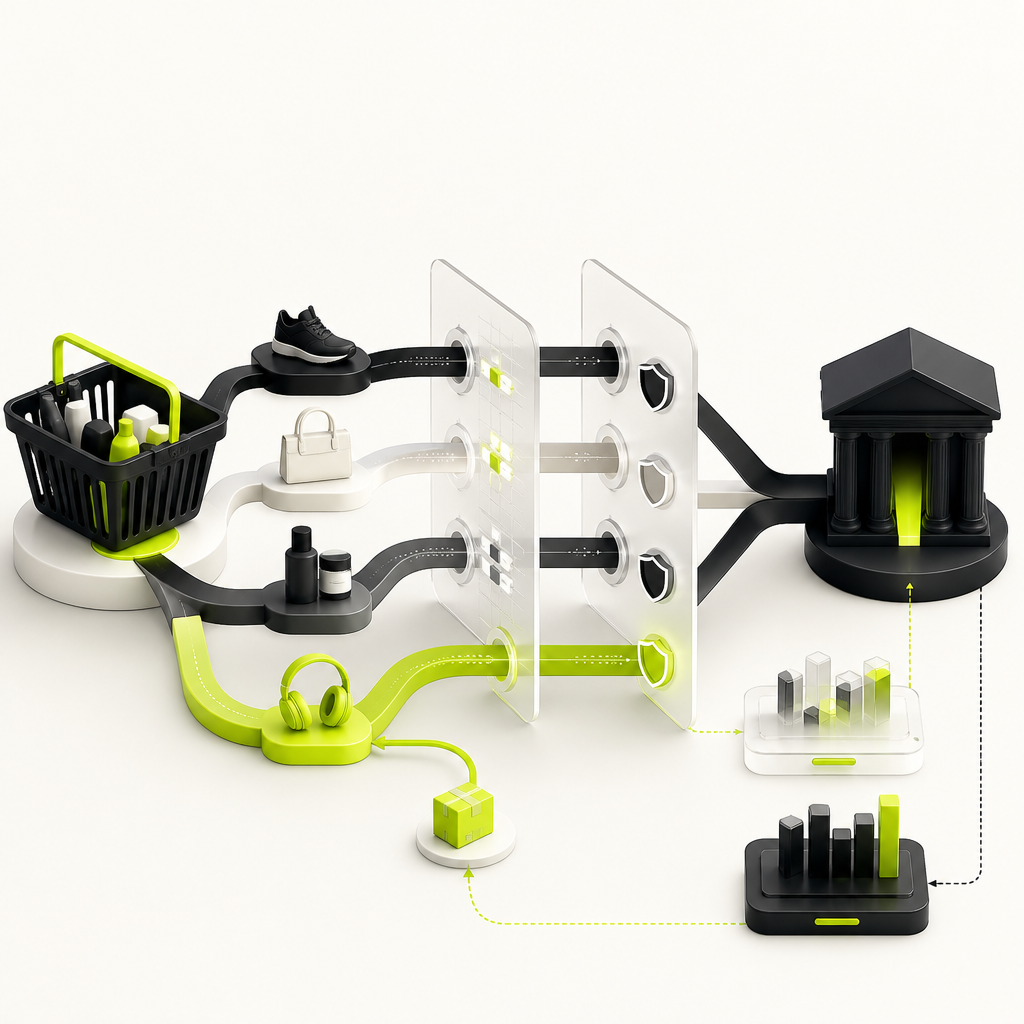
Jumia affiliate commission varies by product category and country; there is no single verified rate that applies to every referral. Third-party listings advertise rates as high as 13%, but the supplied research did not establish a current official affiliate rate sheet. Treat that figure as a reported ceiling, not a guaranteed commission.
The practical answer is to confirm the rate for your market, product category, and campaign in Jumia’s current affiliate terms before forecasting earnings. Then check attribution, order validation, and payout eligibility separately: a tracked sale is not necessarily payable cash.
For marketplace product and operations teams, this distinction also matters when designing affiliate programs. Partners need an explainable path from a promotional link to an approved commission—not just an attractive percentage.
How much commission does Jumia pay affiliates?
The Referly Jumia directory listing advertises a 13% commission and a seven-day cookie. Those are third-party directory claims, not a universal offer established by a current Jumia rate schedule.
The supplied research describes category-based commissions, with fashion and accessories generally carrying higher percentages than electronics. It also reports possible variations by order volume and new-customer status. However, the retrieved summaries disagree on category percentages and maximum rates. Publishing a definitive category-by-category tariff would give those figures more authority than the evidence supports.
Use published rate roundups to identify questions, not to price a campaign. A rate is only useful when attached to a country, category, effective period, and set of qualification rules.
| Commission term | What to verify | Why it changes earnings |
|---|---|---|
| Market and program | Country and affiliate agreement | Rules may differ across markets |
| Product category | Category assigned to each item | A basket may contain different rates |
| Eligible sale value | Treatment of discounts, tax, and delivery | Checkout total may not be the base |
| Campaign conditions | Dates and qualifying customers | Promotional rates may be conditional |
| Attribution | Window and competing referral rules | A purchase may not earn credit |
| Validation | Delivery, cancellation, and return rules | Tracked earnings may be reversed |
| Payout eligibility | Threshold, currency, and schedule | Approved earnings may remain unpaid |
Calculate at the eligible-item level
A useful planning formula is:
Estimated commission = sum of each eligible item’s commissionable value × its applicable rate.
This is a calculation framework, not a statement of Jumia’s exact contractual formula. Confirm what Jumia includes in the commissionable value rather than assuming the entire checkout amount qualifies.
For a mixed basket, applying the highest advertised percentage to every item can overstate earnings. Likewise, if one item is returned, the effect should be checked against the program’s item-level or order-level reversal rules. Preserve the original estimate and the adjustment separately so the difference remains explainable.
Check attribution before counting a sale
A commission rate answers how much a qualifying sale could earn. Attribution determines whether the affiliate receives credit at all.
Here, the research contains a material conflict. Referly reports a seven-day cookie, while the Nigeria-focused Nairatechie Jumia affiliate guide reports a 30-day window. These should not be combined into a flexible range or treated as interchangeable policies.
Instead, verify the terms attached to the specific market and campaign. Ask:
- What event starts the attribution window?
- Which referral receives credit if a shopper clicks several affiliate links?
- Does attribution carry from a browser into the Jumia app?
- Are there restrictions on promotional channels or self-referrals?
- Which report shows whether an order was attributed successfully?
These are verification questions, not confirmed descriptions of Jumia’s tracking implementation. A longer cookie window alone does not establish that every later purchase will qualify.
Do not confuse online affiliates with JForce
The research distinguishes Jumia’s online affiliate or KOL program from JForce, a sales-consultant model in which participants help customers place orders. Jumia’s Nigeria commission opportunity page is relevant to checking that distinction.
Do not transfer JForce commission or payment claims into an online affiliate forecast. Similar branding does not mean the same agreement, qualifying event, or payout schedule.
When someone asks about “Jumia commission,” establish whether they mean an online referral reward, a sales-consultant reward, or a fee charged to a marketplace seller. These represent different payment relationships.
When does commission become payable?
The supplied research describes monthly payments and country-dependent payout arrangements, but its summaries disagree on minimum balances and validation periods. It does not establish one reliable global threshold, payment method, or release timetable.
That uncertainty makes it important to separate the stages below. These are analytical stages for understanding earnings, not verified labels from Jumia’s dashboard.
- Tracked: a referral and potential commission have been recorded.
- Awaiting validation: the transaction still needs to satisfy the applicable order conditions.
- Approved: the commission has passed validation but may not yet qualify for payment.
- Eligible for a payout run: threshold, payment setup, and other applicable release requirements are satisfied.
- Sent and received: a payment has been initiated and subsequently credited.
A minimum payout threshold is not the same as an approval condition. A balance can be approved yet below the release threshold. Conversely, a large tracked balance may still contain commissions that will never be approved.
For cash planning, ask which event starts the payment clock: purchase, delivery, approval, or the payout cutoff. “Monthly” does not answer that question, nor does it establish the recipient’s bank-credit date.
A verification checklist before promoting Jumia products
Build a short evidence record before committing campaign spend or promising creators a revenue share:
- Identify the agreement: record the country, program name, account, and contracting entity shown in the terms.
- Capture the applicable rate: save the category schedule and effective dates, including campaign exceptions.
- Define the calculation base: confirm how discounts, delivery charges, and taxes affect eligible value.
- Confirm attribution: retain the current cookie window and rules for competing referrals.
- Document validation: establish how cancellations, returns, and partial returns affect commission.
- Verify payment conditions: record the threshold currency, supported method, rollover treatment, and payment schedule.
- Check payment readiness: complete any identity, tax, or account-detail requirements the program actually requests.
- Prepare a support trail: retain order references, commission records, relevant terms, and payment references where available.
If a term is missing, request clarification through Jumia’s official account or support channels. Do not fill the gap with a rule from another country or a different program.
What marketplace teams should learn from these gaps
Make every commission explainable
For platforms operating their own affiliate programs, retain the rule version behind each commission: market, category, eligible value, attribution outcome, and adjustment reason. Historical earnings should remain reproducible after a rate changes.
Keep affiliate rewards separate from seller settlement obligations. Both can arise from the same order, but they need not have identical approval or release rules. This distinction is also central to marketplace split-payment design.
Show the reason a balance is not payable
A single “pending” balance hides too much. Distinguish order validation from a threshold shortfall, incomplete payment setup, and a transfer already in progress. Each state needs a reason, a responsible party, and a next action.
For teams building affiliate and partner payout operations, payment-method choice belongs after those eligibility decisions. A faster rail cannot make an unapproved commission payable.
Start with the applicable rule, not the maximum rate
Jumia affiliate commission is best evaluated as a set of local rules: what qualifies, which rate applies, when approval happens, and how approved money reaches the recipient. The reported maximum is only a starting point.
Affiliates should confirm those rules before budgeting income. Platform teams should make the same rules visible in their own partner experience. Once eligibility and release controls are defined, explore Payouts.com’s payout automation to support the money-movement layer—not to replace the commission policy that determines what is owed.
Created with AI assistance. Sources are linked in the article; this content is general information, not legal, tax, or financial advice.
Discussion
3 commentsRelated resources
Marketplace Split Payments: From Checkout to Seller Settlement
Splitting a checkout payment is only the start. Build a marketplace money flow that keeps seller entitlements, release conditions, FX, and refunds connected through settlement.

Walmart Affiliate Program Commissions: Plan Campaigns by Program
Walmart’s standard affiliate program and Walmart Creator should not share one commission assumption. Learn how to verify the right terms and build campaign budgets that survive rate changes.

XM Affiliate Commission: Rates, Qualification, and Withdrawals
XM commission headlines describe earning potential, not guaranteed cash. Here is how to evaluate the applicable rate, qualifying activity, and withdrawal conditions—and what platform operators can learn from the distinction.
Run your entire money cycle on one ledger
Global payouts, AP/AR automation, and AI agents with their own wallets and spend limits.
Get started
The staged commission model (tracked → validated → approved → eligible → paid) is exactly what we're wrestling with on our marketplace build right now. We've got finance screaming about accrual timing and partners confused why their dashboard balance isn't moving to their bank account. Breaking these into separate states in the UI is the only way we've kept refund reversals from turning into support tickets.
"A rate is only useful when attached to a country, category, effective period, and set of qualification rules." This should be printed on a poster in every partner ops team. We onboarded a reseller last quarter who built their entire margin model around a top-line percentage they found in an affiliate directory, then discovered half their SKUs were in a lower tier and returns reversed commissions 45 days later.
Honestly surprised the article didn't call out tax withholding more directly in the payout stage breakdown—cross-border affiliate payments get messy fast when you're reconciling net vs gross and partners are in jurisdictions where you're suddenly responsible for 1099 reporting or local equivalents.