

Marketplace Payout: Build a Seller Experience You Can Honor
A reliable marketplace payout starts before money moves. Learn how to connect seller balances, withdrawal rules, payment methods, and exception handling into a promise your platform can keep.

A marketplace payout is the transfer of money owed by a marketplace to a seller or service provider, after applicable commissions, fees, refunds, and other adjustments. It is distinct from accepting the buyer’s payment: successful checkout does not mean the seller’s money is immediately available to withdraw.
For product and operations teams, the central challenge is making the seller-facing promise match the underlying money movement. The balance, withdrawal button, arrival estimate, and support response must all describe the same financial reality.
The practical starting point is not “Which rail is fastest?” It is “What can this seller withdraw, when, at what cost, and what happens if delivery fails?”
Define the payout promise before choosing the payment method
Marketplace payouts combine several decisions that sellers often experience as one event. As Tipalti’s overview of marketplace payouts explains, distributing seller earnings brings together payment execution, recipient requirements, and operational challenges. Treating that process as a simple bank transfer leaves important gaps.
Write a payout policy that answers:
- Eligibility: Which verification, fulfillment, and risk conditions must be satisfied?
- Availability: When do earnings become withdrawable, and what remains reserved?
- Timing: Does the platform pay automatically, on request, or through both options?
- Price: Who pays transfer and currency-conversion charges?
- Exceptions: What happens after a rejected transfer, disputed sale, or changed bank account?
Splitting transaction proceeds is an upstream concern. The marketplace split payments guide covers how to allocate money between participants. The payout experience starts with those entitlements and determines when and how recipients can access them.
Make the seller balance a controlled state model
A single “earnings” number is insufficient. It can combine unsettled sales, reserves, available money, and withdrawals already underway. If the application treats that total as spendable, the platform can release funds twice or finance withdrawals unintentionally.
Use explicit balance buckets and payout states. The following is a suggested operating model, not a universal processor status vocabulary.
| Balance or payout state | Seller-facing meaning | Required control |
|---|---|---|
| Pending earnings | Earned, not yet withdrawable | Track settlement and release conditions |
| Reserved | Held under a stated policy | Record reason and review trigger |
| Available | Eligible for withdrawal | Exclude existing payout commitments |
| Committed to payout | Withdrawal requested | Lock the amount atomically |
| In transit | Submitted for delivery | Track provider reference and status |
| Delivered | Delivery confirmed by available evidence | Reconcile against provider records |
| Failed or returned | Payment needs resolution | Confirm funds before restoring availability |
Calculate availability from ledger entries, not a front-end estimate. Record earnings, deductions, reserve placements, reserve releases, and payout commitments separately. Preserve the currency and transaction references for each entry.
When a withdrawal is accepted, reduce available funds and create the payout commitment in one atomic operation. Otherwise, simultaneous requests from the seller and a scheduled payout job can both claim the same money.
Also distinguish seller entitlement from payout-account liquidity. A seller may have eligible earnings while the execution account lacks the required currency. That is a treasury issue to prevent or disclose, not a reason to silently relabel the earnings as unearned.
Separate availability, dispatch, and arrival
A payout schedule contains distinct clocks: when earnings become eligible, when the platform submits the payment, and when the recipient can use the money. Faster execution changes the last part; it does not automatically eliminate settlement requirements or risk holds.
Horizon Labs’ discussion of payout schedules and risk highlights how holds, seller risk tiers, and payout timing interact. A practical policy should explain the condition for release rather than present every delay as “processing.”
In the seller interface, show:
- The amount available now, separately from pending earnings.
- The next scheduled dispatch or the conditions needed to schedule it.
- An arrival estimate tied to the selected method and destination.
- Any action the seller must take, with a specific reason.
Where exact availability is uncertain, state the dependency: “Available after fulfillment review” is more accurate than an unsupported countdown. For delivery estimates, use the framework in building reliable payout ETAs rather than applying one global arrival promise.
Offer payment choices with visible tradeoffs
Scheduled payouts can consolidate small balances and simplify forecasting. On-demand withdrawals give recipients more control but create less predictable funding demand. Faster payment options can improve access, but their availability, cost, limits, and recovery characteristics vary by destination and provider.
At selection, show the expected recipient amount, currency, platform-disclosed charges, estimated arrival, and any known uncertainty about intermediary deductions. Do not label a payout “free” while leaving an undisclosed conversion charge in the exchange rate.
Validate destination eligibility before presenting a method as usable. A stored debit card or bank account does not establish that every faster rail can reach it.
Fallback also needs a policy. Moving to a slower method may be acceptable with prior consent; changing the currency or reducing the recipient amount requires clear disclosure. Never launch a fallback merely because the original request timed out—the first payment may still be moving.
Design exception handling before launch
Unknown is not the same as failed
A network timeout means the platform lacks an answer. It does not prove that the provider rejected the payout. Use an idempotency key for each payout instruction, retain the provider reference, and query the original attempt before creating another.
Process duplicate notifications safely and reject invalid state regressions. Where provider events arrive out of order, reconcile them against the authoritative payment record rather than letting the latest notification overwrite everything.
Recovery must preserve the audit trail
When a payment returns, identify the reason, confirm the funds’ disposition, and determine whether charges affected the recoverable amount. Restore availability only through a recorded ledger movement. Link any replacement payout to the original so support can explain the complete sequence.
A refund arriving after payout needs a separate policy. Depending on contracts and applicable law, the marketplace may absorb the loss, use an agreed reserve, or recover it from future earnings. Do not assume a completed transfer can simply be reversed.
Destination changes are security events
Require appropriate authentication for bank-detail changes, notify the seller, and assess whether a review or temporary restriction is warranted. Store the destination version used for each payout so later edits cannot obscure where money was sent.
Keep compliance and reporting connected, but distinct
Map which entity collects buyer funds, holds them, owes the seller, and executes the payout. A payment provider’s involvement does not by itself resolve every licensing, safeguarding, verification, or reporting obligation. Requirements depend on the jurisdiction, contractual roles, and actual flow of funds.
Collect required identity and tax documentation early, and expose missing requirements before withdrawal. Payouts.com’s Tax & Compliance capabilities address documentation and verification workflows; the platform still needs a defined responsibility map.
Keep tax reporting totals separate from net withdrawals. In the United States, the IRS explains that Form 1099-K reports gross payment amounts without adjustments for items such as fees, credits, or refunds. A seller’s bank deposits therefore should not be expected to match that reported gross figure. Explain the difference in statements and help content.
A marketplace payout launch checklist
Before enabling withdrawals, test the promises and failure paths—not just a successful transfer.
- Balance integrity: Confirm concurrent withdrawal requests cannot consume the same available funds.
- Policy visibility: Show why money is pending or reserved and what releases it.
- Funding readiness: Check execution-account liquidity by currency before dispatch.
- Method transparency: Display eligibility, fees, conversion terms, and arrival estimates before confirmation.
- Ambiguous outcomes: Simulate a timeout after provider acceptance and confirm no duplicate is created.
- Returns and refunds: Verify ledger adjustments, replacement references, and seller messages.
- Reconciliation: Match seller commitments, provider transactions, and funding-account movements.
- Support ownership: Give each unresolved state an owner, next action, and escalation path.
Track unexplained balance differences, withdrawals arriving outside the displayed estimate, unresolved payout age, and support contacts per completed payout. Segment results by method and destination so aggregate success does not conceal a failing seller cohort.
Build trust through explainable money movement
The strongest marketplace payout experience is not necessarily the fastest option everywhere. It is one where recipients understand their balance, can choose an appropriate method, and receive a credible explanation when something changes.
Start by auditing the journey from available earnings to confirmed delivery. Then evaluate Payouts.com’s payout automation against that journey, with balance controls, funding, reconciliation, and recovery included in the requirements—not deferred until after launch.
Created with AI assistance. Sources are linked in the article; this content is general information, not legal, tax, or financial advice.
Discussion
34 commentsRelated resources
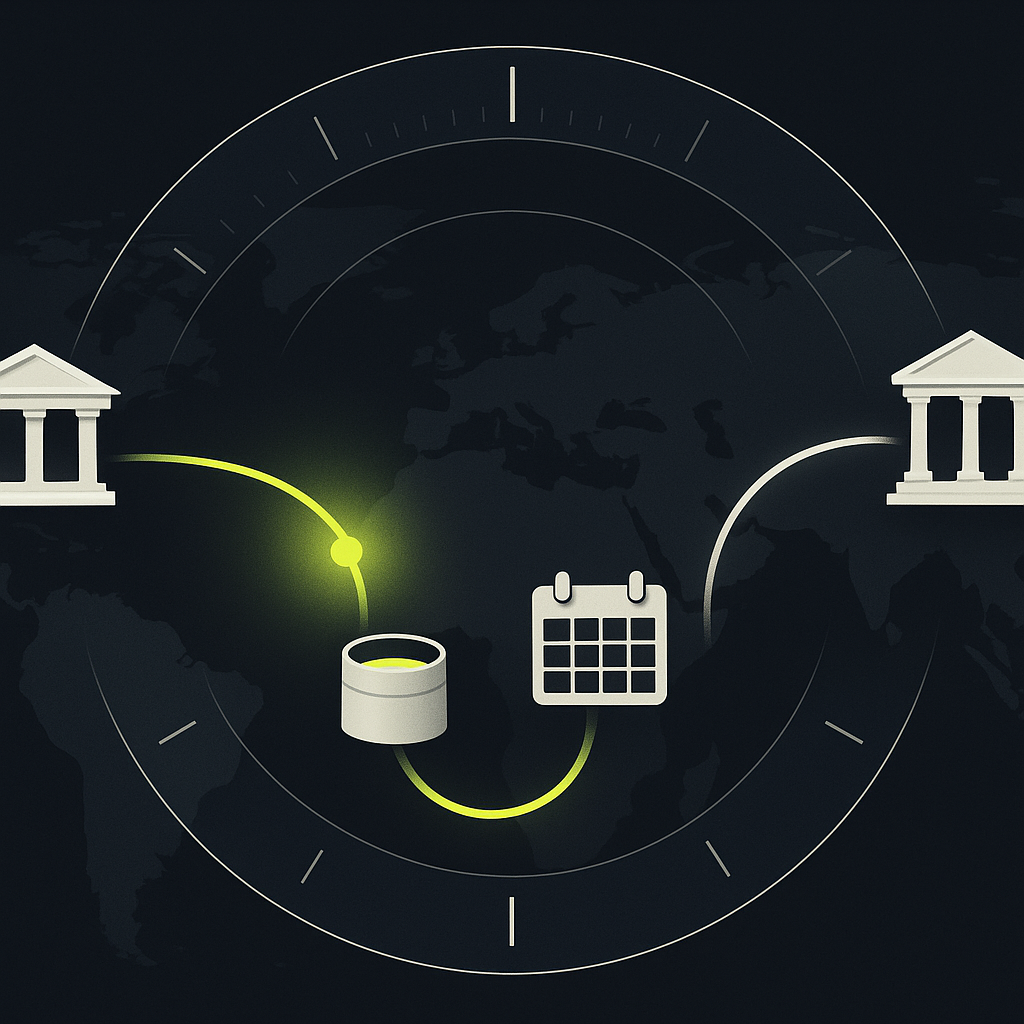
Payout Settlement Times by Country: Build Reliable Payment ETAs
An instant domestic rail does not make an international payout instant. Use this country reference and operating framework to set payment ETAs that account for funding, calendars, and recipient-bank availability.
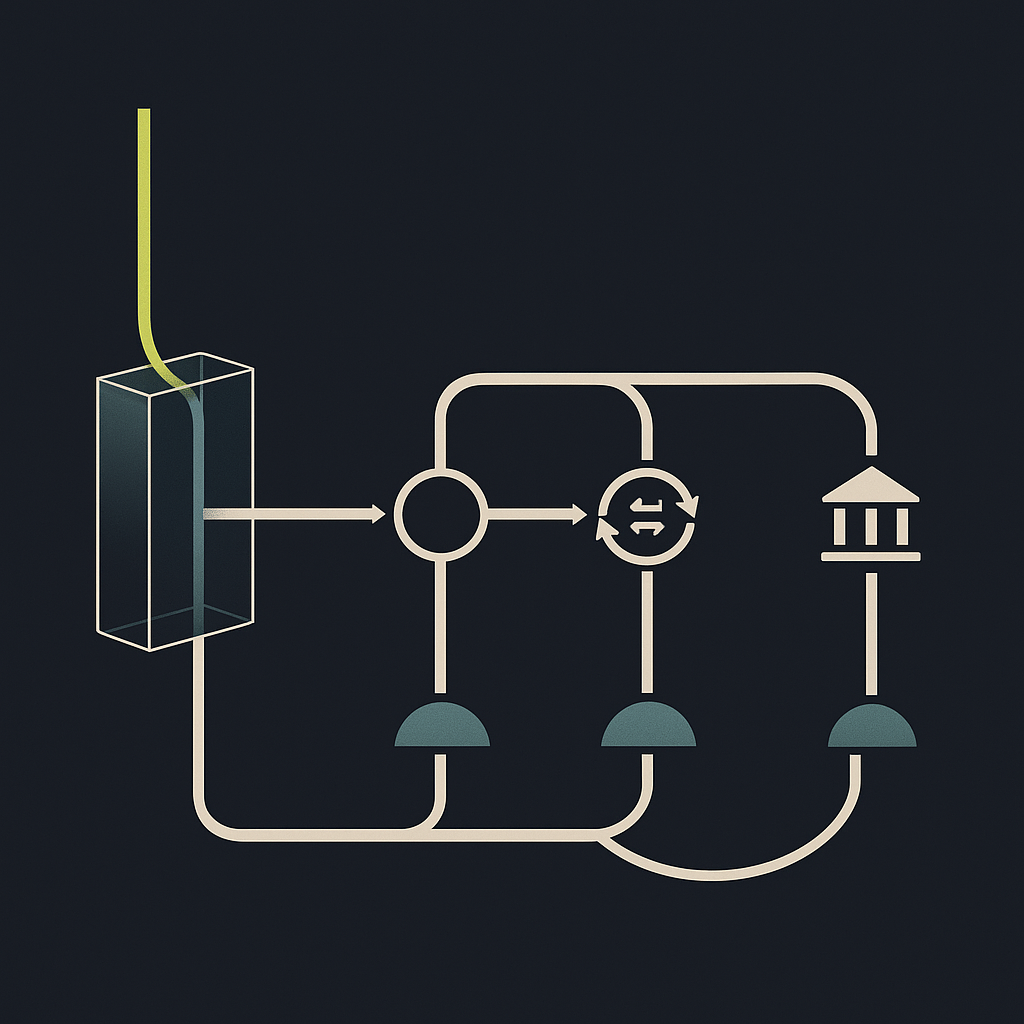
Marketplace Split Payments: From Checkout to Seller Settlement
Splitting a checkout payment is only the start. Build a marketplace money flow that keeps seller entitlements, release conditions, FX, and refunds connected through settlement.

IG Creator Fund: Lessons for Platform Incentive Design
The IG creator fund is not one universally available program. For creator platforms, that confusion reveals a practical challenge: turning promotional incentives into clear, funded payment commitments.
Run your entire money cycle on one ledger
Global payouts, AP/AR automation, and AI agents with their own wallets and spend limits.
Get started
The bucket state model makes sense but we struggled with how to communicate reserves to sellers without triggering a flood of support tickets. Saying 'reserved under policy' is vague enough that everyone assumes it's a mistake, but listing the specific reason (chargeback window, fulfillment verification, fraud review) made sellers panic about implied accusations. Did you find a middle ground that actually works in the UI?
We added a reserves dashboard that shows each hold with its release trigger (e.g., 'Released 7 days after delivery confirmation' or 'Released when chargeback window closes on [date]'). It didn't eliminate tickets entirely but cut them by maybe 60%. The key was being specific about the date or event, not just the category.
We added a reserves dashboard that shows each hold with its release trigger (e.g., 'Released 7 days after delivery confirmation' or 'Chargeback window closes May 15'). Support volume dropped by about half once sellers could see the timer and reason without asking.
The point about treating timeout as unknown rather than failed is critical but underappreciated. We burned a weekend last quarter because our retry logic assumed no response meant safe to resubmit, which resulted in duplicate payouts to about 40 sellers when the original requests had actually succeeded but the provider's webhook was delayed.
We learned this the hard way too. Now we park anything without a definitive status response in a separate reconciliation queue and wait for webhook confirmation or the next scheduled status poll before marking it terminal. The idempotency key saved us from worse damage but the manual cleanup still took days.
Same lesson here. We added a reconciliation window where payouts in 'pending confirmation' state get checked against provider webhooks and daily settlement files before any retry is allowed. The idempotency key alone didn't save us because we were generating new keys on what we thought were fresh attempts.
The recommendation to show 'Available after fulfillment review' instead of a countdown is the kind of UX friction most product teams fight against, but it's absolutely the right call. We used to display estimated release dates and it created way more support load when holds extended than just surfacing the actual gate condition upfront.
We made the same switch after sellers started screenshotting countdown timers and escalating through social when the date moved. Vague dependency language feels less polished but it's operationally honest and the ticket volume dropped by half.
We went through the same calculus and landed on conditional messaging instead of removing the estimate entirely. If the hold reason is deterministic (e.g., waiting for a specific event like shipment confirmation), we show the dependency. If it's discretionary review, we drop the timer. Cuts support tickets without killing all urgency signals.
The distinction between availability, dispatch, and arrival is something we got wrong for months. We were showing one timestamp in the UI but the actual arrival could lag by 2-3 days depending on the corridor. Sellers would contact support the day after 'expected delivery' and we had no good answer because we conflated submission confirmation with recipient access.
The section on defining payout policy upfront is critical but I'd add one more: currency of earnings vs currency of disbursement. We had sellers assuming they'd receive in their local currency when we were actually holding balances in USD and converting at withdrawal, which created expectation gaps around FX timing and rate visibility.
Agreed, and worth calling out that this also matters for fee calculation. If you're deducting platform fees in USD but the seller thinks in EUR, they can't validate the math without knowing the conversion timestamp and rate. We now show both settlement currency and payout currency in the transaction detail view.
We ran into the same thing. The fix was separating balance display currency from settlement currency in the schema and letting sellers set a preference. Still required updating the payout policy docs to explain when conversion happens and who sees the mid-market rate vs our markup.
The atomic lock recommendation is solid but in practice you also need to handle the case where a seller changes their payout destination between commit and dispatch. We've seen sellers update bank details right after requesting withdrawal, then dispute the arrival when it goes to the old account. Now we snapshot the full destination record at commit time and surface a confirmation step if anything changes before actual submission.
We handle this by freezing the destination record at commit time and storing it with the payout object itself, not referencing the seller's current account table. If they update afterward, the in-flight transaction still goes to the committed destination and we show both accounts in the status UI so they know where it went.
We block destination changes when there's an active payout in committed or in-transit state. The seller sees a message that they need to wait until delivery confirmation or let the current one fail. Not perfect UX but it eliminates the dispute scenario you described.
The section on separating payout account liquidity from seller entitlement is probably the most underappreciated operational issue in marketplace finance. We've had CFOs ask why we can't just pay sellers instantly when 'the money is there' without understanding that customer funds sitting in a pooled account don't automatically equal liquid currency in the right nostro for cross-border payouts. Documenting this gap in the policy framework upfront would have saved us six months of treasury escalations.
Exactly. We built a simple cash forecast model that estimates payout demand by day and currency based on historical withdrawal patterns and pending balances. Treasury uses that to pre-fund execution accounts 48 hours ahead. It's not perfect but it stopped the random liquidity crunches where we had seller funds accounted for but no USD in the right account to actually send.
We ended up treating this as two separate reconciliation loops: one for seller ledger state and one for treasury position. The real pain point is explaining to finance why we can't just use the pooled balance as working capital when it's technically already obligated to sellers who haven't withdrawn yet.
The state model section is useful but you gloss over the hardest part: what counts as 'delivery confirmed by available evidence' varies wildly by rail and geography. ACH has one confirmation model, FedNow another, SWIFT MT103 yet another, and local schemes like BACS or SEPA each have their own. We ended up maintaining a rail-specific reconciliation ruleset because treating a 200 OK as proof of delivery caused real losses when banks rejected files hours later.
Exactly this. We built an internal abstraction layer that maps each provider's terminal states to our own payout status enum, but the edge cases are brutal. For example, some rails give you a credit confirmation while chargeback windows are still open, others only confirm debit from your account. The article's 'Delivered' state works conceptually but operationally you need rail-specific logic and different SLAs for each.
Completely agree. We ended up maintaining a separate confirmation ruleset per corridor with different thresholds for each rail. For ACH we treat the file acceptance as committed but wait for NOC/return windows before marking delivered. SWIFT we rely on MT910 or MT950 depending on the correspondent bank. The article's state model is a good starting framework but you need a routing layer that maps rail-specific events back to those canonical states.
The balance bucket model you describe is basically ledger accounting applied to seller earnings, which is the right approach but I'm curious how teams handle the UI/UX challenge of explaining 'reserved' vs 'pending' to sellers who just want one number. We ended up collapsing reserved and pending into a single 'processing' label with a tooltip, which reduced support tickets but also hid useful information.
We went the opposite direction and surfaced all the states explicitly. Sellers initially complained but support tickets dropped 40% once they could see exactly why specific amounts weren't withdrawable yet. The key was attaching a plain-language reason to each bucket, not just a label.
We tried the collapsed view initially too but had to unroll it after support got flooded with 'why can't I withdraw my full balance' tickets. The extra line item for reserved funds with a hover tooltip explaining the hold reason cut our related support volume by about 40%. Sellers don't love seeing multiple numbers but they hate surprises more.
The atomic operation point for withdrawals is spot on. We had a race condition last year where a seller triggered two withdrawals within seconds through different browser tabs and our lock wasn't granular enough. Ended up overpaying by $18k before we caught it in reconciliation.
We hit the same issue with concurrent requests. Ended up implementing row-level locks in Postgres with SELECT FOR UPDATE SKIP LOCKED, plus an application-level distributed lock using Redis. The double protection feels heavy but after one overpayment incident the paranoia is justified.
We saw the same pattern with parallel API calls from mobile and web. The fix that worked was pessimistic locking at the database level plus a short-lived Redis key scoped to seller ID + withdrawal request. Belt and suspenders, but race conditions during withdrawals are too expensive to leave to chance.
The fallback policy section is good but doesn't address the vendor reality: some payout providers will silently downgrade your real-time rail request to next-day without telling you until reconciliation. How are people actually validating method eligibility beyond what the API claims at setup time?
We started requiring a second status check 60 seconds after initial success response specifically because of this. If the provider's webhook says real-time but their ledger export shows ACH batch ID, we flag it for review and notify the seller before the original ETA expires. Not perfect but catches most of the silent downgrades.
We poll for status updates every 30 seconds for the first 5 minutes after submission and compare the final settlement method in the webhook payload against what we requested. If there's a mismatch we flag it in our ops dashboard. Not perfect but at least we know before the seller does.
I appreciate the distinction between seller entitlement and payout-account liquidity, but you're glossing over how treasury actually manages this in practice. If you're running a marketplace doing payouts in 15+ currencies, you can't just "prevent or disclose" FX liquidity gaps. You need threshold policies, automated rebalancing rules, and tiered disclosure that doesn't spook sellers when SGD is temporarily low at 3am.
Fair point. We handle this with daily forecasts per currency based on rolling withdrawal patterns and pre-fund accounts 2 days out, but when a large seller requests an unexpected withdrawal in SGD or MXN it still exposes how thin our cushion really is.
We run monthly rebalancing sweeps across nostro accounts and keep a 72-hour buffer calculated from trailing 30-day withdrawal volume by currency. Still burns us on holiday spikes though. What cadence works for you with 15+ currencies without holding excess capital?