

Multi Currency Business Account: A Finance Team’s Guide
A multi-currency account gives finance teams more control over when money is converted and how international payments are funded. The real test is whether each balance is usable by the right entity, on the right rail, before payments are due.

A multi currency business account lets a business hold, receive, convert, and send money in multiple currencies through one account interface. Depending on the provider, it may also include local receiving details for selected currencies. Its main advantage is control: you can retain foreign-currency receipts and use them for matching expenses instead of automatically converting them into your home currency.
For finance teams paying hundreds of international vendors, contractors, or sellers, however, a currency balance is only useful if it can fund the payments due. Evaluate the account as a funding structure—not simply a list of supported currencies.
How a multi-currency business account works
Providers typically display separate currency balances within a shared interface. You might receive euros, retain them, and later pay euro-denominated invoices without converting those funds into dollars first. Stripe’s explanation of multicurrency accounts describes this ability to manage different currencies and reduce unnecessary conversions.
Separate four capabilities when evaluating an account:
- Receive: Accept incoming payments in a currency, potentially using local account details.
- Hold: Keep that currency without mandatory conversion.
- Convert: Exchange it for another supported currency under a quoted rate and fee.
- Pay: Send it to an eligible recipient through an available payment network.
These capabilities are not interchangeable. A provider may support payouts in a currency it does not let you hold. It may offer a euro balance without local receiving details for every eligible business. It may also receive a currency through one network but send it through another.
A conventional bank account does not always force conversion either: banks can offer foreign-currency accounts. Compare the actual account terms, rather than assuming that every bank account and every fintech account follow different rules.
Check what the account legally represents
A single dashboard does not necessarily mean a single bank account. The underlying arrangement might involve bank deposits, an electronic-money balance, or a payment account supported by partner banks. Local receiving details may identify your business directly or route payments into a pooled structure with an internal allocation to you.
Before depositing operating cash, establish:
- Which regulated legal entity contracts with your business.
- Whether you hold a bank deposit, electronic money, or another payment balance.
- Who legally holds the funds and how your entitlement is recorded.
- Whether safeguarding or deposit protection applies, including eligibility and exclusions.
- What happens to access and recovery if the provider or a partner bank fails.
Safeguarding is not the same as deposit insurance. Protection depends on the jurisdiction, account structure, customer eligibility, and sometimes the currency. A partner-bank logo alone does not establish that your business balance is insured.
Also distinguish account ownership from dashboard access. If separate subsidiaries share a platform, that does not make their cash interchangeable. Moving funds between them may require an intercompany transaction, approval, and appropriate accounting.
Build a currency usability map before choosing a provider
Ask the provider to complete the following worksheet for each currency your business actually collects or spends. This is more useful than comparing headline currency counts.
| Account dimension | Evidence to request | Operational consequence |
|---|---|---|
| Entity eligibility | Eligible incorporation countries and business types | Whether your paying entity can onboard |
| Receiving details | Account name, identifiers, supported incoming rails | Whether customers can fund the balance |
| Holding capability | Supported balances and conversion rules | Whether receipts can remain unconverted |
| Available funds | Pending, reserved, and spendable balance definitions | Whether cash can fund today’s payments |
| Outbound access | Rails, beneficiary eligibility, and limits | Which recipients the balance can reach |
| Timing | Funding availability, cutoffs, and holiday treatment | When payment funding must arrive |
| Data and reporting | Statements, transaction IDs, fee and FX records | Whether finance can reconcile movements |
Local receiving details are particularly easy to overinterpret. They do not necessarily establish a local legal presence, provide unrestricted domestic banking access, or guarantee local payouts.
Likewise, access to a local network does not guarantee an instant or fee-free payment. Provider processing, beneficiary-bank participation, compliance checks, and payment limits still matter. Recipient information also varies: US payments commonly use routing and account numbers, UK payments use sort codes and account numbers, and SEPA payments use IBANs. Confirm additional requirements by destination using a country-by-country bank payment checklist.
Use matching receipts to fund expenses—not to speculate
The strongest operating case is often a natural currency match: collect in a currency you already need to spend. OFX’s account explainer describes holding and managing multiple currencies rather than converting every receipt immediately.
Hypothetical example: euro collections funding suppliers
Consider a business that collects customer revenue in euros and pays euro-denominated supplier invoices. Instead of converting every collection to its reporting currency and buying euros again at payment time, it retains enough euro liquidity for approved obligations.
That approach can avoid unnecessary conversions, but the match must be operationally valid. If the revenue belongs to one subsidiary and the invoices belong to another, the team must resolve the ownership and intercompany funding requirements. If collections remain pending when invoices fall due, the displayed balance may not be spendable.
The account also does not eliminate currency exposure. An unmatched euro surplus still changes in value relative to the business’s reporting currency. Retain balances against documented operating needs, not an informal prediction about exchange rates.
Set a funding rule for every active currency
A practical policy links currency holdings to obligations and funding lead times:
Funding gap = approved payments due before the next reliable funding date + operating buffer − available, unreserved currency balance.
Set the buffer according to collection variability, funding delays, and the cost of a missed payment. Establish a surplus review trigger as well, so unused balances do not accumulate indefinitely. This turns the account into a managed liquidity tool; the broader real-time treasury framework connects those balances to obligations across the business.
Compare total operating cost, not just the FX rate
A low conversion fee can be outweighed by account charges, transfer fees, or manual reconciliation. Request a quote based on your actual currency pairs, payment sizes, recipient locations, and transaction frequency.
- Account costs: Subscription, additional account details, minimum-balance conditions, and inactivity charges.
- Conversion costs: Reference rate, embedded spread, explicit fee, quote expiry, and any timing-related charges.
- Movement costs: Incoming transfers, outbound transfers, intermediary deductions, returns, and investigations.
- Liquidity costs: Required prefunding, idle balances, and the cost of holding contingency funds elsewhere.
- Operational costs: Exception handling, statement preparation, reconciliation, and support escalation.
Compare conversion quotes at the same time and on the same basis: either a fixed source amount or a fixed recipient amount. Otherwise, rate movements and fee treatment can make an apparently cheaper quote misleading.
Do not apply consumer remittance averages to business account economics. Your costs depend on the specific account agreement and payment flow. As Slash’s discussion of benefits and alternatives notes, multi-currency accounts do not remove the need to manage conversion, settlement, and reconciliation.
Make the balance auditable and payment-ready
Finance needs more than a consolidated home-currency total. Preserve the original currency amount, fees, conversion details, value date, legal entity, and transaction identifiers for each movement. A dashboard valuation is not a substitute for the accounting records needed under your reporting framework.
Require distinct statuses for pending receipts, available funds, reserved payments, completed transfers, and returns. An approved payment instruction should not be treated as beneficiary receipt.
Keep conversion permissions separate from payment approval where appropriate. Changes to beneficiary details should receive independent review, and payment retries should reference the original obligation to prevent duplicate release. Evaluate whether your accounting and ERP integrations can preserve these distinctions rather than importing every movement as a generic transaction.
Checklist before opening and funding an account
- Map actual demand: List collecting entities, receipt currencies, invoice currencies, and payment deadlines.
- Verify the legal structure: Review the contracting entity, fund protection, permitted activity, and withdrawal terms.
- Prepare onboarding evidence: Confirm requirements for incorporation documents, ownership, directors, business activity, and source of funds.
- Validate currency usability: Obtain written confirmation of receiving, holding, conversion, and payout capabilities.
- Test a complete cycle: Receive funds, pay a representative beneficiary, and reconcile the statement; confirm the documented return process.
- Approve operating policies: Assign funding buffers, balance limits, approval rights, and an alternative funding route.
- Review reporting obligations: Ask advisers whether the underlying account location and structure create foreign-account or tax reporting requirements.
Choose usable currency liquidity, not a longer currency list
A multi-currency business account is most valuable when recurring foreign receipts can fund recurring foreign obligations. For occasional international payments without matching collections, holding additional currency balances may create more administration than benefit.
Start with your payment calendar and currency usability map. Then evaluate Payouts.com Global Accounts for collecting and holding funds worldwide, confirming the account structure and supported flows for your business. The deciding question is simple: can the right legal entity use the available balance to meet its obligations when they fall due?
Created with AI assistance. Sources are linked in the article; this content is general information, not legal, tax, or financial advice.
Discussion
32 commentsRelated resources

Real-Time Treasury Explained: How Finance Teams Are Rethinking Liquidity in Motion
Real-time treasury moves beyond batch reporting and end-of-day snapshots, giving CFOs and controllers a live, actionable picture of every dollar in motion. This guide explains the mechanics, the operational payoff, and what it takes to build it.
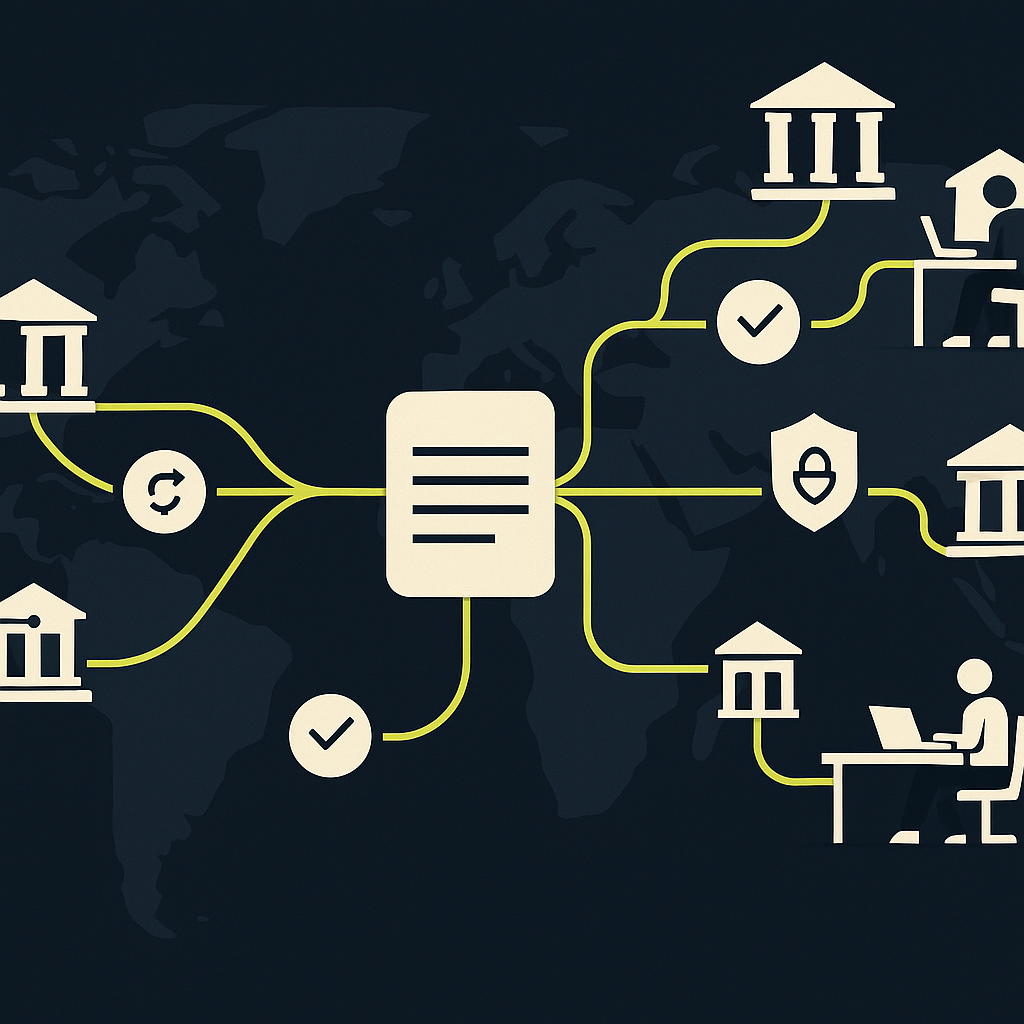
How to Pay International Contractors: A Country-by-Country Bank Payment Guide
A successful contractor payment delivers the agreed amount—not just a completed transfer instruction. Build a country-specific payment plan around bank details, currency, fees, and the date funds become available.
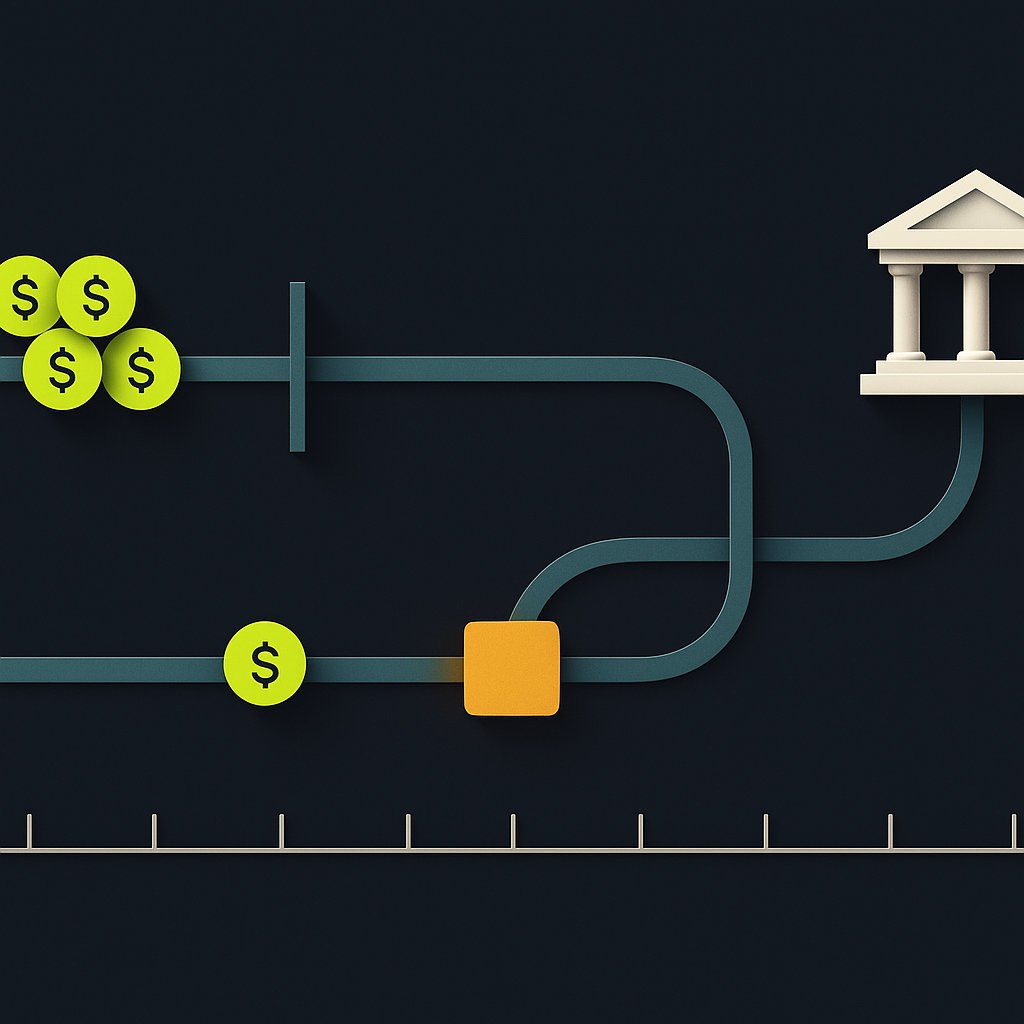
ACH Wire Transfer Time: A Cutoff and Escalation Playbook
ACH and wires run on different clocks. Learn how to set release deadlines, identify where a payment is waiting, and decide whether an urgent replacement is safe.
Run your entire money cycle on one ledger
Global payouts, AP/AR automation, and AI agents with their own wallets and spend limits.
Get started
The point about a displayed balance not necessarily being spendable cash is something we've had to explain to our CEO multiple times. Just because the EUR balance shows 200k doesn't mean all of it is available same-day for a wire—some might be pending, some might be reserved for prior payouts still in flight, and depending on the provider there can be a compliance hold we don't even see in the UI.
We started requesting a daily breakdown of available vs pending vs reserved directly from our provider after running into this exact scenario. Turns out their API also exposes these separately but the dashboard didn't surface it clearly until we asked.
We finally started requesting a daily breakdown of available vs pending vs reserved directly from the provider's API rather than relying on the dashboard. Made reconciliation easier and stopped the same conversation from happening every month.
The warning about checking what happens to access and recovery if the provider or partner bank fails is something we didn't think about until 2023. We now require a full failure scenario writeup during vendor review, including which regulator supervises the entity we're actually contracting with. It's tedious but the legal structure can be surprisingly opaque even with well-known providers.
Same. We also now ask specifically about ring-fencing arrangements and whether the provider has a resolution plan on file with the regulator. The account structure documentation alone isn't enough if there's no clarity on priority during wind-down.
We added the same requirement after seeing what happened with some of the smaller payment institutions in the UK. One thing that helped was asking the provider to map their specific failure scenario to the relevant insolvency framework—turns out some of them had never actually walked through it with their own legal counsel.
The natural currency match concept makes sense in theory, but the article glosses over timing risk. We collect in GBP from customers on net-60 terms but need to pay UK suppliers net-30, so the balance we're supposedly matching hasn't even arrived yet. You end up converting anyway or maintaining a float that defeats the purpose.
We had the exact same mismatch problem with EUR collections and supplier payments. Ended up maintaining a minimum balance funded through planned conversions quarterly, then using receipts to reimburse ourselves. Not elegant but at least we stopped forcing conversions on every transaction.
The distinction between being able to hold a currency versus actually being able to pay out in it is something we only learned after signing with a provider. They supported holding MXN but all outbound payments converted to USD first and then went out via correspondent banking, which defeated the entire purpose and added two conversion spreads.
We encountered the exact same issue with MXN. The provider's documentation listed it as a supported currency but buried in the technical specs was the fact that outbound rails only supported USD conversion first. Would have saved us weeks if we'd used the currency usability map from this article during vendor selection.
Same structure for us with BRL. The balance was technically available but every outbound converted through USD which added both time and an extra FX spread we weren't expecting. Now we explicitly request the outbound clearing path during diligence, not just the supported currency list.
The part about local receiving details not establishing local legal presence is critical. We nearly signed with a provider whose marketing heavily implied we'd have 'local banking' in Brazil and India, but during legal review we found out it was a pooled arrangement with their name on the account, not ours, and zero help with tax reporting or statutory payment requirements.
We ran into the exact same issue with a different provider for UAE and Singapore. The sales deck showed local account numbers but legal clarified it was their omnibus account with sub-ledger allocation. That completely changed the compliance discussion since our auditors needed to see segregated title to the funds.
We ran into the exact same issue with a different provider for UAE and Singapore. The sales deck showed local account details but the actual contract said funds were held in a commingled omnibus account in their name with sub-ledger allocation. That structure created massive reconciliation headaches and our auditors flagged it during year-end.
The worksheet asking for entity eligibility, receiving details, holding capability, and outbound access by currency is gold. We wasted two months migrating to a provider that turned out not to support our Singapore entity for SGD receiving details even though their marketing listed SGD prominently. Would have caught it in week one with this framework.
We now require a completed version of that worksheet during the RFP stage, not after selection. Also learned to ask for screenshots of the actual account setup flow showing entity selection, because some providers technically support a country but require manual approval that can take weeks.
We now require a completed version of that worksheet during the RFP stage, not after selection. If a provider can't fill it out or takes more than a week to respond, that tells you something about their operational maturity.
The section on evaluating the account as a funding structure rather than a currency list is spot on. We onboarded a provider that supported 18 currencies but three of our highest-volume payout currencies had 48-hour clearing holds, which made them useless for our weekly supplier run.
We had almost the exact same problem with our first provider. They advertised 22 currencies but didn't disclose that most non-USD balances had reserve policies that effectively locked funds for compliance review on every single outbound payment above a certain threshold, which was lower than our average invoice amount.
We had the same realization during diligence. Now we explicitly ask for clearing hold times and settlement windows during the RFP, not just which currencies appear on the dashboard. The difference between a currency being 'supported' and actually being available when you need to fund a batch is everything.
The point about entity eligibility being distinct from dashboard access is underappreciated. We spent two months integrating a provider only to discover our Singapore subsidiary couldn't actually hold SGD balances under their terms, even though the parent could. Would have saved a lot of time if we'd worked through that worksheet upfront.
We built eligibility verification into our RFP process now. Ask for a matrix of which legal entities can hold which currencies before any technical scoping starts. Saves everyone time and avoids exactly this scenario.
Exactly this. The currency availability worksheet in the article would have caught that before integration started. We now require the provider to fill out entity eligibility row-by-row for every subsidiary and every currency we actually need before we sign.
curious how teams are handling the intercompany piece when subsidiaries share a platform - are you booking FX gains/losses at the time of internal transfer or just treating it as a loan and settling monthly?
We treat it as an intercompany loan and reconcile monthly, but honestly the timing issue the article mentions around spendable vs displayed balance has bitten us twice. If the receiving sub has payables due before the transfer clears internally, you're still converting anyway.
We book the FX impact at transfer time since the subsidiaries are in different functional currencies. Waiting until month-end settlement would just create a nightmare for the controller trying to reconcile which movements belong to which period, especially if rates move significantly.
The usability map worksheet is exactly what we needed when we evaluated providers last quarter. We had three vendors claiming 40+ currencies but only one could actually pay Indian contractors in INR from our EUR balance without forcing a USD intermediary step. That grid would have saved us two weeks of back-and-forth with sales teams.
We hit the same thing with IDR. The balance existed but the routing was Swift-only which meant 3-4 day delays and the contractors expected same-day domestic transfers. Ended up needing a completely different provider just for that corridor.
Same issue here. We also discovered that one provider technically supported IDR payouts but only through their correspondent bank in Singapore, which added 3-4 days and unexpected lifting fees that weren't in the original FX quote. The currency list means nothing without the actual rail and intermediary details.
Important callout on safeguarding vs deposit insurance. We learned this the hard way when our previous provider's partner bank had issues and our GBP balance was frozen for eleven days while they sorted out the account structure. Now we ask for the specific regulatory filing and confirm which entity actually appears on the banking agreement before we move treasury funds over.
We do the same now. After SVB we started requesting the full account structure documentation upfront, including which jurisdiction's rules apply to each currency balance. Turns out two of our providers had completely different safeguarding mechanics even though both used UK partner banks.
We hit a similar freeze with a EUR balance but for three weeks. The issue was that we were classified as an indirect client of the partner bank, not a direct depositor, so the normal resolution process didn't apply. Now our treasury policy requires direct confirmation of how funds are held before we move more than 10% of operating cash into any new account.