

How to Pay Mobile Esports Players in Southeast Asia, Latin America, and Sub-Saharan Africa: A Rail-by-Rail Guide
Mobile esports prize pools reach players who bank on their phones, not through SWIFT. Here's how to pay winners across three regions, rail by rail.
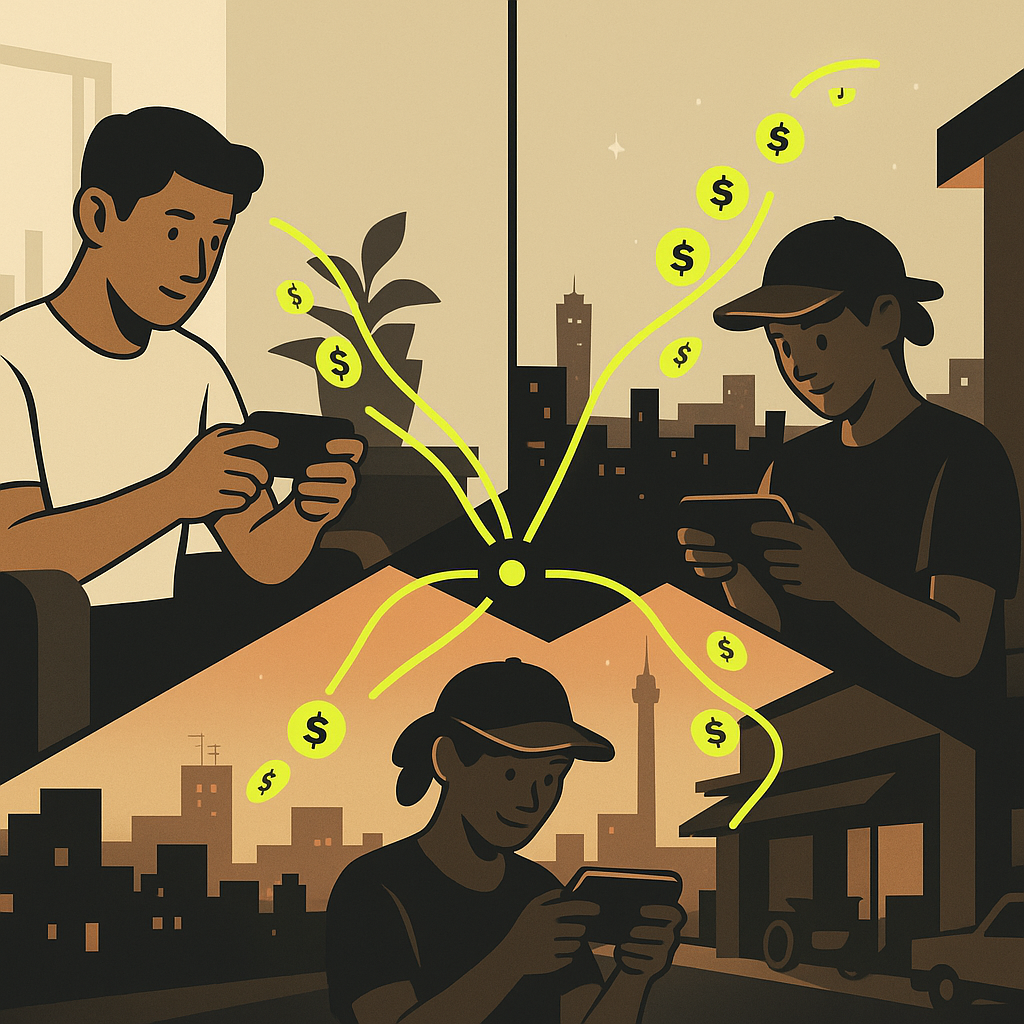
Mobile esports has a payout problem that console and PC esports never faced at the same intensity. The audience — and the players — are concentrated in Southeast Asia, Latin America, and Sub-Saharan Africa, where the phone is the bank account. A tournament organizer in Manila or Lagos can amass a global roster of teenagers and semi-pros, then discover that a bank wire is the worst possible way to reach most of them. Half don't have a traditional bank account. The other half wait two weeks and lose 6–9% to intermediary and FX fees.
This guide breaks down how to pay mobile esports players internationally the way they actually receive money: local rails, mobile wallets, and instant transfers — region by region, rail by rail. It's written for the operations, finance, and community leads who own prize distribution and have to answer the question every player eventually asks: where's my money?
Why bank wires fail mobile esports payouts
The instinct is to treat prize money like a vendor invoice: collect an IBAN, send a wire, done. In these three regions that instinct breaks on contact with reality.
- Low bank penetration, high wallet penetration. In the Philippines, Kenya, and much of West Africa, a mobile money account is far more common than a checking account.
- Small ticket sizes. A group-stage payout might be $40–$300. A $25 correspondent-banking fee on a $60 prize is absurd — and it kills community trust.
- Speed expectations. Winners are used to instant peer-to-peer transfers. A T+7 wire feels like a scam.
- FX leakage. Paying in USD and letting each recipient's bank convert quietly strips value at a poor retail rate.
The fix is to stop thinking in a single global rail and start thinking in local rails — the destination-country instruments players already use daily. This is the same discipline behind creator payouts at scale: match the rail to the recipient, not to your convenience.
The rail-by-rail map
Below is a practical map of the dominant destination rails in each region, with our editorial read on when to reach for each. Ratings and "best for" columns are our own operator assessments, not third-party scores.
| Region | Dominant rail(s) | Typical speed | Best for | Rating |
|---|---|---|---|---|
| Philippines | GCash, Maya, InstaPay | Near-instant | Small, frequent prize payouts | 4.8 / 5 |
| Indonesia | DANA, OVO, GoPay, bank transfer | Minutes | Mixed wallet + bank rosters | 4.6 / 5 |
| Vietnam / Thailand | MoMo, PromptPay (TH) | Instant (PromptPay) | Low-cost domestic-style reach | 4.6 / 5 |
| Brazil | Pix | Instant, 24/7 | Any size, any recipient | 4.9 / 5 |
| Mexico / Colombia | SPEI (MX), bank transfer, wallets | Minutes–hours | Bank-account holders | 4.4 / 5 |
| Kenya / Tanzania | M-Pesa | Near-instant | Unbanked players | 4.8 / 5 |
| Nigeria / Ghana | Bank transfer (NIP), mobile money | Minutes | Larger prize tiers | 4.3 / 5 |
Southeast Asia: wallets first
Mobile esports payouts in Southeast Asia run on wallets. In the Philippines, GCash and Maya cover the vast majority of players you'll ever pay; a payout hits the phone in seconds and can be spent immediately. Indonesia is more fragmented — DANA, OVO, and GoPay each own a slice — so you need a payout layer that can route to the right wallet per player rather than forcing one. Thailand's PromptPay, built on the national real-time infrastructure, is the closest thing to a universal instant rail in the region. The country's central bank, the Bank of Thailand, has driven real-time payments as public infrastructure, which is why PromptPay reach is so broad.
Latin America: Pix changed everything
Brazil's Pix, launched by the Banco Central do Brasil, is arguably the best prize-payout rail on the planet: instant, 24/7, works for banked and effectively-unbanked players via a simple key (phone, email, or tax ID), and nearly free at the recipient end. If you pay Brazilian esports players any other way, you're doing it wrong. Mexico's SPEI is fast and reliable but assumes a bank account; for younger, less-banked players you'll blend in wallet rails. Colombia and Peru are moving the same direction but remain more mixed. For gaming payouts in Latin America, the design principle is: default to Pix in Brazil, and offer a wallet-or-bank choice everywhere else.
Sub-Saharan Africa: mobile money is the account
In East Africa, M-Pesa isn't a wallet on top of a bank — for most players it is the account. Paying esports winners via M-Pesa in Kenya or Tanzania reaches people no bank rail can. Nigeria and Ghana lean more on instant bank transfers (Nigeria's NIP is fast and ubiquitous) alongside growing mobile-money adoption. Currency controls and volatility make FX handling especially important here — you want to fund in a stable currency and convert at payout time, not leave value trapped.
The operational stack behind good payouts
Choosing rails is only half the problem. The other half is running them at the scale and cadence of a tournament circuit — dozens of events, hundreds of winners, multiple currencies, and a compliance trail. A few principles from running these operations:
1. Collect payout preferences before the bracket, not after
The single biggest source of payout delay is chasing details after someone has already won. Build a self-serve onboarding flow at registration that captures each player's preferred rail, wallet number or bank details, identity documents, and tax forms up front. By the time the finals end, payout is a button, not a project. A vendor portal that lets players self-manage their own details also cuts your support load dramatically.
2. Fund in one currency, pay in many
Hold your prize pool in a multi-currency account and convert at payout, so you control the FX moment instead of letting each recipient's bank skim a retail spread. This is the same anti-leakage logic covered in multi-currency payouts — it applies just as cleanly to prize money.
3. Orchestrate rails, don't integrate each one
Integrating GCash, M-Pesa, Pix, DANA, SPEI, and NIP individually is a multi-year engineering commitment. Most organizers should orchestrate rather than build, routing every payout through a single payout automation layer that already reaches 100+ payment rails across 190+ countries and picks the local rail per recipient automatically.
4. Treat compliance as a first-class feature
Prize money crosses borders, so KYC on winners and tax documentation are not optional. US-based organizers paying international players deal with W-8BEN collection and withholding rules; see our breakdown of gaming payout tax compliance. Build identity verification and tax and compliance into onboarding so you're never withholding a legitimate winner's money because a form is missing.
Where stablecoins fit — and where they don't
For older or higher-value players who are comfortable with crypto, stablecoin payouts in USDC can bypass correspondent banking entirely and settle in minutes — useful in markets with heavy currency controls or unreliable banking. But for the median 17-year-old mobile gamer in Manila or Nairobi, a wallet or M-Pesa cash-out is far more usable than a crypto wallet. Offer stablecoins as an option, not a default.
A payout playbook you can copy
- Capture rail preference, KYC, and tax docs at registration.
- Hold the prize pool in a multi-currency account; lock FX at payout.
- Route each winner through their local rail — GCash, Pix, M-Pesa, and the rest.
- Automate mass disbursement with approval controls on large tiers.
- Reconcile against one ledger and give players a status they can check themselves.
Get this right and payouts stop being the thing that erodes community trust and become a competitive advantage — the reason players choose your circuit over the one that pays in three weeks by wire. For larger operations layering in automation and reconciliation, our guide to AI agents in gaming finance shows where this heads next.
Next step
If you're mapping your own prize-payout stack, start with the rails your players actually use and work backward to your treasury — not the other way around. Payouts.com runs the whole cycle on one ledger, from funding to local-rail disbursement to reconciliation. Explore payout automation to see how multi-region esports payouts run without a spreadsheet in sight.
Published by Payouts.com. Editorial standards · Report a correction.
Discussion
37 commentsRelated resources
Creator Payouts: How Platforms Can Pay Millions of Creators Fast, Globally, and Compliantly
Paying creators at scale is one of the most operationally complex challenges in fintech today. Here's how modern platforms are solving it — from multi-currency rails to automated tax compliance.
Multi-Currency Publisher Payouts: How Ad Networks Eliminate FX Leakage at Scale
FX costs quietly erode publisher earnings and ad network margins on every cross-border payment. Here's how modern ad networks architect multi-currency publisher payouts to eliminate that leakage at scale.

AI Agents in Gaming Finance: How Game Studios Can Use Autonomous Agents to Automate Payouts, Reconciliation, and Spend
Game studios face some of the most complex financial operations in tech — from real-time prize disbursements to global creator royalties. Here's how autonomous AI agents can take over the entire money cycle.
Run your entire money cycle on one ledger
Global payouts, AP/AR automation, and AI agents with their own wallets and spend limits.
Get started
The instinct to treat prize money like a vendor invoice is exactly where we went wrong in Q1. We ran our first Southeast Asia tournament using the same ACH and wire setup we use for contractors and the support tickets were brutal—half the players thought we'd scammed them because the money took 9 days and arrived $18 lighter than announced. Switched to GCash for Philippines players in Q2 and the difference in community sentiment was night and day.
We made the exact same mistake. The worst part was the FX leakage on top of the delay—players were comparing notes in Discord and realized they were each getting different effective amounts after their local banks converted. Killed trust instantly.
We had almost the same experience in our first Brazil event before we switched to Pix. The wire delays made us look unprofessional and we lost credibility with the community before we even got the payout model fixed.
The orchestration layer argument makes sense but what's the threshold where it's actually cheaper to build integrations in-house versus paying the margin to a payout platform? We're at about 400 payouts a month across six countries and I'm not convinced we need a middleman yet.
At 400 payouts a month you're probably still below the threshold, but the calculus changes fast if you're growing or adding regions. The hidden cost isn't just engineering time—it's maintaining compliance updates, handling rail downtime, and managing currency exposure across multiple accounts. We were at about 600/month when we switched and the operational overhead was eating more than the platform margin.
At 400 payouts a month you're right on the edge. The break-even usually isn't just engineering cost though—it's also maintenance, compliance updates when rails change (happens more than you'd think in these markets), and liquidity management across currencies. We crossed over around 600/month but honestly wished we'd switched earlier just to stop bleeding ops time on failed transactions and manual reconciliation.
The wallet fragmentation issue in Indonesia is even messier than the article suggests. We've found that not only do you need to support DANA, OVO, and GoPay, but player preferences shift based on which app is running promos that month. We ended up giving winners a dropdown at payout time instead of locking it in at registration, which adds friction but cuts failed transfers by about 40%.
That's a smart workaround. We considered dynamic preference capture but worried it would delay payouts if winners didn't respond quickly after the event. Did you set a deadline for them to select, or just hold the funds until they pick?
We handle this by letting players update their wallet preference up until 24 hours before payout processing. It adds a bit of operational overhead but the support ticket volume from failed payouts to inactive wallets dropped significantly once we made the switch.
The FX leakage point is underrated. We were losing almost 7% per payout on small Brazilian prizes before we moved to Pix with local conversion, and players noticed the difference immediately in their support tickets. The real win wasn't just cost, it was trust.
Same experience here. The support ticket volume dropping was almost as valuable as the cost savings. When players see the exact prize amount they expected hit their wallet instantly, you stop getting the 'where did my money go' questions entirely.
We saw the exact same pattern with M-Pesa payouts in Kenya. The moment we started converting locally instead of sending USD and letting it hit whatever retail rate the telecom used, complaints about short payments basically disappeared. Players don't always articulate it as FX spread but they definitely know when the number is wrong.
The recommendation to fund in one currency and convert at payout is solid but it assumes you have clean visibility into your prize liability ahead of time. We struggled with this because our tournament brackets are often finalized only 48–72 hours before payout, and by then spot rates may have moved 2–3% against us. How are others managing FX exposure when prize pool amounts are known but final recipient currencies aren't locked until the last minute?
The "fund in one currency, pay in many" principle is spot on but we found the hard part isn't the FX conversion itself, it's maintaining liquidity in the right corridors at the right time. If you're running a weekly tournament circuit across all three regions you need to either prefund local currency buffers or have a treasury partner who can settle same-day in NGN, PHP, KES, and BRL without blowing you out on spreads during volatility spikes. How are people solving the liquidity timing problem at scale?
We solved this by setting up a weekly funding cadence tied to tournament schedule rather than trying to predict exact amounts per corridor. We overfund by about 15% as buffer and then true up monthly. Not elegant but it keeps us from being caught short mid-event.
We solve this by keeping a rolling 30-day forecast of prize liability by region and prefunding 60% of expected volume in local currency. The other 40% we convert just-in-time which adds 4-6 hours of latency but keeps us from getting stuck with excess PHP or KES sitting idle.
The payout preference collection before the bracket is the single biggest operational unlock here, but you glossed over the harder part: what do you do when a player is under 18 and can't register a wallet or bank account in their own name? We've had winners who literally couldn't receive their prize without involving a parent or guardian, and that introduces a whole new layer of verification and compliance risk.
We ended up implementing a tiered verification flow: under-18 players must onboard with a parent or guardian who controls the wallet registration, and we require both player and guardian to sign off on payout delivery. It adds friction but at least creates a clear path. The alternative was excluding minors entirely, which killed half our player base in some regions.
We hit this constantly in the Philippines and Kenya. Our workaround is requiring parental consent at registration and routing the payout to a parent-linked wallet or account with the player named as beneficiary in our records. It's clunky for compliance tracking but the only way we've found to not just forfeit prizes or wait until they turn 18.
The PromptPay callout is helpful but Thailand's KYC requirements for cross-border payouts are strict and the article glosses over that. We ended up needing a local entity just to handle the tax withholding piece properly, which ate into the cost advantage pretty quickly for players under Thai tax residency.
We ran into the same thing with PromptPay. Ended up partnering with a local payment provider who handled the withholding and filing on their end, which added about 2.5% to our cost but kept us compliant without the overhead of a Thai entity. Worth it at our volume but agree the article oversimplifies the setup.
We ran into the same thing with PromptPay. Ended up partnering with a local payment provider who handled the tax withholding and reporting obligations on their end, which added about 1.2% to each transaction but kept us compliant without needing to set up a Thai entity. Still cheaper than wires but definitely not free like the article implies.
The rail-by-rail table is useful but I'd love to see more about the compliance layer when you're orchestrating this many rails across jurisdictions. Are you running KYC at registration for every player regardless of prize amount, or is there a threshold where you step up verification? We're trying to balance friction with risk and haven't found a clean answer yet.
We run KYC at registration for everyone but tier it by prize threshold. Under $100 it's just name and phone verification plus a self-attested tax form. Above that we step up to document verification and beneficial owner checks where required. The tricky part is harmonizing thresholds across jurisdictions since reporting requirements vary wildly between Brazil, Kenya, and the Philippines.
We run KYC at registration for everyone but tier it by prize threshold. Under $100 it's just name, phone, wallet details, and basic identity doc. Above that we collect tax forms and do enhanced verification before payout clears. The tricky part is that some rails like M-Pesa technically require KYC on their end already, so you're sometimes duplicating effort, but our legal counsel insists we can't outsource that entirely to the wallet provider.
The Southeast Asia wallet fragmentation is real but I'd push back on the idea that you need complete coverage across DANA, OVO, and GoPay. We've been able to reach 85% of Indonesian winners with just two wallet integrations plus standard bank transfer as a fallback, and the support burden of forcing three wallet options is not trivial when each has different dispute processes and reconciliation formats.
That's a reasonable approach if your player base skews older or more banked. We found the gap between 85% and ~95% coverage was mostly younger players who only had one specific wallet their parents set up for them, and those were also the ones most likely to complain loudly on Discord when they couldn't get paid. Depends on your tolerance for support noise.
That's fair, and honestly 85% coverage with two wallets is probably the right tradeoff for most ops teams. We went three-deep because our community skews younger and unbanked, but the third integration took twice as long as the first two combined and only picked up an extra 10%. The fallback bank option is key.
Pix really is that good. We switched our Brazil operations over about 18 months ago and support tickets related to payment delays dropped by something like 80%. The only hiccup we hit was around key registration for players under 18, since some banks require parental consent flows that aren't standardized, but even that was easier to solve than correspondent bank holds.
We ran into the same under-18 issue. Ended up requiring parent/guardian to register their own Pix key and link it during onboarding, which added friction but at least made it predictable. Did you solve it a different way or just eat the support overhead on those cases?
Did you solve the under-18 key registration issue or just limit payouts to players with adult accounts? We're looking at Brazil expansion now and trying to figure out if we need to build a completely separate flow for minors or if there's a cleaner workaround.
I'm curious how you're thinking about compliance and tax reporting when you're routing through mobile wallets instead of traditional bank rails. We've been hesitant to move away from wires partly because our auditors want a clear 1099 trail, and it's not obvious how you document a GCash payout for a cross-border contractor in the same way. Are organizers just eating that complexity or is there tooling that handles the reporting layer cleanly?
We had the same concern and ended up working with our auditors to treat wallet rails the same way we'd treat any ACH or local bank transfer. The key was establishing that the wallet provider gives you a transaction ID, timestamp, and recipient identifier that's just as auditable as a wire confirmation. For 1099s specifically, we collect W-9 or W-8BEN at registration regardless of rail, and the payout method becomes a separate operational question. Your tax obligation is tied to the payment itself, not the delivery mechanism.
We handle this by requiring tax docs (W-8BEN or local equivalent) at registration and storing them with the wallet info, then generating a consolidated payout report per quarter that maps each wallet transaction to a specific payee identity. Our auditors were skeptical at first but once we showed them the audit trail linking registration KYC to disbursement records they signed off.
The point about collecting payout preferences before the bracket is obvious in hindsight but we absolutely did not do this for our first two tournaments. Ended up chasing wallet IDs via Discord DMs for three weeks after finals. Now we gate tournament registration behind a full payment detail form and it's night and day.
We built our preference collection into the tournament signup flow as a required step and it cut our post-event payout cycle from 12 days to about 36 hours. The problem is keeping those details current when players switch wallets or phone numbers between events, so we force reconfirmation at each registration even if they've played before.
We learned this the hard way too. The other thing we changed: we now lock the preference form 48 hours before the event starts. If you haven't submitted valid payout details by then, you can still play but your prize gets held until you do. Cut our post-tournament admin time by at least 60%.