

Payment Operations Analyst: Role, Skills, and Global Payout KPIs
A payment operations analyst keeps payouts moving and makes their status explainable. Here is how to scope the role, assess practical skills, and measure performance across currencies and payment rails.

A payment operations analyst monitors payment execution, investigates exceptions, reconciles transactions, and maintains the evidence needed to explain where money went. In global payouts, that means connecting approved obligations to funding, currency conversion, payment instructions, and confirmed outcomes—not simply uploading a payment file.
For companies paying hundreds of international vendors, contractors, or sellers, the role bridges finance, treasury, compliance, support, and engineering. Its most important output is a trustworthy answer to three questions: What happened to this payment? What must happen next? Who is authorized to act?
What does a payment operations analyst do?
The title covers different operating environments. A bank-focused position may emphasize domestic wires, Fedwire, ACH, exception handling, and daily reconciliation, as illustrated by the Apex Systems payments operations analyst listing. A role supporting international disbursements adds currency balances, country-specific beneficiary information, provider integrations, and cross-border investigations.
Seniority also changes the remit. The Capital One principal analyst posting extends the work into operational risk, procedural frameworks, payment-health reporting, and cross-functional workflow improvement. These are examples of employer expectations, not a universal job specification.
A useful role charter defines responsibilities by payment stage:
| Stage | Analyst responsibility | Evidence to retain | Decision boundary |
|---|---|---|---|
| Payment preparation | Check instruction completeness | Approved obligation and beneficiary version | Do not self-approve bank-detail changes |
| Funding and FX | Check available funds and conversion status | Funding reference and FX confirmation | Treasury owns funding policy |
| Submission | Validate acceptance and identify rejects | Request ID and provider response | Release follows approval policy |
| In-flight monitoring | Investigate overdue or ambiguous statuses | Event history and investigation reference | Do not assume a timeout means failure |
| Reconciliation | Match obligations, transfers, and cash | Ledger entries and statements | Accounting approves adjustments |
| Improvement | Identify recurring causes and propose fixes | Root-cause analysis and change record | Control changes require designated approval |
Where the role stops
Payment operations should not become the default owner of every unresolved finance issue. AP validates the payable; treasury manages liquidity and FX policy; compliance makes restricted-party and regulatory decisions within its remit; accounting owns accounting treatment. The analyst coordinates the payment evidence and operational response.
For example, an analyst can gather documents for a compliance hold, but should not override it to meet a payout deadline. Similarly, identifying a funding shortfall does not authorize borrowing or converting funds outside treasury policy.
What changes when payouts cross borders?
Beneficiary data becomes route-specific
“Bank details collected” is not a sufficient readiness check. A US ACH instruction generally needs a routing number and account number; a UK domestic transfer typically uses a sort code and account number; a SEPA credit transfer uses an IBAN. Additional requirements depend on the provider, beneficiary type, jurisdiction, and payment purpose.
The analyst should maintain a requirements matrix by destination, currency, and route, validated against current provider specifications. It should distinguish mandatory fields, format checks, verification status, and conditional supporting documents. A correctly formatted account identifier does not prove account ownership.
Rail selection affects cost and investigation
SWIFT is a financial messaging network, not a single settlement rail with one delivery time. Local payment schemes also differ in eligibility, limits, operating hours, return handling, and available status information.
The analyst needs to understand the approved route—not choose whichever looks fastest in isolation. A lower-cost option may provide less useful tracking or may not support the beneficiary account. Our guide to building a local-rail versus SWIFT routing policy explains how to formalize those decisions.
FX and fees complicate reconciliation
A cross-border payout can involve an obligation in one currency, funding in another, a conversion, and a beneficiary credit net of permitted charges. Comparing only the invoice amount with the bank debit can produce false exceptions.
The analyst should preserve source and destination amounts, currencies, executed exchange rate, separately recorded fees, and linked transfer identifiers. Differences need classification: expected conversion, disclosed fees, rounding, a short payment, or an unexplained break. The broader cross-border money-and-data lifecycle provides a useful framework for these handoffs.
A practical daily operating routine
The work should follow risk and deadlines, not whichever support message arrives first.
- Review the opening position: identify unresolved transfers, returned funds, reconciliation breaks, and payouts approaching their promised delivery window.
- Check upcoming releases: confirm approvals, beneficiary readiness, available balances, applicable cutoffs, and holiday calendars.
- Monitor execution: separate rejected instructions from accepted, pending, completed, and unknown outcomes using provider-specific definitions.
- Investigate exceptions: assign a cause, next action, owner, and escalation deadline. Preserve the supporting evidence.
- Reconcile and hand over: match cash movements to obligations and transfer records; document remaining uncertainty for the next shift or business day.
Hypothetical example: a contractor payout request times out, but the funding account shows a debit. The analyst should not create a fresh payment immediately. They should retrieve the original request identifier, check provider records, confirm how retry and idempotency rules work, and investigate the debit. A replacement requires evidence that the original cannot still complete, or a documented exception decision that addresses duplicate-payment exposure.
This distinction matters: an unknown outcome is an investigation state, not permission to pay again.
Skills that matter more than familiarity with a dashboard
- Payment mechanics: explain acceptance, settlement, beneficiary credit, rejection, and return without treating them as interchangeable.
- Data analysis: use spreadsheets and SQL to match records, find missing events, and avoid counting repeated status updates as separate payments.
- Integration literacy: understand API responses, webhooks, request identifiers, retries, and delayed or out-of-order events.
- Accounting fluency: distinguish a paid obligation from an unsettled transfer, returned cash, and a fee adjustment.
- Control judgment: recognize when bank-detail changes, compliance holds, or manual overrides need independent authorization.
- Communication: state what is known, what remains unverified, and when the next update will occur.
For hiring, use a synthetic payment dataset with an invoice, duplicate event, FX conversion, pending transfer, and return. Ask the candidate to reconcile it and draft an escalation. Evaluate their reasoning and evidence handling, not just whether they reach the expected total.
Compensation and seniority should follow the actual scope. A supervised domestic processing role is not directly comparable with ownership of multi-currency investigations, provider escalations, and control design. Location, working hours, and on-call expectations also belong in the job specification.
KPIs that measure payment integrity
Do not assess analysts solely on closed tickets or submitted batches. Those measures can reward premature closure. Use a balanced scorecard:
- First-pass acceptance: accepted initial instructions divided by initial instructions submitted. Track retries separately.
- Delivery within the promised window: eligible payouts with supported delivery evidence by the deadline, measured against a defined due-date cohort.
- Exception age: elapsed time since detection, segmented by cause and responsible team.
- Unreconciled exposure: count and value of unexplained differences, separated by currency and age.
- Repeat failure rate: recurrence of a previously identified root cause after corrective action.
- Evidence completeness: closed cases with the required transaction references, outcome evidence, and approvals.
Separate analyst-controlled time from time awaiting a bank, beneficiary, or compliance decision. Segment results by corridor and provider so a changing payment mix does not masquerade as improving performance. Where beneficiary-credit evidence is unavailable, report that limitation rather than labeling provider acceptance as delivery.
What automation should take over—and what it should not
Automation is well suited to status ingestion, deterministic matching, missing-field checks, and queue prioritization. AI can help summarize event histories or draft investigation notes, but generated explanations must remain traceable to payment records.
Bank-detail changes, uncertain retries, compliance exceptions, and material accounting adjustments need explicit decision rights. Configurable payment approval policies help separate preparation from authorization; an analyst or agent should not gain release authority merely because it can diagnose an exception.
Checklist: define the role before expanding payout volume
- Document the entities, currencies, corridors, and payment routes in scope.
- Assign an owner and escalation path to each exception category.
- Define payment statuses and the evidence needed to close a case.
- Provide controlled access to provider records, statements, and ledger data.
- Specify approval boundaries, coverage hours, and handover requirements.
- Measure delivery, reconciliation, and recurrence—not activity alone.
- Feed recurring failures into onboarding, integration, and routing improvements.
A strong payment operations analyst makes uncertainty visible and actionable. Before adding headcount or software, map the role against these responsibilities. Then evaluate Payouts.com Payouts Automation for automating mass payment execution while preserving clear ownership of exceptions and release decisions.
Created with AI assistance. Sources are linked in the article; this content is general information, not legal, tax, or financial advice.
Related resources

Local Payment Rails vs SWIFT: Build a Corridor Routing Policy
The right payout route depends on the recipient’s currency, bank reachability, funding, and payment purpose—not just the transfer fee. Here is how finance teams can turn that decision into a repeatable corridor routing policy.
Cross Border Payments: Follow the Money and the Data
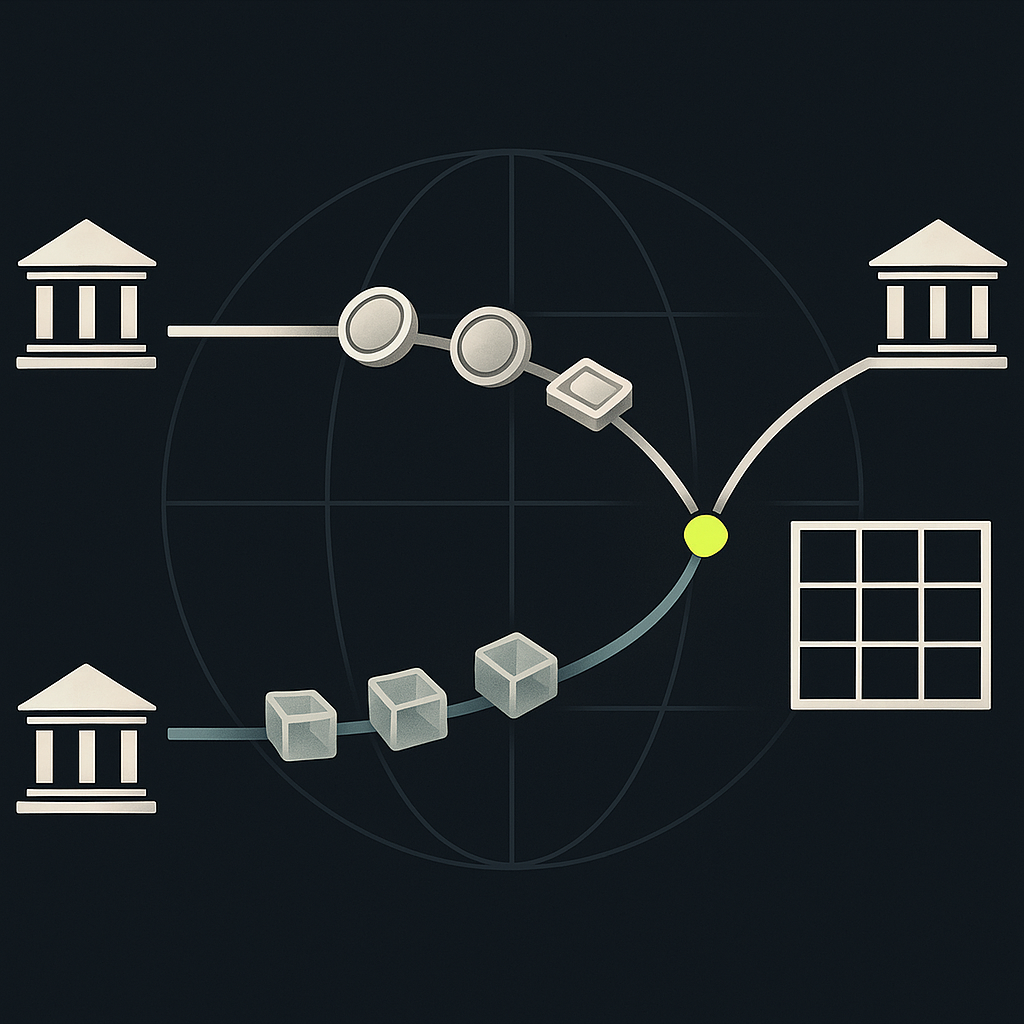
International payments move through two connected chains: money movement and payment information. Finance teams need visibility into both to understand costs, resolve delays, and confirm recipients have been paid.

Payroll Fraud Prevention for Global Payment Operations
Payroll fraud prevention requires more than checking a payroll register. Connect worker eligibility, approved earnings, verified payment destinations, and settlement evidence without disrupting legitimate wages.
Run your entire money cycle on one ledger
Global payouts, AP/AR automation, and AI agents with their own wallets and spend limits.
Get started
Discussion
0 commentsBe the first to join the discussion.