

TikTok Creator Fund Canada: Eligibility and Payment Options
Canada is not confirmed as a Creator Rewards market in the available evidence. Here is how to separate program eligibility from other creator income—and build clearer payment expectations.
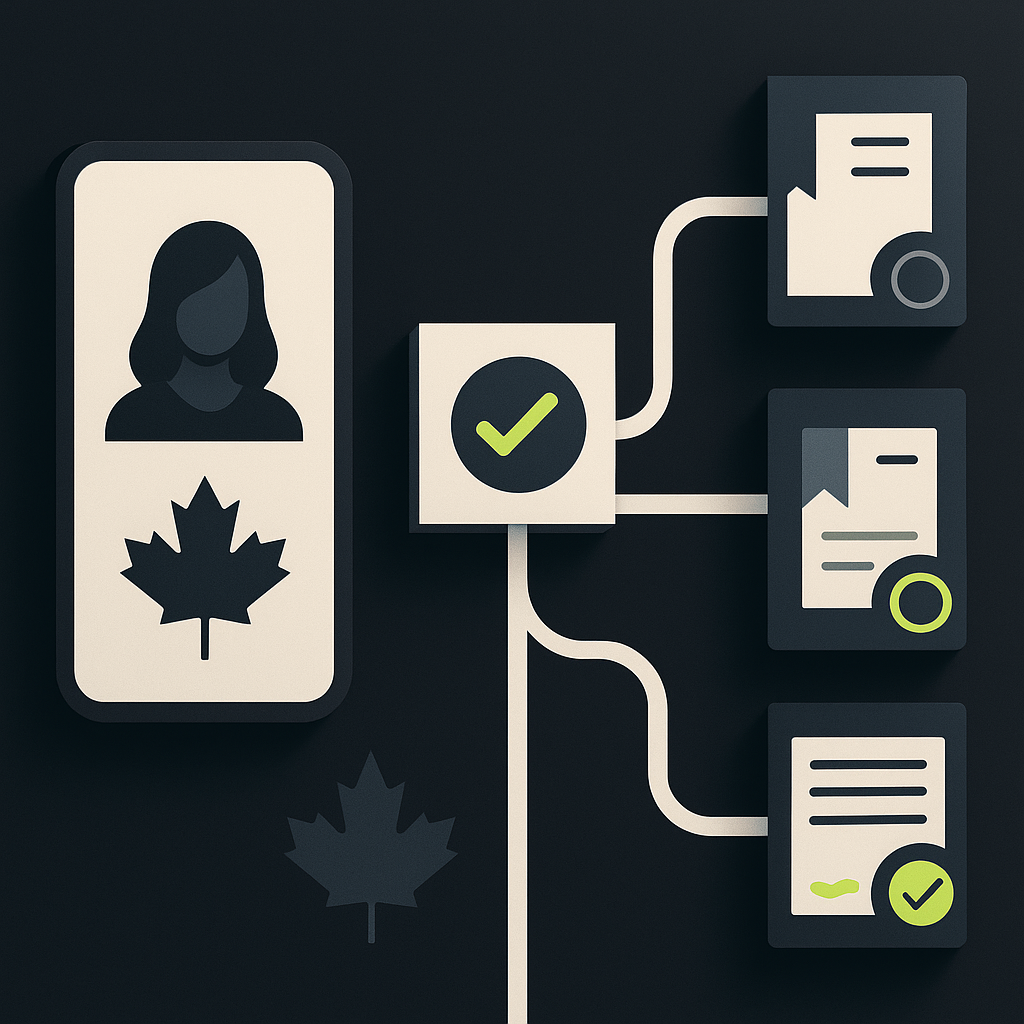
Is the TikTok Creator Fund available in Canada? Canada was not included in the original Creator Fund. For its successor, Creator Rewards, the evidence available as of October 8, 2026 does not establish a formal Canadian launch. Canadian creators should not assume they can earn standard Creator Rewards payments simply by reaching follower or view thresholds.
The dated evidence matters: CBC reported in June 2024 that Creator Rewards was unavailable in Canada. A July 2026 review of publicly confirmed eligible countries still did not include Canada. That supports a cautious planning position, not a claim that availability can never change.
For creators, the immediate task is to verify the exact program and account eligibility. For platforms and agencies paying Canadian creators, the lesson is broader: being able to send someone money is not the same as that person qualifying to earn it through a particular program.
Creator Fund and Creator Rewards are not interchangeable
Searches for “tik tok creator fund canada” often mix the original Creator Fund, the Creativity Program name, and the current Creator Rewards Program. They also surface unrelated monetization features, including gifts and brand collaborations.
Creator Rewards pays eligible participants for qualifying content using qualified views and rewards per thousand qualified views, or RPM. It is not a universal payment for every view on every TikTok account.
A Canadian creator receiving money connected to TikTok does not, by itself, prove Canadian access to Creator Rewards. The money might come from a sponsor, a separate TikTok feature, or an external affiliate agreement.
| Income route | What creates earnings | Canadian eligibility position | Editorial comment |
|---|---|---|---|
| Original Creator Fund | Participation in the legacy program | Canada was not included | Do not use old enrollment guides |
| Creator Rewards | Eligible content and qualified views | Canadian launch not established by available evidence | Verify current program terms |
| Brand sponsorships | Contracted campaign deliverables | Depends on the agreement | Identify the contractual payer |
| Gifts and other TikTok features | Feature-specific participation | Check each feature and account separately | Not proof of Rewards eligibility |
| Canada Media Fund support | Selection under a funding program | Separate Canadian application criteria | Not a TikTok per-view payment |
How to check Creator Rewards eligibility in Canada
Country eligibility is a gate, not an optional detail. Meeting audience thresholds does not override a program's geographic restrictions.
TikTok's Creator Rewards support guidance describes requirements including an account registered in an eligible region, a personal account in good standing, at least 10,000 followers, and at least 100,000 video views in the preceding 30 days. Age requirements apply, and qualifying videos must meet originality and duration requirements, including being at least one minute long.
Those conditions are useful reference points, but they are not an invitation for Canadian accounts to enroll. Check the current terms for the applicable market rather than treating an eligibility checklist from another country as universal.
A practical verification checklist
- Identify the exact product. Look for Creator Rewards, not a generic “rewards” label or a discovery-page headline.
- Check the current official country rules. A recent third-party article is not sufficient evidence of a Canadian launch.
- Review your account's monetization area. Look for an actual enrollment workflow and applicable terms, not merely promotional content about the program.
- Confirm the account information is accurate. Residency, identity, and payment information should match the requirements you are accepting.
- Keep dated evidence. Save the applicable terms and any acceptance notice before forecasting earnings.
- Escalate conflicting information to TikTok support. If the interface and published guidance disagree, seek clarification rather than assuming eligibility.
A VPN, foreign payment account, or audience in an eligible country does not establish valid program eligibility. Misrepresenting location can create account, verification, and payment problems.
How much does TikTok pay Canadian creators per view?
There is no substantiated standard Canadian Creator Rewards rate in the available evidence. Publishing a Canadian-dollar RPM without first establishing program availability creates a misleading impression that ordinary Canadian accounts can earn it.
Even in eligible markets, total video views and qualified views are different measures. Program rules determine which views count, and RPM is not a guaranteed universal price. Multiplying a public view count by a rate reported by another creator is therefore not a dependable earnings forecast.
Audience geography and creator eligibility are also separate concepts. A Canadian audience may be commercially valuable to an advertiser, but it does not make a Canadian creator eligible for a geographically restricted program.
For budgeting, keep potential rewards separate from confirmed earnings. Once earnings are actually established, a missing transfer becomes a different operational question; our guide to diagnosing missing TikTok payments addresses that later stage.
Other ways Canadian creators can earn
Brand campaigns and commissioned content
A brand or agency can contract with a Canadian creator to produce content independently of Creator Rewards. Payment follows the agreement: who owes the money, which deliverables trigger approval, what usage rights are included, and when payment becomes due.
Creators should establish the payment currency, responsibility for transfer fees, and whether paid advertising usage or exclusivity requires separate compensation. These terms determine the value of the engagement more reliably than an assumed per-view rate.
Feature-specific monetization
Gifting and other monetization tools have their own availability and participation rules. Check each feature directly. Access to one should never be presented as evidence that Creator Rewards is available.
External affiliate arrangements are another distinct model: a merchant or network pays under its own attribution, approval, and reversal rules. Those arrangements should not be confused with access to TikTok's native commerce products.
Canada Media Fund support
The Canada Media Fund's Digital Creators Pilot Program supports eligible mid-career Canadian digital creators producing content for platforms including TikTok. It is a separate funding mechanism with its own application rules, not a TikTok enrollment route or an automatic payment for views.
Check the current application window, eligible activities, and funding conditions before treating it as a potential source of financing.
What creator platforms should learn from Canada's eligibility gap
The operational failure to avoid is a single account label—“monetized”—that hides several different decisions. A creator may qualify for sponsored campaigns while remaining ineligible for a platform-funded rewards program.
Record eligibility by program, not just by creator
Maintain a program-level record containing the creator's applicable country, eligibility decision, supporting evidence, effective date, and policy version. Assign an owner to review it when program rules change.
Keep that record separate from payment readiness. Identity verification, tax documentation, and valid bank details help make a recipient payable; they do not prove entitlement to a particular revenue stream. A creator payment onboarding portal should collect payment information without implying approval for every earning program.
Separate estimated, approved, and payable amounts
Show creators whether an amount is an estimate, an approved obligation, or ready for payment. Each transition should have a defined rule and an auditable reason.
Hypothetical example: A Canadian creator completes a sponsored campaign while also posting ordinary TikTok videos. The agency approves the campaign fee after accepting the deliverables. It records no Creator Rewards receivable merely because those videos attracted views. The sponsor contract and the platform rewards program remain separate income sources.
Make the payment promise specific
For an approved campaign payment, disclose the payer, currency, deductions, release condition, and available payment methods. Where an agency or collaborator receives a share, document the agreed allocation and each recipient's amount rather than sending an unexplained net balance.
For small payments, method choice matters: fixed fees and currency conversion can materially reduce what a creator receives. Offer appropriate options where supported, with clear costs and timing. Faster payment infrastructure cannot resolve an unapproved earning or an unavailable program.
The next step: verify eligibility before promising income
Canadian creators should verify Creator Rewards access through current official terms and their account's enrollment process, not search snippets or another creator's payment screenshot. Until eligibility is established, build income plans around identifiable agreements and confirmed program participation.
Platforms should apply the same discipline: establish entitlement first, approve the obligation second, and execute payment third. For teams managing those approved obligations, Payouts.com's payout automation can support mass payment execution across rails. It does not change TikTok eligibility—and keeping that boundary explicit is part of a trustworthy creator payment experience.
Created with AI assistance. Sources are linked in the article; this content is general information, not legal, tax, or financial advice.
Discussion
39 commentsRelated resources

Creator Payment Onboarding Portal: How to Build a Self-Serve Flow That Collects Tax Docs, KYC, and Payout Preferences Before Day One
A poorly designed creator onboarding flow creates compliance gaps, delayed payouts, and frustrated talent. Here's a practical blueprint for building a self-serve portal that gets tax documentation, identity verification, and payout preferences locked in before Day One.

TikTok Not Paying Creators? Diagnose the Missing Money
Missing creator earnings and failed payouts are different problems. Here is how to identify where money stopped—and what platform teams should make visible before creators need to ask.

OnlyFans Creator Payment Methods: Choosing a Withdrawal Route
OnlyFans withdrawal options depend on the creator’s country and account. Learn how to compare bank transfers and wallets by eligibility, total cost, and time to usable money.
Run your entire money cycle on one ledger
Global payouts, AP/AR automation, and AI agents with their own wallets and spend limits.
Get started
The part about checking account-specific enrollment workflows versus relying on third-party blog posts is something our AP team should apply to other platform payouts too. We've been treating Stripe Connect eligibility the same way across regions without checking country-by-country program restrictions, and this article makes me realize that's probably creating risk we haven't quantified.
We had the exact same gap with Stripe Connect. Turns out regional differences in identity verification requirements meant some contractors couldn't actually complete onboarding even though we'd already contracted them. Now we verify platform program access before contract signature, not after.
Same here. We assumed Stripe Connect KYC requirements were uniform and got surprised by Brazil's additional documentation layers. Now we treat every payment rail as region-specific until proven otherwise.
The VPN residency issue is thornier than the article suggests when you're dealing with dual nationals or expats with legitimate tax presence in multiple jurisdictions. We had a case where a creator had Canadian incorporation but was physically residing in France under a long-stay visa, and TikTok's platform verification didn't align cleanly with either tax authority's definition of residency—created a three-way reconciliation nightmare between their 1099 equivalent, local FR tax filing, and our AP records.
That's a good example of why the entity location and individual residency verification need to be separate fields in our system. We ask for both tax residency and operating entity jurisdiction now, and if they don't match we require a signed attestation about which one governs platform eligibility.
That's a good example of why the entity location and individual residency verification need to happen at onboarding with annual refresh, not just when a payout dispute surfaces. We require both corporate registration docs and a signed declaration of primary tax residency with effective dates. Still imperfect, but it at least creates an audit trail if TikTok or a tax authority challenges the setup later.
The distinction between Creator Rewards eligibility and other TikTok income sources hits exactly the accounting headache we're dealing with right now—our AP system has no clean way to differentiate between a brand deal invoice and a claimed platform payment, so we end up doing manual verification on everything above a certain threshold.
We solved this by adding a required field at invoice submission that forces the creator to specify the income type from a controlled list—brand deal, gift revenue, rewards program, affiliate, other. It's not perfect but it flags the ones that need manual review before they hit the approval queue.
We added a classification field at invoice entry that maps to income type codes in our GL, but the problem is enforcement—creators still submit vague line items like 'TikTok services' and we're stuck chasing them for clarification before we can route it properly.
The dated evidence callout (CBC June 2024, July 2026 review) is a good model for how we should be documenting program availability internally. We've been treating 'I saw it mentioned online' as sufficient evidence for payment approval, but this article makes it clear we need timestamped, primary-source confirmation before booking any creator liability.
Absolutely agree. We started requiring the same—dated screenshots from official program dashboards, not blog posts or influencer claims. The difference between 'program exists in market X' and 'this account is enrolled and eligible' has saved us from at least three bad payment approvals this quarter alone.
Agreed. We implemented a similar change after getting burned on a European marketplace payout dispute. Now we require either a direct link to official program terms with archive date, or a screenshot from the creator's enrolled account settings. Self-reported eligibility doesn't cut it anymore.
The eligibility checklist is helpful, but the harder problem for us is downstream: what do you do when a creator invoices for 'TikTok earnings' without specifying the source, and your AP team has no way to verify the program launch status themselves? We ended up building a reject workflow that forces them to resubmit with program name and enrollment proof, but it adds friction every time a new platform feature drops.
We solved this by requiring a screenshot of the TikTok Creator Portal showing active enrollment status and the earnings breakdown by source. If they can't produce it within 48 hours, the invoice gets kicked back with a template explaining the documentation gap. Cuts down on the back-and-forth and puts the verification burden where it belongs.
We solved this by requiring a screenshot of the TikTok Creator Portal showing active enrollment and the applicable country terms before we even open a vendor record. If they can't produce it, the invoice gets coded to brand sponsorship or gift revenue and we request backup documentation for the contract or feature terms instead.
The distinction between 'being able to send someone money' and 'that person qualifying to earn it through a particular program' is something we should have built into our creator payment workflows years ago. We've been treating all platform payouts as if they're identical from a verification standpoint, which has caused reconciliation headaches when the income source turns out to be gifts or brand deals instead of the RPM-based programs we assumed.
We added a dropdown to our creator onboarding that forces them to select the actual income mechanism before we configure their vendor record—makes the tax classification and withholding logic much cleaner downstream.
Same here. We were relying on self-reported program enrollment without actually verifying the geographic eligibility criteria until an audit caught the gap. Now we require dated evidence of the actual enrollment terms before we classify anything as platform program income versus direct campaign fees.
The caveat about multiplying view counts by RPM rates is something we learned the hard way with YouTube payouts last year—creators would send us their public analytics and a blog-sourced CPM, but actual deposited amounts were consistently 30-40% lower because monetized views are a subset and the rates fluctuate by content type and advertiser demand. Now we only accept platform-issued payment summaries, not projections.
We see the same pattern across most creator platforms—the delta between public metrics and actual payable amounts compounds when you add eligibility filters, content-type restrictions, and quality thresholds that creators don't surface in their initial estimates. Now we just ask for three months of actual deposit history before we model anything.
Same issue with Twitch affiliate payouts. The publicly visible viewer count tells you almost nothing about what actually hit the threshold for monetization, and creators rarely understand the difference until reconciliation fails.
The recommendation to keep dated evidence of terms and acceptance notices is smart but creates a record retention problem when you're managing 40+ creators across multiple platforms. How are others handling version control for program terms that change quarterly without building a compliance library that requires its own database?
We snapshot the applicable terms page as PDF at the time of contract execution and store it with the vendor record in our document management system. Links it to the creator ID and effective date so when rates or eligibility change we can pull the version that was actually in force when payment was approved.
We snapshot the applicable terms page as PDF at the time of contract execution and store it in the same folder as the vendor agreement. Not elegant but it's auditable and takes about 15 seconds per creator. The real headache is when the platform changes terms mid-contract and you need to decide whether to renegotiate or grandfather.
The point about audience geography versus creator eligibility is critical for international payout reconciliation. We've had to reject several invoices where creators cited their US-based viewership as justification for a US Creator Rewards rate, but their account was registered in a non-eligible country. The payment workflow broke because the underlying program eligibility was never actually verified before the campaign brief went out.
We built a supplemental field into our vendor intake form specifically for this—requires platform program name, enrollment region, and account registration country as separate values. Catches the mismatch before invoice review instead of during reconciliation.
Exactly this. We now add a program eligibility verification step before processing any creator payable that references a platform fund or rewards structure. The onus is on the vendor to prove enrollment, not on us to assume geography equals access.
The practical verification checklist is solid, but it exposes a gap in most AP systems: we don't have a clean way to pre-validate program eligibility before a creator submits an invoice. Right now we're doing manual email back-and-forth to collect enrollment proof, which doesn't scale when you're working with 50+ creators across different platforms and regions.
We ended up requiring creators to attach their program enrollment confirmation as a condition of vendor setup, not at invoice time. Shifts the validation gate earlier and blocks people who can't produce it from entering the system at all.
We ended up building a simple gate in our vendor portal where the creator has to upload their program acceptance notice before they can even create an invoice. It's not perfect, but it moves the validation burden upstream and cuts out 80% of the email tennis.
honestly the VPN warning should be bigger. we had a contractor last year who enrolled in something using a US address while actually working from Vancouver and it created a complete mess when the 1099 didn't match their actual tax residency
We now require freelancers to submit their actual enrollment confirmation and residency documentation before we recognize any platform monetization income in our system. Saves us from exactly that kind of tax filing nightmare.
We saw the same thing with a UK influencer partnership. The tax mismatch triggered a hold at our bank because the beneficial owner verification failed against the program operator's records. Ended up needing legal to unwind it.
The table separating income routes is exactly what we needed when we reviewed creator payments last quarter. We had assumed gifts and rewards were the same pool and nearly built the wrong automation rules into our creator vendor file. Saved the eligibility checklist section for our next audit.
We made the same mistake assuming all TikTok income was program-based until we reconciled a contractor invoice that turned out to be pure brand sponsor work. Now we flag the income type at onboarding before anyone even submits an invoice.
Same lesson applies to YouTube Shorts Fund vs Partner Program earnings. We now tag every creator payment by source program in our vendor master before any automation touches it. The eligibility checklist approach saved us from overpaying based on projected rates that didn't actually apply to the account's region.
This raises a broader question about platform-specific program verification in AP workflows. If a supplier claims they're receiving income through a particular platform feature, do we now need to independently verify their eligibility before setting up the payable, or is that overreach? We've never asked Shopify sellers to prove they qualify for specific seller programs before we pay them for services.
I'd say it depends on materiality and control risk. If you're cutting a $500 invoice to a contractor who says they're monetizing through a platform feature, verifying their eligibility is probably overreach—you're paying for deliverables, not auditing their side income. But if program eligibility affects tax treatment, withholding, or 1099 classification, then yes, you need proof. The distinction in the article between contracted work and program payments is exactly where that line gets drawn.
We treat it the same way we'd treat any other claimed income source: ask for documentation that proves the relationship exists and the payment is authorized. If they claim Creator Rewards eligibility, we ask for the enrollment confirmation and the platform's payment summary, not just an invoice they drafted themselves. It's not overreach if it protects you from paying for something they can't actually deliver or that creates a tax classification problem later.