

YouTube Creator Fund: From Bonuses to Revenue Sharing
The original YouTube Shorts Fund has ended, but creator monetization continues through revenue sharing and other features. For platform operators, the transition shows why reward design and payout operations must evolve together.
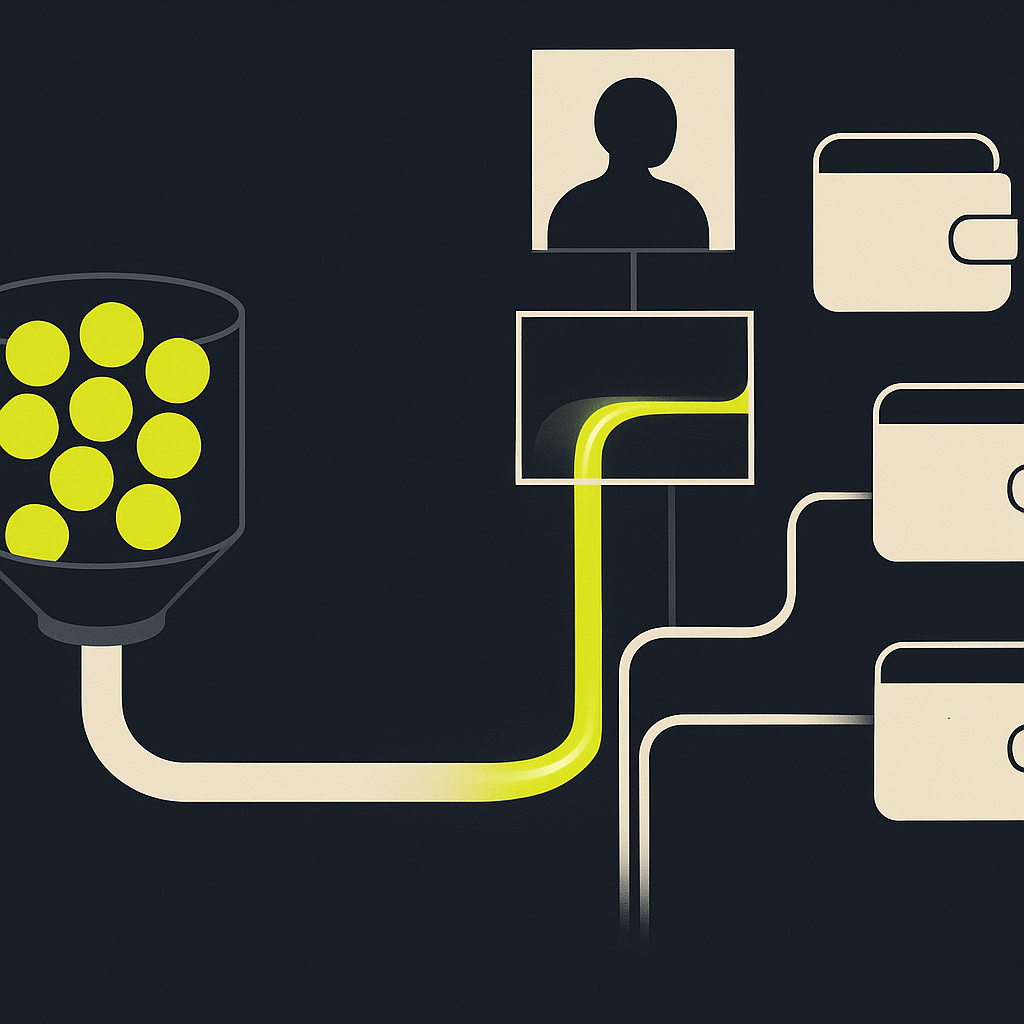
The “YouTube creator fund” usually refers to the former YouTube Shorts Fund, not a universal fund creators can apply to today. Shorts ad revenue sharing through the YouTube Partner Program replaced the original bonus program in February 2023, as explained in Shopify’s Shorts monetization guide. Creators seeking ongoing Shorts ad income should look at Partner Program eligibility rather than old fund application advice.
For product and operations teams at creator platforms, the important distinction is economic: a promotional fund distributes a defined budget; revenue sharing distributes a portion of qualifying revenue. That changes how earnings are calculated, explained, approved, and ultimately paid.
What was the YouTube Shorts Fund?
YouTube announced a $100 million Shorts Fund for 2021 and 2022. Its purpose was to reward creators producing engaging short-form content while YouTube developed its Shorts business. TechCrunch’s coverage of the launch described a program that could reward creators outside the YouTube Partner Program.
This was a bonus mechanism, not an open-ended promise to pay a fixed amount for every view. YouTube selected eligible creators for rewards; creators were not applying for production financing under a general-purpose grant.
Three concepts should therefore remain separate:
- The historical Shorts Fund: a time-limited incentive program.
- Partner Program monetization: ongoing access to eligible revenue-sharing and monetization features, subject to program rules.
- Specific grants or accelerators: separate opportunities with their own availability, selection criteria, and terms.
A page advertising a “creator fund” is not enough to establish that applications are open. Check the program’s exact name, sponsoring organization, eligible countries, and application dates before treating it as a funding opportunity.
What replaced the fund—and what eligibility means
For Shorts advertising income, the replacement is revenue sharing within the YouTube Partner Program. Access is not simply a matter of uploading a popular Short: a channel must qualify for the relevant monetization features, pass applicable review, and accept the required terms.
It is also important to distinguish entry into the program from access to advertising revenue. TechCrunch’s reporting on YouTube’s 2023 eligibility expansion explains how lower entry requirements opened access to features such as fan funding in selected markets without eliminating the separate requirements for ad revenue sharing.
Do not use one subscriber threshold as shorthand for every monetization feature. Country availability, channel eligibility, content policies, feature-specific conditions, and acceptance of monetization terms all matter. Because requirements can change, creators should check the Earn section of YouTube Studio and the applicable YouTube terms before relying on a third-party eligibility checklist.
For platform operators, this suggests a useful design rule: record eligibility by program and feature, not as a single “monetized” flag. A creator may qualify for one revenue stream without qualifying for another.
How Shorts revenue sharing differs from a bonus
Shorts advertising revenue is pooled rather than attributed to a conventional ad placement on each individual video. The calculation accounts for music licensing before allocating the Creator Pool to eligible creators based on their share of qualifying engaged views within each country. Creators keep 45% of their allocated revenue, according to Shopify’s explanation of the Shorts revenue-sharing model.
That does not mean a creator receives 45% of every advertising dollar generated anywhere near their Short. The percentage applies after the preceding pool and allocation calculations.
Music also requires careful explanation. Licensing affects how the pool is funded; it should not be described as a simple personal fee deducted from every creator who uses a track. Nor should raw public view counts be treated as interchangeable with the qualifying engagement used for revenue allocation.
The practical consequence is that views alone cannot establish a guaranteed payout. Relevant variables include eligible advertising revenue, the allocation rules, qualifying engagement, and the geographic mix of that engagement.
| Dimension | Historical Shorts Fund | Shorts ad revenue sharing | Operator takeaway |
|---|---|---|---|
| Funding basis | Defined incentive budget | Qualifying advertising revenue | Separate subsidies from earned revenue |
| Participation | Selected eligible creators | Eligible monetizing partners | Track program-specific eligibility |
| Earnings basis | Bonus selection and calculation | Pool allocation and creator share | Store the calculation version |
| Forecasting constraint | Reward selection uncertainty | Revenue and engagement variability | Avoid guaranteed per-view promises |
| Creator explanation | Why a bonus was awarded | How revenue was allocated | Provide an earnings statement |
The operator takeaways are editorial assessments, not ratings of YouTube’s implementation.
The platform lesson: define earnings before moving money
A payout provider can move an approved amount. It cannot resolve an unclear entitlement rule. A platform launching its own creator fund should define the economic contract before selecting payment methods.
Separate incentive budgets from revenue obligations
A bonus program needs a budget owner, a selection policy, and rules for when an award becomes owed. Revenue sharing needs a defined revenue base, permitted deductions, an allocation method, and a close process.
Keep promotional awards and revenue-sharing earnings separately identifiable, even if they appear in the same creator balance. Otherwise, finance cannot readily distinguish a discretionary growth expense from an obligation generated under revenue-sharing terms.
Make each calculation reproducible
For every earnings period, retain the applicable program terms, eligibility decision, qualifying activity, calculation inputs, adjustments, and approved result. A support agent should be able to explain an amount without asking engineering to reconstruct it from changing analytics data.
Policy changes should have effective dates. An increased qualification threshold should not silently change how a closed period is interpreted. Corrections should remain traceable to the original calculation rather than replacing its history.
Distinguish earned, approved, payable, and paid
These states answer different questions:
- Estimated: What might the creator earn before final calculations?
- Approved: What amount has the platform confirmed?
- Payable: What can be released after applicable payment requirements are satisfied?
- Paid: What payment outcome has been confirmed?
A bank-detail problem should not erase an approved earnings record. Similarly, meeting a payment threshold does not prove that every engagement counted toward earnings was eligible. For the broader operational architecture, see our guide to creator payout systems.
A hypothetical transition from bonuses to revenue sharing
This example illustrates a platform design choice, not YouTube’s internal processes.
Imagine a short-video platform replacing monthly promotional awards with advertising revenue sharing. A creator earned a bonus under the previous program and qualifies for the new program partway through the next earnings period.
The platform should retain the old award under its original terms, apply the new program from the appropriate eligibility date, and show the two earning types separately. If the creator’s receiving account fails validation, payment release may be blocked without changing either approved earnings amount.
This exposes a useful acceptance test: can the system explain which rule created the obligation, which period it belongs to, and what currently prevents payment? If not, changing payment rails will not fix the underlying problem.
Checklist for a defensible creator fund
- Name the economic model. State whether creators receive discretionary bonuses, fixed contractual rewards, revenue shares, or a combination.
- Publish the eligibility scope. Identify countries, content requirements, qualification periods, review conditions, and feature-specific access.
- Define the earnings calculation. Specify the revenue base or budget, eligible activity, exclusions, allocation method, and adjustment process.
- Version the rules. Preserve effective dates and explain how transitions affect existing awards and future earnings.
- Control approval separately from calculation. Use documented payment approval policies for exceptional awards, manual adjustments, and release decisions.
- Explain payment conditions. Disclose applicable thresholds, available methods, currency treatment, and fees separately from earnings eligibility.
- Test disputes and exceptions. Reconstruct a calculation, correct an award, and retry a failed transfer without duplicating the underlying obligation.
Build a program creators can understand
The YouTube creator fund story is a shift from temporary incentives to an ongoing revenue-sharing model—not simply a renamed payout program. For creators, the next step is to check the specific monetization features available to their channel. For platform teams, it is to make eligibility, earnings allocation, and payment status independently explainable.
Start with one representative earnings statement and trace it from policy to confirmed payment. Once that chain is clear, evaluate Payouts.com’s payout automation for moving approved creator payments across supported rails. Automating a clear obligation is scalable; automating an ambiguous one scales disputes.
Created with AI assistance. Sources are linked in the article; this content is general information, not legal, tax, or financial advice.
Discussion
3 commentsRelated resources
Creator Payouts: How Platforms Can Pay Millions of Creators Fast, Globally, and Compliantly
Paying creators at scale is one of the most operationally complex challenges in fintech today. Here's how modern platforms are solving it — from multi-currency rails to automated tax compliance.

TikTok Creator Fund Canada: Eligibility and Payment Options
Canada is not confirmed as a Creator Rewards market in the available evidence. Here is how to separate program eligibility from other creator income—and build clearer payment expectations.

Facebook Marketplace Payout Time: From Shipping to Spendable Cash
Facebook Marketplace payout timing depends on how the buyer paid, shipment tracking, and processing after release. Here’s how to separate the delivery clock from the date cash becomes available.
Run your entire money cycle on one ledger
Global payouts, AP/AR automation, and AI agents with their own wallets and spend limits.
Get started
i appreciate the warning about not using raw view counts as a proxy for payout. we made that mistake early on and had to backfill so many support tickets explaining why 10k views didn't translate to the amount creators expected
The table comparing fund vs revenue sharing is extremely helpful. We're building a contractor marketplace and I've been arguing internally that we need separate GL accounts for promotional bonuses and true revenue share obligations. Finance keeps saying it's all just 'payout expense' but the legal and forecasting implications are completely different.
Question on the reproducibility point at the end: are you suggesting platforms should version the actual calculation code, or just store input snapshots? We had an ugly dispute last year where a creator claimed we changed the formula mid-month, and we couldn't prove we hadn't because we only kept the final numbers.