

J.P. Morgan AI Invoice Reconciliation in the Philippines: What AP Buyers Should Verify
J.P. Morgan’s Philippine announcement signals investment in AI-assisted invoice matching, not proof of a complete invoice-to-pay replacement. Here is how finance teams should separate reported capabilities from the workflow they actually need.
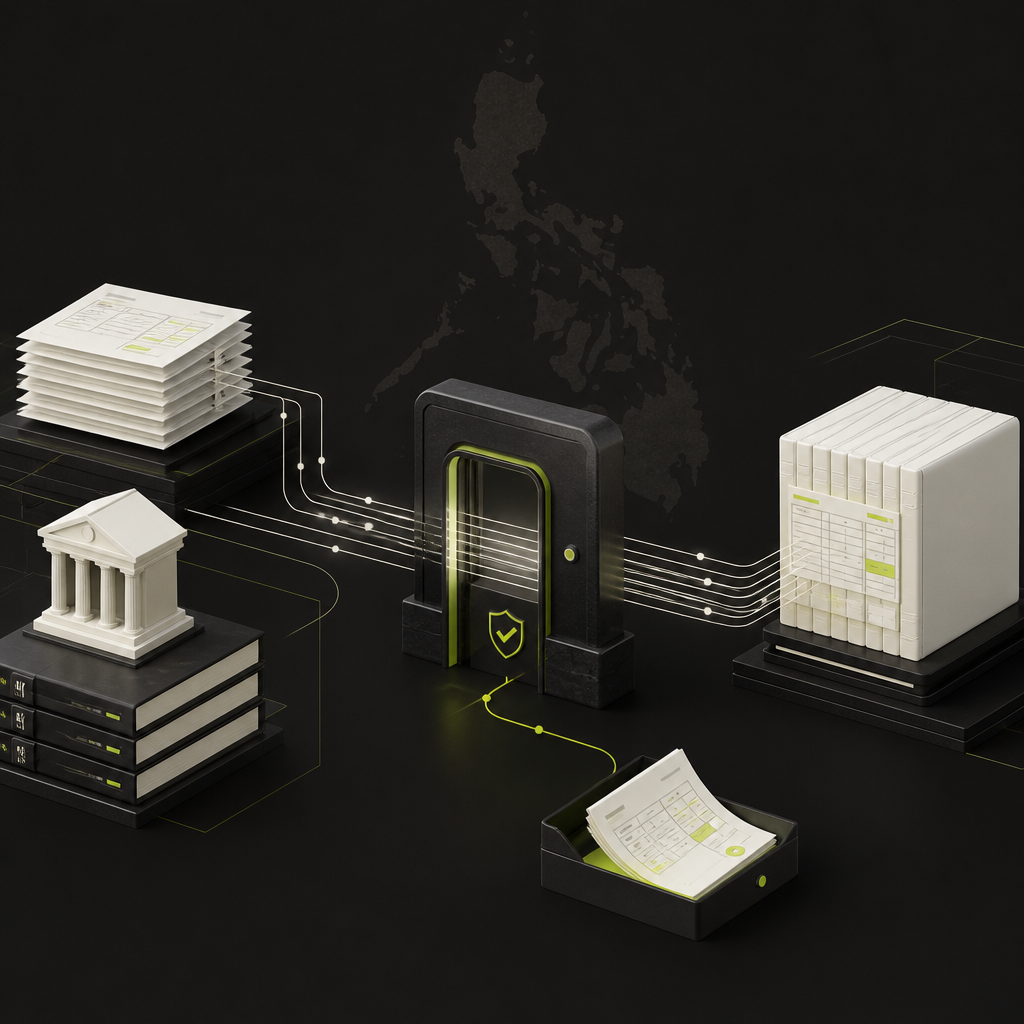
J.P. Morgan announced plans to introduce an AI-powered invoice reconciliation service in the Philippines in May 2025. The reported function is matching invoices with payments. For finance teams evaluating it today, the important caveat is that the supplied reporting establishes launch intent—not verified current availability, Philippine customer results, or a complete accounts payable automation feature set.
The Philippine Star’s April 21, 2025 report describes the planned introduction. Before putting the service on an AP shortlist, ask J.P. Morgan to confirm whether it reconciles outgoing supplier payments, incoming customer receipts, or both. That distinction determines whether it addresses your AP bottleneck at all.
What the announcement establishes—and what it does not
Fintech News Philippines reported the planned Philippine launch as part of a broader regional expansion following deployment in India. This supports a narrow conclusion: J.P. Morgan was extending an AI-assisted invoice reconciliation offering into the market.
It does not establish that every Philippine business can access the service, that every local bank account is supported, or that invoice capture, purchase-order matching, approvals, and payment execution are included in one package.
The research reviewed for this article, dated October 25, 2026, did not identify independently verified post-launch Philippine outcomes. That is an evidence gap, not proof that the service is unavailable. Performance examples from India should not be treated as Philippine results or forecasts for your business.
The buyer’s task is to turn a launch announcement into a written scope of service. Request availability, eligibility, supported transaction flows, integration requirements, pricing, and operational responsibilities directly from the provider.
First establish which reconciliation problem you have
“Invoice reconciliation” can describe different accounting tasks. An AP team may mean checking a supplier invoice against a purchase order and goods receipt. Treasury may mean matching a bank debit to a payment instruction. An AR team may mean allocating a customer receipt across outstanding invoices.
These processes share data, but they require different evidence and controls.
| Workflow | Records being matched | Required proof in a demo |
|---|---|---|
| Invoice validation | Supplier invoice and vendor records | Field checks and duplicate handling |
| Purchase validation | Invoice, purchase order, receipt | Quantity and price exception routing |
| AP payment reconciliation | Payable, payment instruction, bank debit | Traceable allocation and payment status |
| AR cash application | Customer receipt and sales invoices | Partial and combined receipt allocation |
| Ledger reconciliation | Subledger, bank records, general ledger | Balanced postings and reversal handling |
Ask the provider to demonstrate the relevant row using your data structure. A strong cash-application demonstration does not prove supplier-payment reconciliation. Likewise, accurate document extraction does not prove that a payment settled.
If your main problems are emailed approvals and manual bank-portal uploads, reconciliation alone may leave the most expensive handoffs untouched. Map those gaps against the broader scope of accounts payable automation before comparing proposals.
How AI-assisted reconciliation should work
J.P. Morgan’s general explanation of AP automation describes extracting invoice information, validating it against internal records, and routing approvals. That is useful process context, but it is not a technical specification for the Philippine reconciliation service.
For procurement purposes, evaluate the following architecture as a requirement—not as a claim about what the announced service includes.
Preserve the source records
The system should retain the original invoice, supplier identity, invoice reference, currency, amount, payment instruction identifier, and bank transaction reference. It should distinguish invoice date, payment submission date, and bank posting date rather than treating them as interchangeable.
Normalization can standardize punctuation or date formats, but it should not destroy original values. Those values are needed to explain an allocation or investigate a dispute.
Separate proposed matches from accounting decisions
Exact identifiers can support deterministic matching. AI can help rank candidates when references are incomplete, supplier names vary, or one transfer covers several invoices.
A high-confidence suggestion is still not authority to write off a balance, amend a supplier account, or release a payment. Define which matches may post automatically, which require approval, and which must remain unresolved. Require the evidence behind each decision, not just a confidence score.
Make exceptions reversible
Partial payments, credit notes, rejected transfers, and late bank updates should have explicit states. If a transfer is returned after a payable was marked settled, the system needs a controlled way to reopen it without generating an unintended duplicate payment.
Approval and payment-release authority should remain separate from matching logic. The controls discussed in accounts payable fraud prevention remain necessary even when AI reduces manual reconciliation work.
What Philippine finance teams should test
Local relevance should be demonstrated through actual documents, accounts, and transaction flows—not inferred from a country launch.
- Invoice and tax fields: Test your Philippine supplier invoices, including tax and withholding information where applicable. Confirm with your tax team which fields and supporting documents must be preserved.
- Gross-to-net allocation: Require separate treatment of approved withholding, credit notes, fees, and unexplained short payments. A lower cash amount must not automatically close a larger invoice.
- Bank coverage: Identify each supported account, statement format, feed frequency, and available transaction status. Local banking relationships do not establish universal connectivity.
- Cross-border suppliers: Distinguish invoice currency, payment currency, exchange-rate differences, and bank charges. Ask how residual balances reach the ledger.
- Entity boundaries: Ensure similar supplier names and invoice references cannot cause allocations across the wrong legal entities.
- Data governance: Obtain written answers on processing locations, access controls, retention, subcontractors, and whether invoice data is used for model training.
The supplied sources do not establish service-specific Philippine regulatory approval or compliance coverage. Have legal, tax, and security owners assess the proposed deployment rather than relying on the announcement.
A hypothetical pilot that exposes the real gaps
The following is a test scenario, not a reported customer deployment.
A Philippine distributor pays several supplier invoices through a combined transfer. One invoice has an approved credit note; another requires documented withholding. The bank record contains an abbreviated supplier name and a payment-batch reference, but no individual invoice numbers.
A useful pilot should show the system retrieving the approved batch, allocating cash to the correct invoices, applying only authorized adjustments, and leaving unexplained differences open. It should preserve the path from invoice to approval, payment instruction, bank record, and ledger entry.
Then introduce a returned transfer and a repeated statement import. The expected behavior is controlled reopening for the return and no duplicate posting from the import. Neither event should trigger a fresh payment without the required authorization.
This tests operational correctness beyond the easy case of an exact invoice reference and matching amount. It also reveals which exceptions still require spreadsheets or bank-portal investigation.
Build the business case around reconciled outcomes
Do not compare a reconciliation-only fee with an end-to-end AP platform subscription as though they purchase the same work. Include implementation, data connectivity, software, bank charges, internal labor, exception handling, and ongoing support within a consistent scope.
Measure both efficiency and error exposure:
- Automatic reconciliation rate: Eligible transactions reconciled without manual intervention, using a documented denominator.
- Incorrect accepted matches: Matches that posted but later required correction.
- Exception effort: Analyst time by cause, including missing references and unsupported adjustments.
- Time to reconciliation: Elapsed time from bank-data availability to correct ledger allocation.
- Cost per reconciled invoice: In-scope operating cost divided by invoices correctly reconciled during the period.
Report exclusions alongside the headline rate. Excluding difficult transactions may make automation look better while leaving staffing needs unchanged. The distinction between task automation and a genuinely touchless invoice process matters here.
Before signing: the buyer’s checklist
- Get written confirmation of Philippine availability and client eligibility.
- Establish whether the service supports AP, AR, or both.
- List included workflows and responsibilities retained by your team.
- Verify your banks, entities, currencies, ERP interfaces, and data formats.
- Test ambiguous matches, deductions, returns, and duplicate imports.
- Agree on posting authority, review thresholds, audit evidence, and reversal procedures.
- Price the complete workflow and define pilot acceptance criteria before testing.
J.P. Morgan’s announcement is a reason to investigate, not a substitute for operational validation. Buy against the reconciliation problem you can demonstrate and the controls you can verify.
If your requirement extends from invoice capture through approvals and payment, evaluate Payouts.com AP Automation alongside the bank-led option using the same workflow map and exception cases. The right next step is a scoped demonstration—not a decision based on the AI label.
Created with AI assistance. Sources are linked in the article; this content is general information, not legal, tax, or financial advice.
Discussion
3 commentsRelated resources

Touchless Invoice Processing: What It Really Means and How to Get From 0% to 80%+
Touchless invoice processing isn't a switch you flip — it's a rate you climb. Here's what it really means, how to measure it, and a step-by-step path from 0% to 80%+.
Accounts Payable Fraud Prevention Controls That Survive Payment Release
An approved invoice can still become a fraudulent payment. Build controls that preserve authorization from vendor setup through bank release—and test whether your AP software actually enforces them.
Supplier Payment Terms: Negotiate, Govern, and Automate
Supplier payment terms are a commercial agreement, not just a due-date field. Learn how to negotiate workable terms and preserve them through invoice capture, approvals, and payment.
Run your entire money cycle on one ledger
Global payouts, AP/AR automation, and AI agents with their own wallets and spend limits.
Get started
The table breaking out the different reconciliation workflows is genuinely helpful. We've been looking at three different vendors and every demo conflates AP payment matching with AR cash application. It's the same word but completely different control requirements, and sales teams either don't know the difference or deliberately blur it.
I'd add one more test case to the Philippine-specific section: how does it handle forex adjustments when your invoice is in USD but the bank debit posts in PHP at a different rate than you recorded? We get supplier invoices in three currencies and the settlement often doesn't match the payable exactly due to timing. If the system just flags those as exceptions we're back to manual cleanup.
The point about launch announcements not equaling verified availability is something procurement teams forget constantly. We got burned on a 'now available in Southeast Asia' press release last year that turned out to mean Singapore only, with everyone else on a waitlist. Always get written confirmation of what you can actually access today before you build it into your roadmap.