

Amazon Affiliate Account: Setup and Cross-Border Readiness
Opening an Amazon Associates account is only part of becoming ready to receive commissions. Here is how to align account ownership, tax information, storefront participation, and international bank details.

An Amazon affiliate account is an Amazon Associates account that lets eligible publishers and creators earn commissions from qualifying purchases through their affiliate links. To get started, apply to the relevant regional Associates program, identify your publishing properties, provide accurate payee and tax information, and configure an available payment method.
For finance and operations teams, the important distinction is that account access, program approval, and payment readiness are separate conditions. Being able to generate links does not prove that the correct legal entity can receive the resulting earnings.
This guide focuses on setting up and governing the account, rather than forecasting individual payments. The objective is a documented connection between the publisher earning the commission, the payee reported for tax purposes, and the account receiving the money.
What an Amazon affiliate account does—and does not do
Amazon Associates is a referral program, not a seller account. An affiliate promotes products and earns eligible commissions; it does not receive the underlying customer's purchase payment as a marketplace seller would.
For a business publishing across markets, separate these concepts:
- Publishing property: the website, app, or social channel used to promote products.
- Regional program: the Associates program whose terms govern participation and earnings.
- Payee: the person or legal entity designated to receive the commissions.
- Receiving account: the bank destination or other available payment method.
Do not assume that participation in one regional program establishes approval, tax readiness, or banking eligibility everywhere else. Keep a record for each program you participate in, even when the same business operates all the publishing properties.
How to set up an Amazon affiliate account
Choose the program and publishing properties
Start with the regional Associates program relevant to the Amazon storefront you intend to promote. Review its current eligibility and content requirements before applying, then submit the publishing properties and business information requested.
Registration should not be treated as unconditional acceptance. For the US program, Shopify's Amazon affiliate guide describes the requirement to generate at least three qualifying sales within the first 180 days before Amazon reviews the application. Check the applicable program's current rules rather than assuming this is a universal global standard.
Assign someone to monitor account notices and application status. A finance team should not have to infer approval from a marketing spreadsheet showing clicks or attributed orders.
Establish the correct payee before entering bank details
Decide whether the participant is an individual or a business, and enter information that reflects the actual arrangement. A brand name, website name, and registered company name may differ; document that relationship rather than treating the names as interchangeable.
Complete the required tax information. Amazon requires tax information before making payments, but the applicable documentation depends on the participant and program. An overseas bank account does not, by itself, change the payee's tax residence.
Where a business owns the publishing operation but an employee originally opened the account, investigate the account's permitted ownership and update procedures. Do not simply replace the bank destination and assume the legal relationship has changed.
Configure an eligible payment destination
Use the methods and banking fields offered in the relevant Associates account. Amazon's direct-deposit help is a starting point for checking bank-transfer availability; the options applicable to your program and destination still need confirmation.
Record the beneficiary name, receiving-bank country, account currency, and required routing identifiers. US domestic account instructions commonly use a routing number and account number, while many European destinations use an IBAN. These are examples of banking formats—not a guarantee that every program accepts those destinations.
Copy details from bank-issued instructions, not an old invoice or a colleague's message. Confirm that the account can receive the relevant payment type and currency.
Create an account-readiness record
The most useful operational artifact is a record connecting program participation to payment ownership. The following is a suggested internal control, not a description of Amazon's dashboard fields.
| Record | What to capture | What it prevents |
|---|---|---|
| Program identity | Regional program and Associates identifier | Mixing separate program records |
| Publishing scope | Declared properties and responsible owner | Untracked publishing changes |
| Legal payee | Legal name, entity type, address | Personal/business ownership confusion |
| Tax readiness | Submission status and review owner | Assuming bank setup is sufficient |
| Bank destination | Beneficiary, country, currency, masked account | Wrong-currency or wrong-owner routing |
| Evidence | Verification date and supporting records | Reliance on undocumented assumptions |
| Change control | Requester, reviewer, effective date | Unreviewed destination changes |
Keep sensitive tax and bank documents in access-controlled storage. The operational register should point to evidence without exposing full account numbers to everyone who manages affiliate content.
Cross-border readiness: check the combination, not just the country
International eligibility depends on the combination of regional program, payee circumstances, bank country, and receiving currency. A bank provider advertising international accounts does not establish that its details are accepted by a particular Associates program.
Amazon's international earnings guidance describes bank-transfer arrangements for participating programs and supported destinations. It also explains that Amazon does not charge an international bank-transfer fee under that arrangement, while recipient-bank charges may apply and banking partners determine the payout-day exchange rate. Confirm current coverage before selecting a destination.
This creates two separate checks:
- Acceptance: Will the program accept these account details for this payee?
- Economics: What currency arrives, who converts it, and what charges may reduce the receipt?
No transfer fee does not mean cost-free currency conversion. Nor should you assume a particular FX markup without evidence. Compare the actual conversion rate and charges with a contemporaneous reference rate when reviewing receipts.
A receiving provider may also convert the funds again when they are withdrawn. Our multi-currency business account guide explains why holding, receiving, and converting currencies are different capabilities.
Treat virtual receiving accounts as a verification question
Do not rely on community claims that a particular virtual account always works. Obtain the provider's beneficiary details, supported inbound payment types, currency restrictions, and account-ownership documentation. Then confirm compatibility with the relevant Associates requirements.
Products such as Payouts.com Global Accounts can support broader multi-currency collection and holding needs. That does not establish acceptance by Amazon; any proposed receiving destination needs its own eligibility check.
Keep account changes from becoming payment incidents
Account readiness can deteriorate after setup. A new legal entity, changed tax address, closed bank account, or departing administrator can leave the operational records inconsistent.
Use a simple change policy:
- Identify the change: distinguish a contact update from a payee, tax, or bank change.
- Check permitted procedures: determine whether the regional program allows the update or requires another process.
- Verify independently: confirm new bank instructions through a trusted channel.
- Review access: remove unnecessary access and preserve business control of recovery methods.
- Retain evidence: record what changed, who reviewed it, and any resulting notices.
For an agency managing multiple publishers, maintain separate ownership records. Administrative involvement does not establish a right to redirect a publisher's earnings into the agency's account.
Before you mark the account ready
- The regional program and publishing properties are documented.
- The application status is known and outstanding requirements have an owner.
- The payee reflects the actual individual or business participating.
- Required tax information is complete, with unresolved requests tracked.
- The bank beneficiary, country, currency, and routing details have been checked.
- International destination eligibility has been confirmed for the specific program.
- Conversion points and potential receiving charges are understood.
- Account access and future changes have an assigned reviewer.
The next step is to audit the account record before increasing affiliate activity. Resolve ownership and banking gaps while they are configuration issues, rather than after earnings become difficult to collect.
If your business also pays its own international partners, treat that as a separate payable workflow. Explore Payouts.com's affiliate payment solutions for that downstream operation—not as a way to change Amazon's approval requirements or payment rules.
Created with AI assistance. Sources are linked in the article; this content is general information, not legal, tax, or financial advice.
Discussion
3 commentsRelated resources

Multi Currency Business Account: A Finance Team’s Guide
A multi-currency account gives finance teams more control over when money is converted and how international payments are funded. The real test is whether each balance is usable by the right entity, on the right rail, before payments are due.
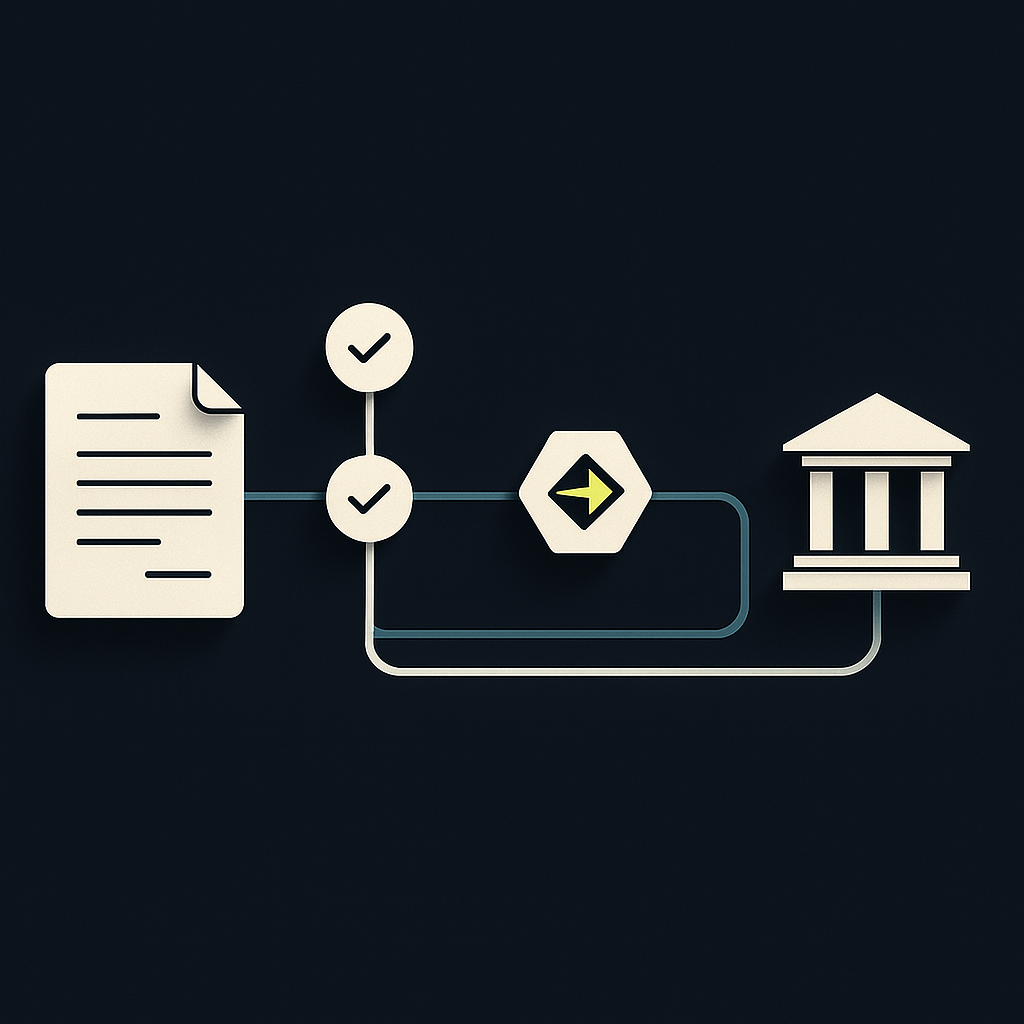
Contractor Payment Terms: From Contract to Cross-Border Credit
Net 30 is only part of the agreement. Learn how to define contractor payment terms that connect invoice acceptance, currency, fees, and payment completion across borders.
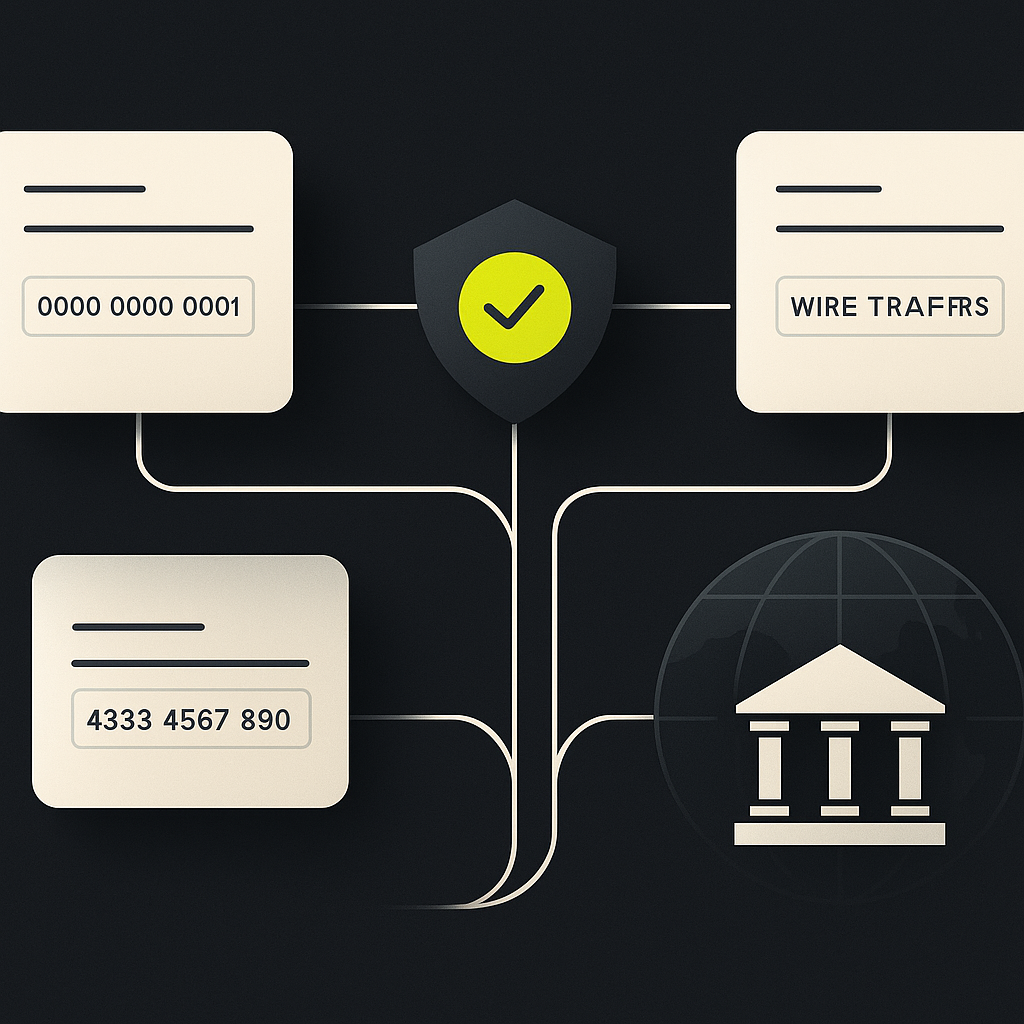
ACH Wire Instructions: Required Fields and a Verification Checklist
ACH and wire instructions are separate sets of banking details, not a single payment method. Use these field templates and verification controls to build payment-ready recipient records.
Run your entire money cycle on one ledger
Global payouts, AP/AR automation, and AI agents with their own wallets and spend limits.
Get started
Appreciate the emphasis on documented ownership chains. We've inherited three affiliate accounts from acquisitions and the mismatch between who owns the content, whose tax ID is on file, and which subsidiary bank account receives payment has been a compliance nightmare every audit cycle.
Does anyone know if the international bank transfer arrangement described actually works reliably for non-USD currencies? We're looking at promoting to Amazon.de from our EU subsidiary but concerned about FX handling and whether it's cleaner to just open a EUR account with the same bank we use for other European receivables.
The distinction between program approval, tax readiness, and bank eligibility is real and painful. We got approved for Associates UK, generated thousands in commissions the first quarter, then discovered our US entity's EIN wasn't structured correctly in their tax form and nothing could disburse for 90 days while we sorted it with our accountant.