

Does Canada Have a TikTok Creator Fund? Verify Before Budgeting
Canadian creators should not budget for TikTok Creator Rewards without confirmed access. Here is how to distinguish country eligibility from other monetization routes—and what creator platforms should communicate before promising payouts.
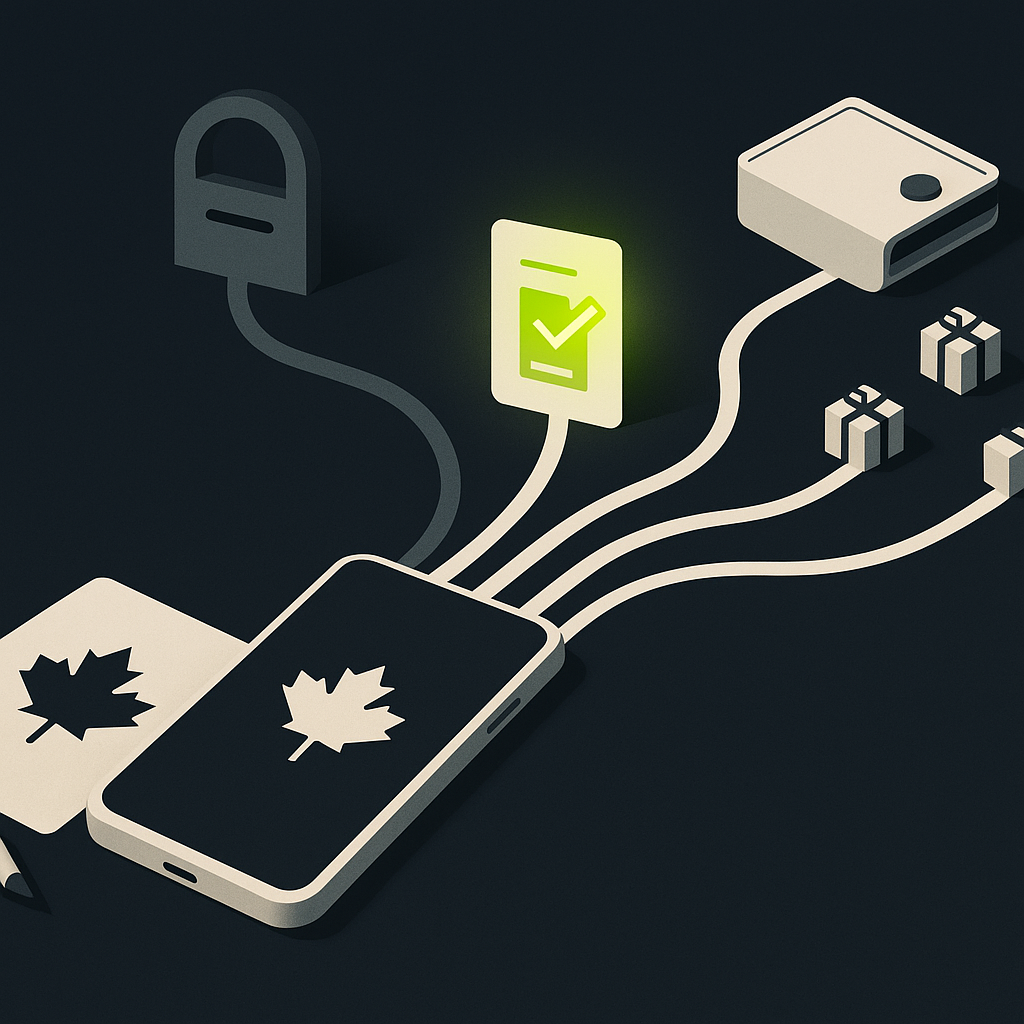
No—Canada did not qualify for TikTok’s original Creator Fund, and the evidence available as of October 13, 2026 does not establish a Canadian launch of its successor, the Creator Rewards Program. Canadian creators should not assume that posting videos or reaching audience milestones creates an entitlement to view-based rewards.
That does not mean Canadians cannot earn money through TikTok. Sponsored content and account-dependent monetization features are separate earning routes, with different eligibility rules and payment arrangements.
For creators, agencies, and platform operators, the practical question is therefore not just whether a fund exists. It is which program is available, what creates an earning, and who owes the payment. Establish those facts before forecasting revenue or displaying a withdrawable balance.
What the evidence establishes about Canada
CBC reported in June 2024 that Canadian creators could not access Creator Rewards. The research available for this article did not identify a subsequent official Canadian launch announcement. That supports a cautious planning position, not a claim that access can never change.
The distinction matters because an older report establishes historical availability, not an indefinite policy. A social post claiming that Canada has finally received the program is also not sufficient confirmation. Look for current program terms that include Canada and enrollment access for the actual account.
Canada’s exclusion should not be explained through speculation about market size, regulation, or TikTok’s commercial priorities. The available reporting does not establish a specific official reason. Nor does it establish a Canadian launch date.
Creator Fund and Creator Rewards are not interchangeable
“Creator Fund” remains common search language, but it names an older program. References to the Creativity Program and Creator Rewards concern the transition to a different rewards model, not proof that the original fund became available everywhere.
Creator Rewards uses qualified views and rewards per thousand qualified views to determine eligible earnings. It is not a universal payment for every video view. Country access is a separate requirement from account standing, audience thresholds, and content qualification.
Meeting follower or view requirements does not override an unsupported account location. A Canadian account with a substantial audience should not treat those milestones as evidence of enrollment.
Separate program access from an actual payment obligation
A creator can be unable to join Creator Rewards while still being owed money by a brand for sponsored content. Conversely, access to a monetization feature does not mean every interaction produces withdrawable cash.
Use the following checks in order. This is a verification framework, not a description of TikTok’s internal payment system.
| Checkpoint | Question to resolve | Evidence to retain | Planning consequence |
|---|---|---|---|
| Country availability | Does the program support Canada? | Current country-specific terms | No launch assumption |
| Account enrollment | Has this account been accepted? | Enrollment confirmation | No rewards forecast before access |
| Earning qualification | Did the activity qualify? | Program earnings record | Views alone are insufficient |
| Payment approval | Is the amount approved for release? | Balance or payer approval | Separate estimates from payables |
| Payment completion | Did the recipient receive funds? | Transfer and receiving-account records | Reconcile cash separately |
This sequence prevents a common support mistake: diagnosing an unavailable earning program as a failed bank transfer. If an earning already exists and payment is missing, the relevant next step is a TikTok payout diagnosis, rather than another country-eligibility check.
What Canadian creators can investigate instead
Printful’s guide to making money on TikTok in Canada discusses alternatives including brand collaborations, LIVE Gifts, and Series. Treat these as routes to investigate, not a promise that every Canadian account has access. Feature availability and account eligibility must be checked separately.
Brand collaborations: identify the contractual payer
A sponsored video is not a Creator Rewards payment. The payment obligation comes from the campaign agreement, which should identify the payer, deliverables, approval conditions, currency, and due date.
TikTok One, which succeeded Creator Marketplace, can support brand–creator collaborations. However, discovering a campaign through a platform does not by itself establish who will remit the money. Read the agreement before assuming TikTok, the brand, or an agency owns payment execution.
For Canadian recipients paid in a foreign currency, agree on who bears conversion and transfer costs. A quoted campaign fee and the amount ultimately credited in Canadian dollars are different measures.
LIVE Gifts: do not equate viewer spending with creator cash
LIVE Gifts involves virtual gifts and Diamonds within TikTok’s monetization system. Viewer spending should not be treated as an equal cash amount owed to the creator. Use the account’s applicable rewards and withdrawal terms to understand what can actually be paid out.
Avoid forecasting revenue from an assumed universal gift conversion rate or commission percentage. The evidence supplied here does not support a dependable Canadian net-earnings calculation.
Series and other features: verify before producing paid content
Where Series is available to an eligible account, it offers a different proposition from payment for ordinary video views: access to paid content. Confirm enrollment, content conditions, and payment terms before investing in production on the assumption that the feature will be enabled.
The same principle applies to commerce and affiliate tools. The existence of a feature in another country is not evidence of Canadian availability.
A verification checklist before forecasting Canadian earnings
- Name the exact revenue stream. Record Creator Rewards, a specific brand agreement, LIVE Gifts, or another identifiable feature—not simply “TikTok income.”
- Check current country terms and account access. Retain the relevant terms and enrollment evidence with a check date. A country list without account acceptance is incomplete.
- Identify the earning trigger. Determine whether payment depends on qualifying content, campaign acceptance, purchases, or another defined event.
- Identify the payer. Record the legal counterparty and support contact responsible for resolving payment questions.
- Separate projected, approved, and received amounts. Do not present speculative rewards as overdue cash.
- Confirm payment conditions. Check required identity or tax information, supported receiving methods, currency, and any applicable withdrawal conditions.
- Recheck before a material commitment. Verify access before signing a revenue guarantee or funding a production plan that depends on the program.
A VPN, foreign payment account, or overseas business entity should not be treated as proof of personal eligibility. A receiving method can help deliver an authorized payment; it does not confer the right to earn under a restricted program.
The platform lesson: communicate eligibility before payout speed
Canada’s Creator Rewards question exposes a product-design problem for creator platforms: a global audience can encounter monetization messaging for a program that is not globally available.
Product and operations teams should maintain program-level country rules separately from payment-method coverage. A platform might be technically able to send money to Canada while choosing not to offer a particular incentive there. Those are different decisions and need different explanations.
Hypothetical example: A creator platform offers a performance bonus only in selected markets but runs sponsored campaigns in Canada. Its Canadian dashboard should show the bonus as unavailable while displaying approved campaign earnings separately. “No bonus eligibility” must not erase a valid campaign payable or appear as a failed withdrawal.
Useful implementation controls include versioned eligibility rules, explicit reason codes, and dated records of the terms under which earnings were approved. Account status changes should trigger review against those terms rather than silently rewriting existing balances. These controls support a marketplace payout experience that matches the platform’s actual commitments.
Plan around confirmed access, not an expected launch
Canadian creators should not budget for Creator Rewards until Canadian availability and their own enrollment are confirmed. Other earning routes may be viable, but each needs its own eligibility check, earning record, and payment terms.
For platforms paying Canadian creators, start by separating program eligibility from approved payment obligations. Then evaluate Payouts.com’s payout automation for distributing authorized earnings. Payment infrastructure can automate money movement; it cannot make an unavailable third-party rewards program available.
Created with AI assistance. Sources are linked in the article; this content is general information, not legal, tax, or financial advice.
Discussion
40 commentsRelated resources
TikTok Not Paying Creators? Diagnose the Missing Money
Missing creator earnings and failed payouts are different problems. Here is how to identify where money stopped—and what platform teams should make visible before creators need to ask.
Marketplace Payout: Build a Seller Experience You Can Honor
A reliable marketplace payout starts before money moves. Learn how to connect seller balances, withdrawal rules, payment methods, and exception handling into a promise your platform can keep.

How to Withdraw Shopee Affiliate Commission: A Practical Guide
Receiving Shopee affiliate commission is not always a manual withdrawal. This Philippines-focused walkthrough explains payment setup, billing checks, and how to trace the money to your receiving account.
Run your entire money cycle on one ledger
Global payouts, AP/AR automation, and AI agents with their own wallets and spend limits.
Get started
The verification checklist at the end is incomplete in the article but the checkpoint table earlier is what we're rolling into our creator vendor intake form—especially the split between country availability and account enrollment, which are constantly conflated by applicants who think hitting 10k followers means they're enrolled in something.
We had the same conflation problem. Creators would send us screenshots showing follower counts above threshold and assume that meant they were enrolled and owed money, when in reality they hadn't even applied to the program or were in an unsupported country. Separating those two checkpoints in the intake workflow cut our back-and-forth by half.
Same experience here. We now have a hard stop at account enrollment proof—screenshot of the actual Creator Rewards dashboard with Canada visible, or we don't add them to the vendor file. Follower count means nothing if the program isn't live in their country.
The framing around 'views alone are insufficient' is exactly where we've had the most creator pushback. They see raw view counts and assume it translates to withdrawable cash, but Creator Rewards has qualification layers that exclude a massive percentage of total views. We now make creators acknowledge in writing that audience metrics don't equal program earnings before we onboard them into any platform integration.
Same here. We started requiring creators to attach their TikTok earnings dashboard export showing qualified vs total views before we even discuss payment terms. The gap between the two is usually 60-70% and they're always shocked.
We solved this by adding a mandatory field in our creator onboarding that asks them to confirm whether their views are *qualified* views under the program terms, not just total impressions. Most can't answer it, which forces the conversation about eligibility criteria before they submit an invoice.
The point about reconciling Creator Rewards versus brand collaboration payments is exactly where our AP workflow breaks down. We've had Canadian creators submit invoices referencing 'TikTok earnings' without specifying whether it's a direct brand deal they fulfilled or an expectation of platform rewards—treating them as the same liability when the payer and obligation are completely different.
This article saved us from a headache. We were about to build TikTok Creator Rewards as a payable category in our system based on a Canadian influencer's request, but the checkpoint sequence made it clear we needed enrollment proof first—which they couldn't provide because the program isn't available here.
Good call stopping at proof of enrollment. We've started treating any creator monetization feature the same way we treat vendor payment terms—no master data record without documentation. Saves the awkward conversation later when they can't actually withdraw anything.
We almost made the same mistake when scoping a new creator payables module. The checkpoint sequence is now part of our discovery questionnaire—we ask for proof of enrollment before we even configure the payment category. Saved at least two weeks of wasted dev work.
The LIVE Gifts section finally explains why our reconciliation never matched what creators claimed they were owed. They were adding up viewer spending at face value instead of understanding the Diamond conversion and platform take rate, then expecting us to true up the difference when we paid based on their actual withdrawal records.
Same issue here. We eventually required creators to provide their official withdrawal statement from TikTok showing the actual Diamond-to-USD conversion before we'd process any reconciliation requests. Saved us dozens of hours disputing phantom shortfalls.
We had the exact same reconciliation gap. Now we require creators to provide their actual payout statement from TikTok showing the post-conversion Diamond amount before we'll validate any disputed payment. Saves hours of back-and-forth over numbers that were never real to begin with.
The distinction between 'who owes the payment' in brand collaborations is critical and often overlooked—we've had cases where creators assumed TikTok was the payer when it was actually the brand's obligation, leading to misdirected collection efforts and delayed reconciliation. Would be helpful to know if TikTok One provides any standardized payment flow documentation that clarifies remittance responsibility upfront.
We now require a copy of the signed agreement uploaded to our vendor portal before we even create the payable. If TikTok is named as remitter, we flag it for the creator to clarify whether they're expecting a platform transfer or if we're actually the disbursing party under a separate services contract.
We implemented a three-party agreement template specifically for this—creator, brand, and platform/agency—with explicit payment routing instructions and a RACI that clarifies who initiates the transfer versus who provides the marketplace infrastructure. Cut our creator payment disputes by about half.
The checkpoint sequence is good but it's missing a step between enrollment confirmation and earnings qualification: the *content eligibility review*. We've had creators enrolled in programs but disqualified from monetization on specific videos due to music licensing, duration, or topic restrictions. They see the view count, assume qualified views, then can't figure out why no payout appears. Would add that as its own gate before the earnings record check.
Agreed. We've also seen videos rejected post-upload due to copyright claims that weren't flagged during production. Adding a content compliance checkpoint before qualification would've caught at least three disputed payouts last quarter.
Good catch. That should probably slot between checkpoint 2 and 3—account enrollment confirmed, but then a per-video qualification gate before any earnings record appears. We've logged the same gap with YouTube Shorts monetization where the account is enrolled but individual uploads fail silently on reused audio.
The section on foreign currency campaign fees is where most finance teams get tripped up. We've had Canadian creators invoice us in USD for deliverables, then dispute the CAD amount when our AP system processes payment at spot rate minus wire fees. Now we specify in the SOW exactly which party absorbs FX risk and transfer costs, and require creators to confirm their receiving currency before we even issue a PO.
We started adding a wire fee estimate table as an appendix to every international creator agreement—fixed ranges by currency corridor and transfer method. It doesn't eliminate disputes entirely but at least we can point to a signed document when the creator questions the net deposit.
We enforce the same now. SOW specifies invoice currency, who bears FX risk, and whether wire fees are deducted or absorbed. Cuts our payment dispute volume by at least half.
The 'distinguish between country eligibility and account eligibility' point is something our controller keeps missing when creators invoice us. They see a monetization tab in the app and assume that means program access, but it's usually just the framework that shows for everyone regardless of country support.
We added a required field in our vendor onboarding form that asks creators to upload their actual enrollment confirmation, not just a screenshot of the app interface. Cut down on the back-and-forth with our controller by about 60% because now the burden of proof is on the creator before we even set up the vendor record.
We started requiring creators to provide either their enrollment confirmation email or a screenshot showing their specific program dashboard with country clearly visible. That extra step filters out about 40% of the confusion before it hits AP.
We built a creator payment reconciliation module last year and the number of support tickets citing 'TikTok owes me' when the account wasn't even enrolled in a monetization program was staggering. That checkpoint sequence—country, enrollment, qualification, approval, completion—should be mandatory reading for anyone building payouts into a creator economy product.
We had the same experience. The worst part is when they insist a viral video automatically means Creator Rewards when their account location was never eligible in the first place. Now we ask for proof of enrollment confirmation before we even discuss reconciliation.
We saw the same thing. The distinction between 'eligible to apply' and 'enrolled and earning' gets lost completely, and then creators escalate to their agency who escalates to us. That five-step sequence would have saved us months of back-and-forth if we'd implemented it upfront.
The sequential checkpoint framework is a much better diagnostic tool than what most of our finance ops team was using. We had creators claiming payment delays when they weren't even enrolled, and support was investigating bank routing issues that never mattered. Separating country eligibility from account enrollment from actual earnings qualification would have saved us about 15 hours last month alone.
We had the same problem until we required creators to screenshot their actual program dashboard showing enrollment status. Cut our payment investigation time by at least 60% because we stopped chasing phantom payables.
We added a pre-validation step that requires creators to submit proof of program enrollment before we even open a vendor record. Cuts down on support noise dramatically and keeps AP from chasing ghosts.
This is why we stopped advancing payments to creators based on platform balance screenshots. Too many variables between a displayed number and actual receivables, especially when the country eligibility piece isn't even confirmed. The 'separate estimates from payables' line should be on every finance team's wall.
We implemented the same policy after running into cross-border issues with creators showing balances in currencies they couldn't actually withdraw to. The checkpoint sequence in the article would have saved us about six weeks of reconciliation headaches.
Same lesson for us but with influencer agencies. They'd send invoices citing 'pending Creator Rewards' as justification for fees, but when we asked for enrollment proof or program terms showing Canada was eligible, nothing. The article's checkpoint framework would have saved us two reconciliation cycles.
Appreciate the clarity on Creator Fund vs Creator Rewards terminology—our AR team has been fielding questions from influencer clients who assume these are the same thing just because both involve TikTok. One question: if a Canadian creator gets approved for LIVE Gifts, what's the typical lag between Diamond accumulation and actual CAD hitting their bank account? We're trying to set realistic expectations for cash flow planning.
The lag depends on your withdrawal threshold and TikTok's processing schedule for Diamonds conversions. We typically tell clients to expect 7-14 days from request to CAD landing in their account, but that assumes no hold for verification. Document the Diamond balance separately from the withdrawal request—those timestamps matter if you're reconciling delayed transfers.
The lag depends entirely on which withdrawal threshold the creator hits and how TikTok processes their specific payout batch. We've seen anywhere from 7 to 21 days after withdrawal request for Canadian bank deposits, but that assumes the account passes their compliance review first—which isn't always automatic even if Gifts are enabled.
The checkpoint table is the most practical thing I've seen on this topic. We've had freelancers submit invoices for 'TikTok earnings' that turned out to be brand deal payments routed through a third-party agency, not platform payouts. Separating country availability from payment approval from actual receipt should be standard for any creator economy reconciliation.
Exactly this. We now require the original contract or campaign brief before booking anything as revenue. If the invoice just says 'TikTok' with no payer entity or agreement reference, it goes back to the submitter with a rejection note and a link to our vendor payment policy.
We had the exact same confusion last quarter. The issue is that influencers often don't understand the distinction either—they just see money coming in and call it all 'TikTok payment.' Now we ask them to specify payer name and contract before we even open the invoice for review.