

Supplier Payment Meaning: Terms, Accounting, and the AP Process
A supplier payment settles an obligation for goods or services, but it is not the same as an invoice or an accounts payable balance. Understanding the distinction helps finance teams automate the right steps without losing control.
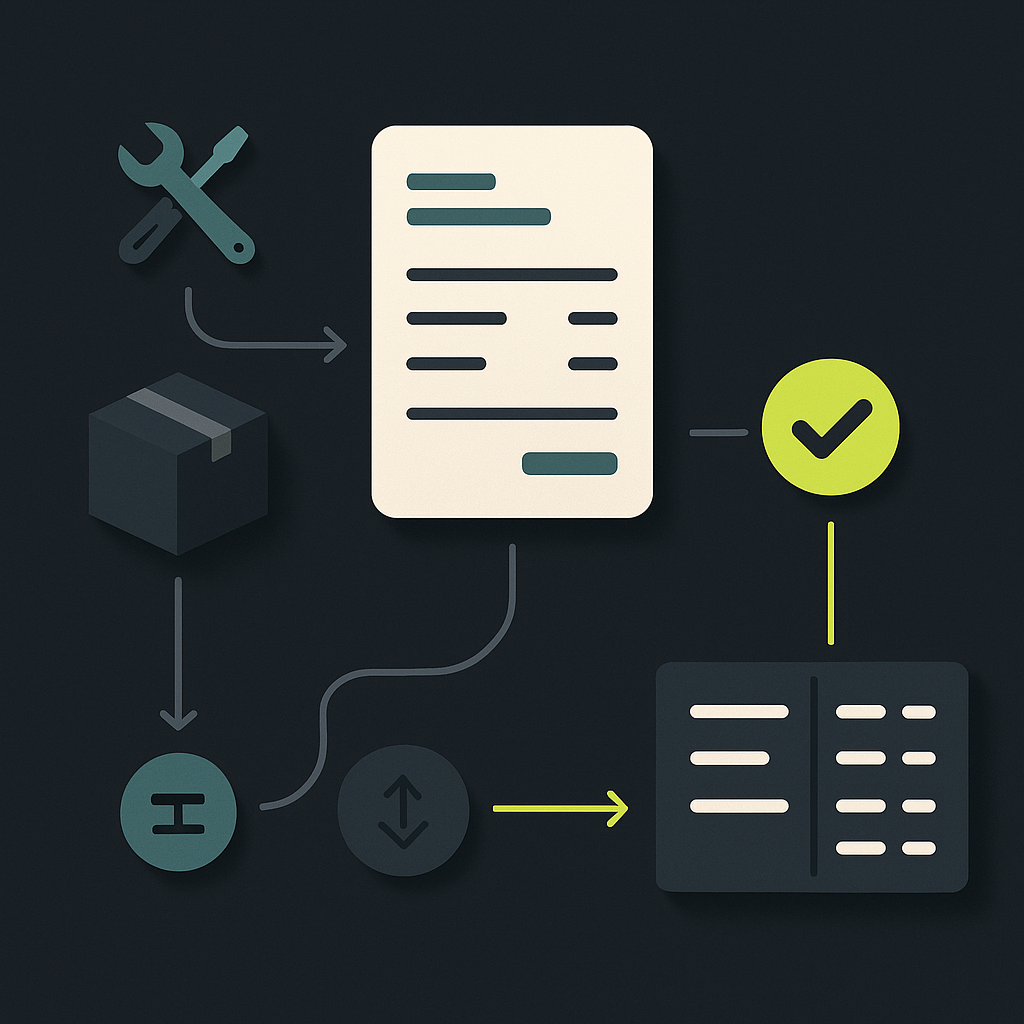
A supplier payment is money a business pays a supplier for goods or services. It can settle an outstanding invoice, fund an advance before delivery, or cover an agreed project milestone. Supplier payment and vendor payment generally mean the same thing.
In accounts payable, the term also describes the operational process surrounding that transfer: validating the invoice, approving the obligation, scheduling payment, sending funds, and reconciling the result. BILL’s explanation of supplier payments similarly places the transaction within the broader process of paying for business purchases.
For finance teams replacing email approvals and bank-portal payments, the important distinction is this: an approved invoice establishes permission to pay; it does not prove that payment occurred. Effective automation preserves that distinction while connecting the records.
Supplier payment vs. invoice vs. accounts payable
These terms describe different parts of the same purchase. Treating them as interchangeable creates confusion in cash forecasts, supplier communications, and month-end reporting.
| Term | Meaning | What it does not prove |
|---|---|---|
| Purchase order | A buyer’s order specifying the purchase | That goods arrived or payment is due |
| Supplier invoice | A supplier’s request for payment | That the charge is valid or approved |
| Accounts payable | A recorded obligation owed to suppliers | That a payment has been scheduled |
| Supplier payment | Funds paid against a purchase obligation | That every related invoice is fully settled |
| Remittance advice | A notice explaining payment allocation | That funds reached the supplier |
| Reconciliation | Matching payment activity to accounting records | That unresolved differences can be ignored |
A payment may cover several invoices. Conversely, an invoice may be settled through several payments, a credit note, or a combination of both. Your system therefore needs an explicit relationship between invoices, credits, and payment allocations—not just a supplier name and a transferred amount.
How supplier payments work in accounting
Under accrual accounting, recording a purchase and paying for it are separate events. AccountingTools defines accounts payable as obligations arising from purchases made on credit, generally reported as current liabilities.
For a straightforward credit purchase, the accounting treatment is:
- When the purchase is recognized: debit the appropriate expense or asset account and credit accounts payable.
- When the payable is settled: debit accounts payable and credit cash or the relevant bank account.
The payment does not create a second expense. It reduces the liability already recorded.
Hypothetical example: A company receives and accepts maintenance services, records the supplier’s invoice as an expense and payable, and pays later under the agreed terms. The later bank transfer clears the payable; it does not recognize the maintenance expense again.
Advance payments are different. Money paid before goods or services are received is generally recorded as a prepayment or supplier advance until the underlying purchase is recognized. Foreign-exchange differences, discounts, withholding, and payment fees may require separate entries. Exact posting timing and any payment-clearing accounts should follow the company’s accounting policy and applicable standards.
What supplier payment terms mean
Payment terms establish when money is due and any conditions governing settlement. They are not the payment method: “net 30” concerns timing, while “bank transfer” describes how funds move.
ProcureDesk’s payment-terms guide describes arrangements including net terms, advance payments, payment on delivery, and milestone-based payments. In practice, finance teams should capture the following distinctions:
- Net 30, net 60, or net 90: the balance is due within the stated number of days from the contractually defined starting event. Verify whether that event is the invoice date, receipt of a valid invoice, or another agreed trigger.
- Payment in advance: funds are due before delivery or service performance, creating exposure that purchasing and finance should assess.
- Payment on delivery: payment becomes due when the delivery occurs, subject to the agreement.
- Milestone payments: installments become due when specified deliverables or acceptance conditions are met.
- Early-payment discounts: a reduced amount is available if payment meets a defined deadline. Store the discount rate, deadline, and full-balance due date separately.
Do not let invoice extraction silently override negotiated terms. If an invoice conflicts with the supplier agreement, route the difference for resolution before calculating the payment date.
Also distinguish the contractual due date from the internal release date. Banking cutoffs, holidays, currency conversion, and the receiving payment network can affect when funds become available. Late-payment charges and other remedies depend on the contract and applicable law; they are not universal.
The supplier payment process, from invoice to reconciliation
Capture and validate the obligation
Capture the supplier identity, invoice reference, purchasing entity, currency, amounts, and terms. Check for duplicate invoices and confirm that the supplier record is eligible for payment.
Where purchasing uses purchase orders and goods receipts, match the invoice against those records. Service invoices may instead require contract checks and evidence of acceptance. Requiring a goods receipt for every invoice creates unnecessary exceptions; skipping acceptance checks for services creates a different control gap.
Approve the purchase and authorize payment
Route invoices according to responsibility, amount, entity, and exception type. Business approval confirms that the purchase is legitimate. Payment authorization determines whether funds may leave the account under treasury and payment-control policies.
Those decisions may occur in a connected workflow, but they serve different purposes. A documented invoice approval workflow helps clarify ownership rather than relying on forwarded emails.
Schedule and execute the transfer
Select the funding account, payment method, currency, and release date. Confirm that approved beneficiary details remain unchanged or that any changes have been independently verified.
Method selection depends on geography and supplier acceptance. In the United States, ACH is commonly used for routine domestic payments; wires may suit urgent or cross-border requirements. Cards require supplier acceptance, and checks introduce delivery and clearing considerations. Local alternatives vary by country. No method is universally fastest or cheapest.
Allocate and reconcile the result
Send remittance details identifying the invoices and credits covered. Match execution results and bank activity to the payment record, then apply the settlement to the correct obligations.
A rejected or returned transfer needs an exception owner. It should not disappear behind a generic “processed” label. Retrying also requires a check that the original instruction cannot still complete, helping prevent duplicate payment.
What the definition means for AP automation buyers
Supplier payment automation should connect the obligation to the movement of money. Invoice capture alone is not an automated payment process, and a bank upload alone is not automated accounts payable.
When comparing platforms, evaluate whether they preserve supplier, invoice, approval, payment, and accounting references across each handoff. This is the foundation of touchless invoice processing: eligible transactions proceed under defined controls, while exceptions reach the right person with supporting evidence.
Use this checklist in a product demonstration:
- Trace an ordinary invoice: follow its source document through approval, payment allocation, and ledger posting without rekeying identifiers.
- Introduce a discrepancy: change the invoiced quantity or payment terms and verify that the workflow pauses for a named owner.
- Apply a credit or partial payment: confirm that the remaining balance stays visible and supplier remittance remains understandable.
- Change beneficiary details: check whether independent verification and renewed authorization are required before release.
- Simulate a failed transfer: inspect the status, accounting treatment, notification, and controlled retry path.
- Inspect the audit trail: verify who approved what, which data changed, and which evidence supports completion.
Measure the full process, not just invoice extraction speed. For cost per invoice, define whether the calculation includes approval labor, exception handling, payment operations, and reconciliation. Otherwise, automation can appear successful while manual work simply moves downstream.
Start with a clear obligation-to-payment record
The supplier payment meaning is simple: money paid for goods or services. The operational requirement is more demanding—prove what was owed, who authorized it, what was sent, and how the result affected the balance.
Before selecting software, map those records for a routine purchase and an exception. Then evaluate Payouts.com AP Automation for connecting invoice capture, approvals, and payment within a broader financial operating system. The goal is less manual handling without losing the evidence that makes a payment explainable.
Created with AI assistance. Sources are linked in the article; this content is general information, not legal, tax, or financial advice.
Related resources
Touchless Invoice Processing: What It Really Means and How to Get From 0% to 80%+
Touchless invoice processing isn't a switch you flip — it's a rate you climb. Here's what it really means, how to measure it, and a step-by-step path from 0% to 80%+.
Invoice Approval Workflow: Build a Matrix That Holds Up
An effective invoice approval workflow defines who can approve, what evidence they need, and when approval must reset. Use this framework to turn an email-based process into enforceable rules.
Azure AI Invoice Processing: What Finance Must Build Around It
Azure can turn supplier invoices into structured data. The buying decision is whether your team can own the validation, exceptions, and ERP workflows that turn that data into approved payables.
Run your entire money cycle on one ledger
Global payouts, AP/AR automation, and AI agents with their own wallets and spend limits.
Get started
Discussion
0 commentsBe the first to join the discussion.