

Supplier Payment Solutions: Choose for Your Supplier Mix
The right supplier payment solution reduces work for both AP and suppliers. Compare platform models, uncover hidden operating costs, and build a rollout around the suppliers you actually pay.
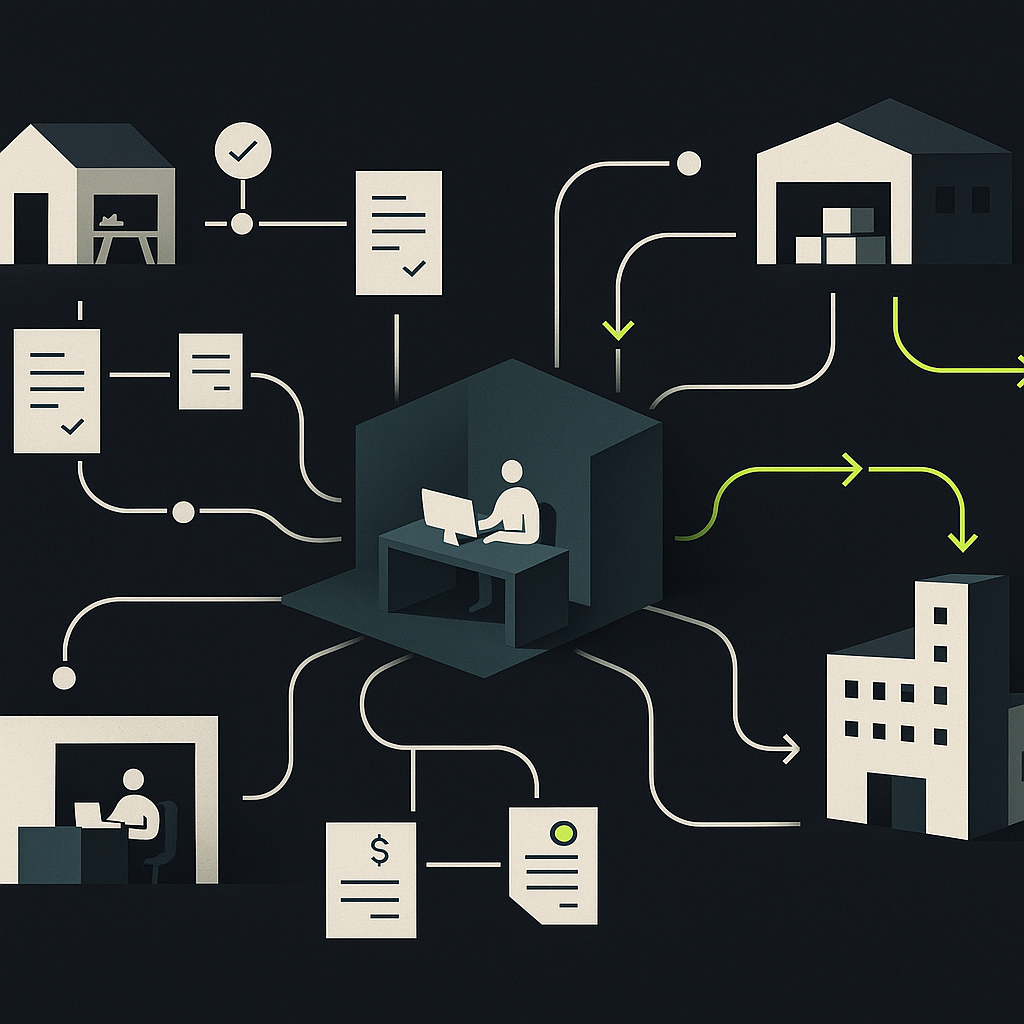
Supplier payment solutions connect approved invoices to payment execution, supplier notifications, and accounting reconciliation. Some also handle invoice capture, approval workflows, and supplier onboarding. For mid-market finance teams, the right choice depends on which work needs replacing: invoice administration, bank-portal payment runs, supplier support, or all three.
Choose around your supplier mix and the work that remains after implementation—not the longest feature list. A platform can offer automated payments while leaving AP to recruit suppliers, resolve rejected transfers, and explain remittance details. Those responsibilities determine whether automation actually frees capacity.
Start with the supplier portfolio, not the product demo
Before shortlisting providers, segment your payables using recent invoice and payment records. Separate recurring domestic suppliers, occasional vendors, cross-border suppliers, and suppliers with strict payment-method requirements. Then identify where AP spends time between invoice receipt and closing the payable.
Build a working profile for each segment:
- Invoice workflow: purchase-order-backed or non-PO invoices, receipt requirements, coding complexity, and approval exceptions.
- Payment requirements: beneficiary country, currency, accepted methods, due dates, and required invoice references.
- Supplier behavior: willingness to use a portal, card acceptance, onboarding responsiveness, and frequency of status inquiries.
- Operating burden: manual uploads, payment repairs, remittance preparation, and reconciliation adjustments.
Measure invoice volume, payment volume, and spend separately. A high-value supplier may generate little processing work, while a fragmented population of small vendors can consume substantial AP capacity. One payment may also settle several invoices, making transaction-based and invoice-based pricing materially different.
Compare solution models by the work they replace
The market includes invoice-focused AP platforms, broader procurement suites, and payment-led services. Zone & Co’s AP software overview illustrates this range, including platforms positioned around global payments and broader spend management. Treat vendor-authored comparisons as discovery material, not independent proof of performance.
The assessments below are editorial judgments about operating-model fit, not product ratings.
| Solution model | Editorial fit | Best for | Main limitation to investigate |
|---|---|---|---|
| Invoice-led AP automation | Strong for workflow bottlenecks | Email approvals and manual coding | Payment execution may remain separate |
| Payment-led platform or network | Strong for payment-run workload | Approved invoices ready in the ERP | Invoice exceptions may stay with AP |
| Procure-to-pay suite | Strong for upstream spend control | Purchasing and receiving tied to AP | Broader implementation and process change |
| Unified financial operating system | Strong for connected money workflows | AP, payouts, and treasury coordination | Depth and availability need workflow-level validation |
If approval chasing is the main problem, better payment rails alone will not fix it. If invoices are already approved reliably in the ERP, replacing invoice capture may add migration work without addressing bank-portal execution.
Payouts.com combines AP/AR automation, global payouts, and real-time treasury on one ledger. Its AP automation offering is relevant when the buying objective is to connect invoice capture, approvals, and payment rather than optimize an isolated step.
Require a connected invoice-to-payment workflow
Even when payment execution is the purchasing priority, the solution needs reliable upstream instructions. Invoice capture should preserve the source document and distinguish extracted fields from approved accounting data. Matching should connect the invoice to the purchase order and receipt where applicable; non-PO invoices need coding and an accountable budget owner.
Approval records should identify the authorized entity, supplier, amount, and currency. A subsequent change to payment-critical information should trigger the appropriate review rather than inherit stale authorization.
At the payment stage, require a persistent connection between the approved payable, payment instruction, provider status, and ERP entry. An accepted instruction is not automatically evidence that the supplier received funds. Returned or rejected payments need a defined accounting and recovery path.
Keep invoice automation and payment automation metrics separate. The guide to touchless invoice processing provides a useful framework for defining straight-through invoice handling. A touchless invoice can still produce a manual payment exception.
Make supplier acceptance part of the commercial evaluation
A payment method is only useful if the supplier can receive and reconcile it. PYMNTS’ coverage of B2B virtual cards highlights supplier acceptance and reconciliation friction as barriers to adoption. Issuing a controlled credential does not remove the receiving supplier’s processing work or acceptance costs.
Ask providers to explain their enrollment model before discussing rebate potential:
- Who contacts suppliers and explains the available payment methods?
- Can suppliers decline cards without interrupting payment?
- Who verifies bank-detail changes through a trusted process?
- Can remittance data identify every invoice, credit, and deduction in a consolidated payment?
- Who supports suppliers that cannot use the portal or cannot locate a payment?
A self-service vendor portal can reduce repetitive information collection and status inquiries. But portal access is not an enrollment service. Establish who follows up on incomplete records and who handles suppliers requiring an alternative channel.
For cross-border suppliers, evaluate receiving-account requirements, currency conversion, and deductions separately. The practical objective is not simply sending money internationally; it is settling the obligation as agreed. See the guide to paying international supplier invoices in full for that distinction.
Compare total operating cost, not the advertised transaction fee
Request a commercial model based on your actual invoice and supplier segments. Include subscription charges, implementation, ERP integration, payment fees, FX charges, enrollment services, support, and exception handling. Confirm which costs change with entities, users, invoices, or payments.
Compare net operating cost as platform and payment costs plus retained AP work, minus conservatively achievable benefits. Do not count theoretical rebates on suppliers that have not agreed to card payments. Likewise, earlier payment is not automatically a saving: it may consume liquidity unless it earns a worthwhile discount or avoids a documented cost.
Keep cost-per-invoice comparisons consistent
Calculate your baseline using a defined scope: AP labor, allocated systems costs, and relevant outsourced processing costs divided by invoices processed during the same period. Track payment execution costs separately if they are excluded from that scope. Use the same boundaries when evaluating the proposed solution.
Distinguish capacity released from cash savings. Removing repetitive work may let the team absorb growth or improve controls, but payroll expense does not disappear unless staffing or outsourcing expenditure actually changes.
Assign ownership before signing
Automation can move work between teams rather than eliminate it. Put ownership of recurring exceptions into the implementation plan and, where appropriate, the service agreement.
- Invoice mismatch: who resolves missing receipts, pricing disputes, and coding uncertainty?
- Funding shortage: who monitors available funds and authorizes funding movements?
- Rejected payment: who diagnoses the cause, contacts the supplier, and approves a corrected instruction?
- Missing remittance: who supplies invoice-level detail and answers reconciliation questions?
- Provider outage or exit: how are open instructions, supplier records, and audit evidence retrieved without creating duplicate payments?
Where AI agents assist with coding or exception triage, define which actions they may take and which require human authorization. A recommendation to change beneficiary details should not become permission to release money.
A practical supplier-segment rollout checklist
Use a representative supplier cohort rather than selecting only the easiest invoices. Agree on success measures before expanding.
- Document the baseline. Record approval delays, manual touches, supplier inquiries, payment failures, and reconciliation effort by segment.
- Confirm participation. Validate accepted methods and remittance needs directly with participating suppliers.
- Test ordinary and exception cases. Include consolidated payments, credit notes, changed bank details, rejected instructions, and disputed invoices.
- Reconcile the complete cycle. Trace the invoice through authorization, execution, cash movement, and accounting without relying on a dashboard label alone.
- Review retained work. Identify what AP, treasury, IT, the provider, and suppliers still do manually.
- Expand selectively. Roll out to segments where service quality, controls, and economics hold up; preserve alternatives elsewhere.
Buy fewer handoffs, not just more payment methods
The strongest supplier payment solution for your business is the one that fits supplier preferences while reducing work across the invoice-to-payment cycle. Broad coverage matters, but so do enrollment ownership, usable remittance data, and a credible plan for exceptions.
For your next evaluation, give each shortlisted provider the same supplier-segment profile and ask for a workflow, responsibility map, and fully scoped commercial proposal. That comparison will reveal more than a generic demo or a headline rebate.
Created with AI assistance. Sources are linked in the article; this content is general information, not legal, tax, or financial advice.
Discussion
3 commentsRelated resources

Touchless Invoice Processing: What It Really Means and How to Get From 0% to 80%+
Touchless invoice processing isn't a switch you flip — it's a rate you climb. Here's what it really means, how to measure it, and a step-by-step path from 0% to 80%+.
International Supplier Payments: Pay Invoices in Full
A successful transfer does not always settle a supplier invoice. Learn how to align currencies, fees, payment timing, and remittance data so suppliers receive and recognize what they are owed.
Supplier Payment Meaning: Terms, Accounting, and the AP Process
A supplier payment settles an obligation for goods or services, but it is not the same as an invoice or an accounts payable balance. Understanding the distinction helps finance teams automate the right steps without losing control.
Run your entire money cycle on one ledger
Global payouts, AP/AR automation, and AI agents with their own wallets and spend limits.
Get started
The point about measuring invoice volume vs payment volume separately is something we learned the hard way. We had a vendor quoting per-transaction pricing and it looked great until we realized we batch-pay most of our recurring suppliers monthly but process their invoices weekly. The math changed completely.
Would be useful to see more on the ERP integration side. We've looked at a few solutions that claim seamless connections but actually require middleware or daily flat-file exports. The persistent connection between approved payable and payment instruction you mentioned breaks down fast if the integration isn't truly real-time.
I appreciate the breakdown of solution models, but the 'payment-led platform' limitation feels understated. We implemented one of these last year and the invoice exception handling is still entirely manual on our side—approval routing, PO matching failures, GL coding errors. The platform solved maybe 30% of our AP workload while the sales pitch implied 80%.