

Duplicate Invoice Detection: Evaluate the Control, Not the Alert
A duplicate alert is not the same as a prevented payment. Learn how to evaluate matching accuracy, exception handling, and payment-release controls before choosing AP automation.
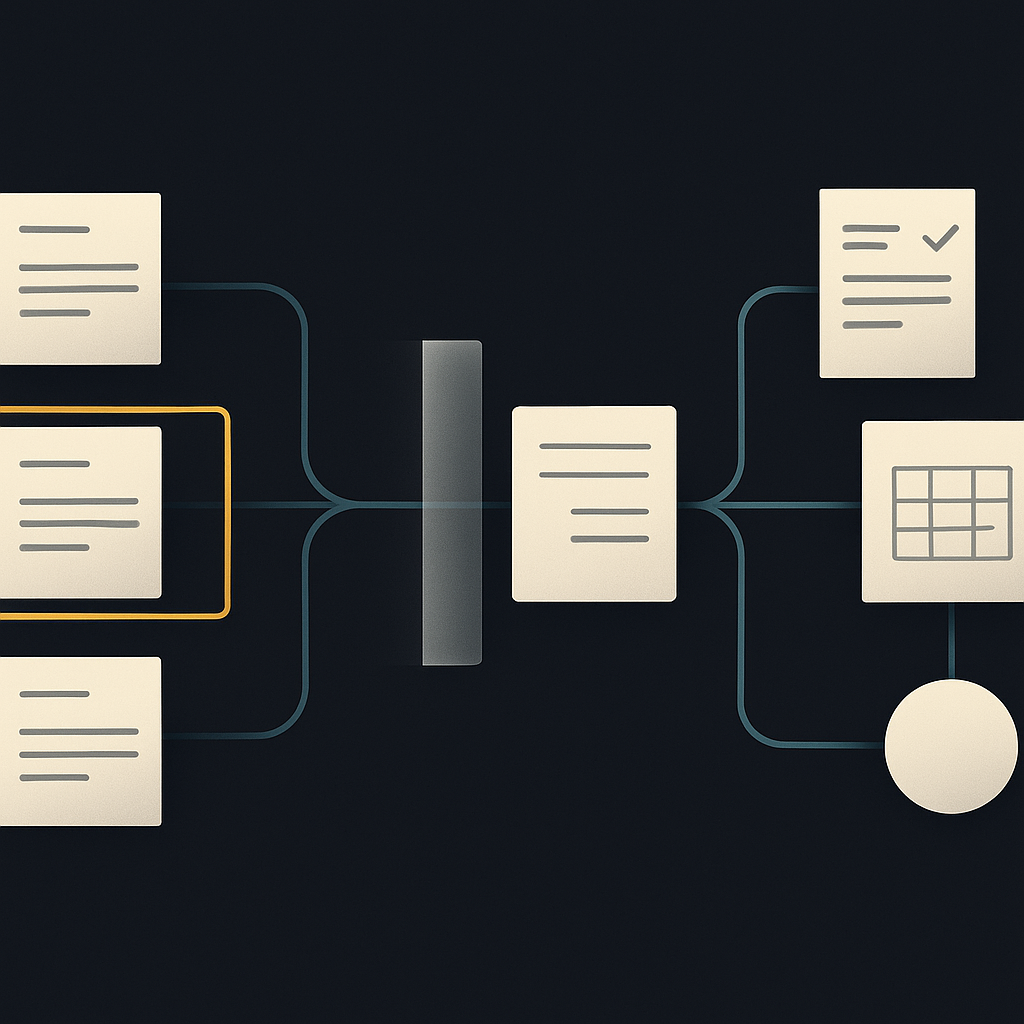
Duplicate invoice detection identifies multiple records that may represent the same supplier obligation. Effective detection combines exact and similarity-based matching across invoice data, supplier identities, and transaction history. Prevention goes further: it holds the suspect obligation, routes it for review, and stops a second payment from being released.
For controllers comparing AP automation platforms, that distinction matters. A system can recognize a duplicate perfectly and still fail if its warning does not reach the payment workflow. Evaluate the complete control—from invoice capture through settlement—not just the matching algorithm.
Duplicate invoices and duplicate payments are different problems
An invoice emailed to AP and uploaded to a supplier portal can create duplicate records without causing a duplicate payment. Conversely, one correctly recorded invoice can be paid twice through a repeated bank-file upload or an unsafe retry after a timeout.
Your control design therefore needs separate protections for:
- Duplicate intake: repeated documents entering through email, portals, scans, or integrations.
- Duplicate obligations: different-looking records requesting payment for the same goods or services.
- Duplicate execution: multiple payment instructions against one approved obligation.
A duplicate flag is also not proof of fraud. Resubmissions, extraction errors, corrected invoices, and supplier-record inconsistencies can produce similar signals. Reviewers need evidence before deciding whether to reject a record, request clarification, or escalate a suspected fraud attempt.
How duplicate invoice detection should work
Normalize fields without destroying their meaning
Capture supplier identity, invoice reference, invoice date, currency, gross amount, tax, purchase order, and relevant line-item or service-period details. Preserve both the original document and extracted values alongside normalized matching fields.
Normalization can remove incidental whitespace and standardize letter case. More aggressive changes need supplier-specific testing: removing leading zeros or punctuation may collapse legitimately different invoice references. Low-confidence extraction should trigger verification rather than silently becoming the basis for an automatic rejection.
Resolve supplier identity across records
Matching only within a vendor ID misses invoices recorded under duplicate supplier accounts. Build candidate matches using mapped supplier identities, supported by legal names, tax identifiers where appropriate, addresses, and other validated attributes.
No single attribute is decisive. Shared bank details may reflect a factoring arrangement or group treasury account. Similar names may belong to different legal entities. Cross-entity matching should surface possible duplication without assuming that similar invoices addressed to different buying entities represent the same liability.
Combine exact rules with similarity-based review
Exact rules can identify repeated combinations of supplier, invoice reference, currency, and amount. Document fingerprints can catch identical files, but a rescan or re-export can change the file without changing the obligation.
Similarity-based matching can surface altered references, nearby dates, and overlapping line items. Machine learning may help prioritize candidates, but a similarity score is not automatically a calibrated probability of duplication. Ask what the score measures and how the provider validates it against resolved cases.
The NIST AI Risk Management Framework provides a useful foundation for evaluating AI trustworthiness and risk management. For AP buyers, the practical questions are narrower: can the system explain a flag, measure errors, and preserve human accountability for consequential decisions?
Do not assume every ERP is limited to exact matching. Inspect the checks available in your configuration, the fields they use, and the records they can actually see.
Coverage matters as much as matching sophistication
A sophisticated model cannot match against an invoice outside its dataset. Require visibility into pending, approved, paid, canceled, and credited records, with their status intact. Historical coverage should reflect supplier billing patterns and applicable retention requirements, rather than an arbitrary short lookback.
For each ERP and accounting integration, establish which system owns invoice status, how quickly updates propagate, and what happens during a synchronization failure. Payment release should not proceed on stale information without an explicit exception policy.
Three-way matching is complementary, not interchangeable. Comparing an invoice with a purchase order and receipt validates purchasing evidence. Duplicate detection asks whether that obligation has already been recorded or paid. Systems also need cumulative invoiced quantities or amounts where multiple invoices legitimately draw against one purchase order.
Turn matching results into enforceable decisions
A warning that an operator can dismiss without explanation is a weak payment control. Define an outcome for each finding:
- Deterministic repeat submission: link the new submission to the existing record and prevent a second payable from being created.
- Likely duplicate obligation: hold the candidate from payment eligibility and show the matching evidence to AP.
- Ambiguous relationship: request supporting documents or supplier clarification before release.
- Legitimate repeat billing: release with a recorded reason and supporting service period, installment schedule, or other distinction.
The review screen should show both documents, matched and conflicting fields, supplier identities, invoice statuses, and payment history. Record who resolved the case, the reason, supporting evidence, and any override approval. Rejecting an already-posted payable may require an accounting reversal rather than deletion.
The U.S. Government Accountability Office Green Book describes an internal-control framework for federal agencies. Its focus on effective internal control and reliable operations is useful context for designing private-sector AP controls, not a claim that those agencies’ requirements apply to every business.
Keep exception authority separate from routine processing where practical. Configurable approval policies should make it clear who can release a held invoice and when additional authorization is required.
Protect the final payment instruction
Recheck eligibility at payment release, not only when the invoice enters AP. Two overlapping payment runs can otherwise select the same payable before either updates its status.
Ask how the platform reserves an obligation for payment and prevents concurrent execution. Where supported, retries should reuse a stable idempotency key so that repeating a request does not create another transfer. Idempotency does not catch two separately created invoices representing the same debt; invoice-level matching remains necessary.
For an uncertain payment outcome, reconcile the original instruction before creating a replacement. A timeout is not evidence that no money moved.
A buyer’s acceptance test for duplicate controls
Use a controlled test environment with representative, appropriately protected invoice data. The following are proposed acceptance scenarios, not measured product results. Require vendors to demonstrate both the detection result and the downstream payment behavior.
| Test scenario | Expected control behavior | Evidence to inspect |
|---|---|---|
| Same invoice through email and portal | Link or hold repeated submission | Channel history and payable count |
| Reference differs only in spacing | Match after safe normalization | Original and normalized values |
| Same bill under duplicate vendor IDs | Surface cross-record candidate | Supplier identity evidence |
| Equal monthly bills for different periods | Distinguish recurring obligations | Service-period comparison |
| Corrected invoice replaces original | Resolve replacement relationship | Cancellation or credit linkage |
| Installment against an existing invoice | Respect remaining payable balance | Prior payments and schedule |
| Concurrent payment runs | Prevent duplicate execution | Reservation and release logs |
| Timeout followed by retry | Reconcile or safely reuse request | Payment identifier and status |
Include difficult legitimate cases, not just obvious duplicates. A detector that flags every repeated amount may look thorough while increasing review work and delaying valid supplier payments.
Measure prevention without inflating the business case
Track outcomes that connect detection quality to operating cost:
- Alert precision: confirmed duplicates divided by resolved alerts, with unresolved cases reported separately.
- Detection recall: detected duplicates divided by known duplicates in a labeled evaluation set. Production recall remains uncertain when missed duplicates are undiscovered.
- Review burden: handling time, aged holds, and unnecessary escalation of legitimate invoices.
- Escaped duplicate payments: confirmed duplicates found after release, with recovery status recorded separately.
- Coverage: channels, entities, historical records, and payment routes included in the control.
Do not count the face value of every alert as savings. A duplicate submission caught before a payable exists is not automatically a payment that would otherwise have occurred. Report confirmed prevention, recovered cash, and estimated avoided exposure separately.
This also protects your touchless invoice processing strategy: automate clean invoices while making exceptions explainable, rather than improving a headline automation rate by suppressing useful checks.
Choose a control that survives the handoff to payment
Before selecting a platform, confirm its data coverage, matching explanations, hold enforcement, override permissions, concurrency protection, and reconciliation behavior. Assign owners for supplier-data quality and unresolved exceptions before deployment.
Payouts.com brings AP/AR automation, global payouts, and treasury into a financial operating system on one ledger. Explore AP automation with the acceptance scenarios above, and ask for a demonstration of the complete invoice-to-payment workflow. The buying criterion is straightforward: can the system stop the same obligation from being paid again, without unnecessarily blocking legitimate bills?
Created with AI assistance. Sources are linked in the article; this content is general information, not legal, tax, or financial advice.
Discussion
31 commentsRelated resources

Touchless Invoice Processing: What It Really Means and How to Get From 0% to 80%+
Touchless invoice processing isn't a switch you flip — it's a rate you climb. Here's what it really means, how to measure it, and a step-by-step path from 0% to 80%+.

Invoice Automation Platform: Buy for Your Invoice Mix
The right invoice automation platform depends on the invoices your team actually receives. Build a buying case around document complexity, exception workload, and the cost of reaching a correctly posted payable.
Vendor Master Data Management: An AP Data Governance Guide
AP automation needs more than clean supplier records. It needs clear data ownership, controlled changes, and proof that every connected system is using the approved version.
Run your entire money cycle on one ledger
Global payouts, AP/AR automation, and AI agents with their own wallets and spend limits.
Get started
The section on cumulative invoiced quantities against a single PO is often overlooked in AP automation discussions. We're running into this with our construction suppliers where a single blanket PO generates dozens of legitimate progress invoices, and basic duplicate detection keeps flagging them because they share the same PO number and similar amounts. How are others handling this without manually overriding every match?
The distinction between duplicate detection and duplicate prevention is something we learned the hard way during our first ERP migration. Our legacy system flagged duplicates beautifully but the workflow still allowed payment batch approval before the review queue was cleared, so we ended up paying the same invoice twice through different subsidiaries because the alert never actually blocked anything.
This is why the article's point about turning matching results into enforceable decisions is so important. A hold on payment eligibility needs to be a hard block, not a dashboard warning. We had to configure our workflow so that any flagged invoice creates a separate approval step that cannot be bypassed without a documented override and second signature.
This is why the article's point about turning matching results into enforceable decisions matters so much. A hold should block the payment batch automatically, not just sit in a parallel queue that someone might check later. We ended up building a custom gate that won't let Treasury release files if any invoice in scope has an open duplicate flag.
The cross-entity matching caveat is something we're wrestling with right now during integration planning. We have shared services processing invoices for multiple legal entities, and the vendor's demo showed matches flagged across entities that legitimately represent different obligations to the same supplier. The article's point that cross-entity matching should surface possible duplication without assuming it's the same liability is exactly right, but I haven't seen a system yet that handles the review workflow gracefully when you have 60+ entities and high-volume suppliers billing all of them.
We're handling this by maintaining a separate intercompany vendor table that flags legitimate cross-entity relationships. The duplicate detection runs first within entity, then checks the intercompany table before surfacing cross-entity matches to AP. Still requires manual review but at least the queue is pre-filtered based on known structures.
We configured a configurable matching scope tied to entity relationship tables in our ERP. So for truly shared suppliers across sister entities we can enable cross-entity comparison, but it requires explicit setup per supplier group rather than blanket matching. Keeps false positives manageable while still catching the scenarios where one entity accidentally processes another's invoice.
The section on document fingerprinting versus obligation fingerprinting really resonates. We had a vendor who would generate invoices as PDFs with embedded timestamps, so every download produced a different file hash even though the invoice data was identical. Our first-gen OCR system flagged them all as unique until we moved matching logic to extracted fields instead of document metadata.
We ran into the same thing with PDF metadata changes. Ended up switching to a hash based only on extracted field values rather than the file itself, but then had to add separate document versioning to catch when a vendor reissued a corrected invoice with the same number but different line items.
We ran into the same thing with PDF metadata changes. Ended up switching to a hash based on extracted normalized fields rather than the file itself, which caught the obligation duplicates while ignoring cosmetic file differences.
The coverage section is spot-on. We evaluated a platform that had excellent fuzzy matching but only looked at invoices in "approved" status, so anything still in workflow or already paid was invisible to the duplicate engine. Missed duplicates during month-end crunch when invoices moved from pending to paid within hours.
We had the same visibility gap. The vendor kept showing us false-negative rates in demos but those were measured only against records the system could actually see. Once we asked for metrics across the full invoice population including pending and voided, the miss rate tripled.
We ran into the same gap with status coverage. The vendor pitched their ML matching as best-in-class but couldn't explain why it only scanned a subset of the ERP tables. Ended up requiring them to map out exactly which invoice statuses were in scope before we'd even run a POC.
The section on normalizing fields without destroying meaning is critical. We burned weeks troubleshooting false positives because our vendor decided aggressive punctuation stripping was safe—collapsed invoice numbers that differed only by hyphens and created a mess with legitimate monthly invoices from the same supplier that followed a predictable reference pattern.
We had the same problem with date normalization. System was auto-correcting European date formats and created false positives on recurring invoices that legitimately had the same amount but different periods. Had to build supplier-specific parsing rules which took forever but at least now the extraction confidence score actually means something.
We saw the same thing with leading zero removal on PO numbers. Vendor sent invoices against PO-001234 and PO-1234 for separate orders, system flagged them as duplicates after normalization, held up payment on a critical shipment. Now we test any normalization rule against actual supplier data before enabling it.
The distinction between a duplicate flag and an enforceable control is something I wish we'd understood before our first implementation. We spent six months celebrating a 98% detection rate only to discover AP was manually overriding about 40% of the alerts because the review screen didn't surface enough context to make a confident decision. The article's point about showing both documents plus matched and conflicting fields is exactly what we had to build ourselves after go-live.
This is why the article's emphasis on the review screen design matters so much. If the AP team can't quickly see both documents side-by-side with the conflicting fields highlighted, they'll just click through to keep the queue moving. Detection rate is meaningless without usable evidence at the decision point.
We had the same experience with override rates. The vendor demo showed perfect matching precision, but they never walked us through what the AP clerk actually sees when a flag fires at 4pm on month-end close day. Turns out the screen defaulted to a tiny modal that didn't even show the original document without an extra click.
The point about ERP integration lag during status updates is something we didn't discover until after go-live. Our sync runs every 15 minutes, and we had a case where an invoice moved from pending to paid in the ERP but the AP automation platform still showed it as unpaid, so a resubmitted version passed duplicate checks and nearly got released. Now we have a manual reconciliation step before every payment run, which defeats half the purpose of automation.
We had the exact same issue and ended up adding a secondary check at payment file generation that queries the ERP directly for status confirmation, not just the synced data. It's a performance hit but stopped two near-misses in the first month.
We added a pre-payment verification step that queries the ERP directly instead of relying on cached sync data. It adds 2-3 seconds to the release process but completely eliminated that race condition for us.
The point about supplier identity resolution is underrated. We've had the same supplier registered under three different vendor IDs (acquisitions, regional entities, etc.) and our old system only matched within a single ID. Caught two near-duplicate payments in the first month after we consolidated the master data.
We hit this exact issue after a supplier merger where the parent company kept billing under both the old subsidiary name and their corporate entity. The invoice numbers even overlapped because they were using separate ERP instances. Cross-vendor matching would have flagged it immediately but our system treated them as completely independent.
Same issue here. Our AP system let us set up cross-reference tables for merged vendor IDs, but the duplicate detection engine still only ran at the individual ID level. Had to write a custom pre-processing script to actually use those mappings before matching could work properly.
"A warning that an operator can dismiss without explanation is a weak payment control" — this is exactly the problem we're dealing with right now. Our ERP flags duplicates but there's no forced workflow, so AP just clicks through when they're busy. Finance doesn't see the override log until month-end. What platforms actually enforce the hold at payment release, not just at invoice entry?
We had the same pattern until we made the override require a reason code plus attachment before the system would let the invoice advance to payment-ready status. Still not perfect but at least there's an audit trail that gets sampled quarterly.
We solved this by routing all override attempts to a secondary approval queue that Treasury reviews daily. AP can still mark their intent to override, but the payment batch won't release until someone from Finance explicitly signs off with a reason code. Adds maybe 30 minutes to our daily close but caught four actual duplicate payments in the first quarter alone.
I appreciate the distinction between duplicate intake, duplicate obligations, and duplicate execution. Most vendor pitches conflate these into one feature. Question though: how do you handle the scenario where a supplier legitimately bills the same amount monthly (SaaS, facilities contracts)? Seems like similarity matching would constantly flag those unless you carve out exceptions by supplier or GL code.
The article addresses this under similarity-based matching—you need fields like service period or installment schedule to distinguish recurring invoices from true duplicates. We tag subscription vendors with a billing-frequency attribute and use that to suppress false positives. Without that context, any fixed-amount monthly invoice will flag.
This is where service-period matching becomes essential. The article mentions it briefly under line-item details, but basically you need to tag each invoice with the billing period or contract reference so the system can distinguish January from February even when amounts are identical. We require our recurring vendors to include period identifiers in invoice references, and our AP automation maps those to separate obligations. Still flags if the same period shows up twice.